Before We Replace Alexa, Apple HomeView Has to Pass the Hallway Test
We placed 14 Echo devices through the house so music could follow us from room to room. Apple's $299 HomeView now has to prove it can keep every room together.

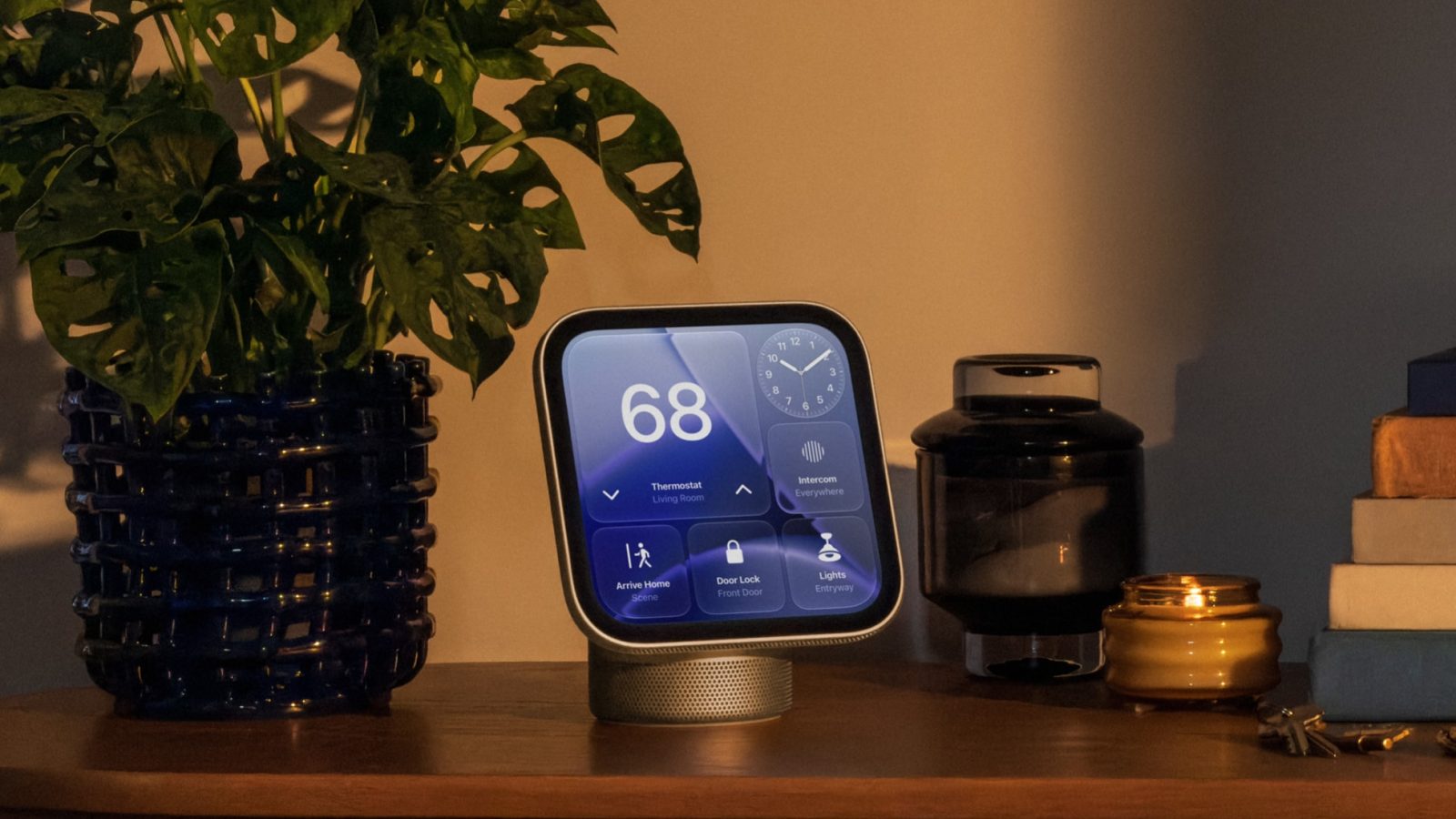
Credit: Company image from Apple · Apple Inc.
Our Alexa system is not one speaker sitting on a kitchen counter. Right now our mix of 14 devices is three Echo Dots, six Echo Show 5s, two first-generation Amazon Echos, one second-generation Echo and two Echo Show 15s. We spread all 14 through the house so the same song could follow us from room to room without a hard break. When it works, it works very well.
We did not keep every model just for coverage. The two first-generation Echo speakers are still here because their bass is fantastic even today. That is part of our gripe with some of the newer Echo devices: more features do not help if the music isn’t as good.
During dinner, an Echo sets the timer and converts cups to grams before I can reach for my phone. A spoken request dims the lights or turns on the television. Those jobs still work.
Whole-home music is where the trouble starts. A song begins in the kitchen. I step into the family room and hear that the kitchen is slightly out of sync. Walk on into the bedroom and the family room’s lag stacks on top of it. Before you know it, all 14 devices are playing to a different beat. When even part of the system drifts badly, I have ended up with a massive headache more than once.
That is what happens in our house, and other Alexa systems may behave differently. Apple’s new $299 HomeView caught my attention anyway. A prettier screen is no reason to replace speakers. What would count is what I call the hallway test: one song, every room, one hour, with the music staying together the whole time.
What Amazon says to check
Amazon starts multi-room troubleshooting with Wi-Fi, then asks owners to confirm that every speaker uses the same account, current software and the intended speaker group. If playback still fails, the company recommends rebuilding the group and restarting any unreachable Echo. Those two Amazon help pages cover music that will not play and speakers that show as unreachable. Neither one is about drift, so neither says what causes it in a 14-device house like ours.
Without a known cause, the fix could be a one-minute restart or a network-wide house project. Before spending on another system, I want to know which problem I am buying my way out of.
Amazon made the Echo Studio 40 percent smaller
Because our house uses several Echo models, I read independent reviews of the current Studio and the Dot Max. We do not own either one, so what follows comes from those reviews and not from my own ears.
The first Echo Studio had a 5.25-inch down-firing woofer, according to Expert Reviews. Amazon’s 2025 replacement moved to a spherical body that the company says is 40 percent smaller. The sales pitch promised deep sound from a speaker that would fit on more shelves.
Expert Reviews said the newer Studio has less bass than the model it replaces but an open, wide sound, and it rated the sound cleaner than the smaller Echo Dot and Dot Max. RTINGS found a fairly balanced response, though kicks and basslines lack punch and thump. Less bass is the trade I would worry about, since our first-generation Echos are still here for theirs.
What Hi-Fi reviewed only the Dot Max and called its sound uninspiring and muddled.
Amazon moved again on October 28 with an Echo Studio with Home Camera priced at $249.99. Amazon says the camera adds visual intelligence to the 2025 audio architecture and lists Advanced Room Adaptation alongside Adaptive Volume. For $30 more than the $219.99 standard Studio, the camera model adds another set of eyes but Amazon does not say it brings back the original 5.25-inch woofer.
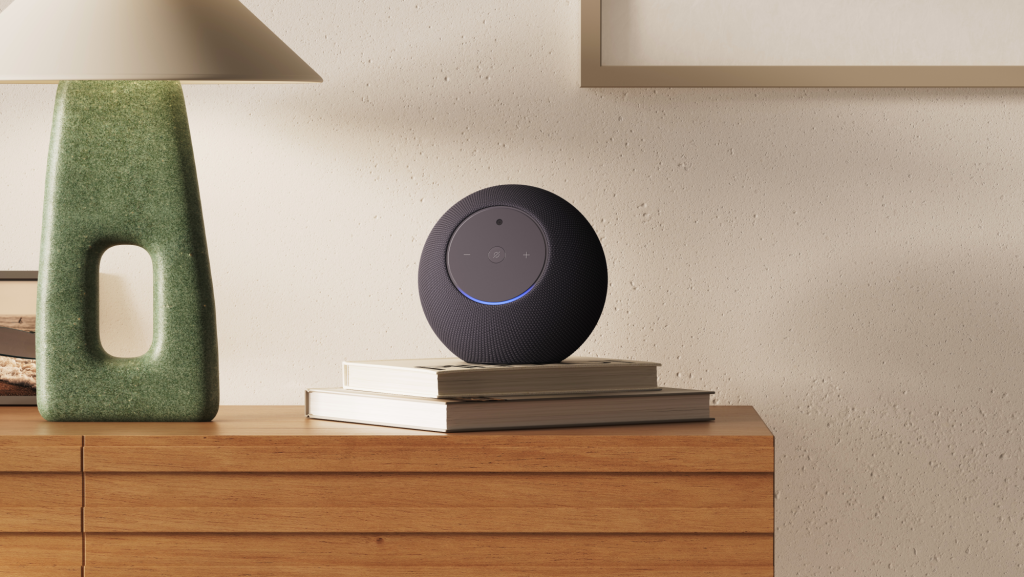
HomeView’s one-room audio tests
Apple says HomeView will be available November 13 for $299. Its 7-inch Liquid Retina display contains two custom full-range drivers, while the base holds a down-firing woofer and two force-cancelling passive radiators. The $299 wall-mounted model keeps the two drivers and loses the speaker base, and Apple’s specifications page says the wall mount, USB-C cable and power adapter are each sold separately.
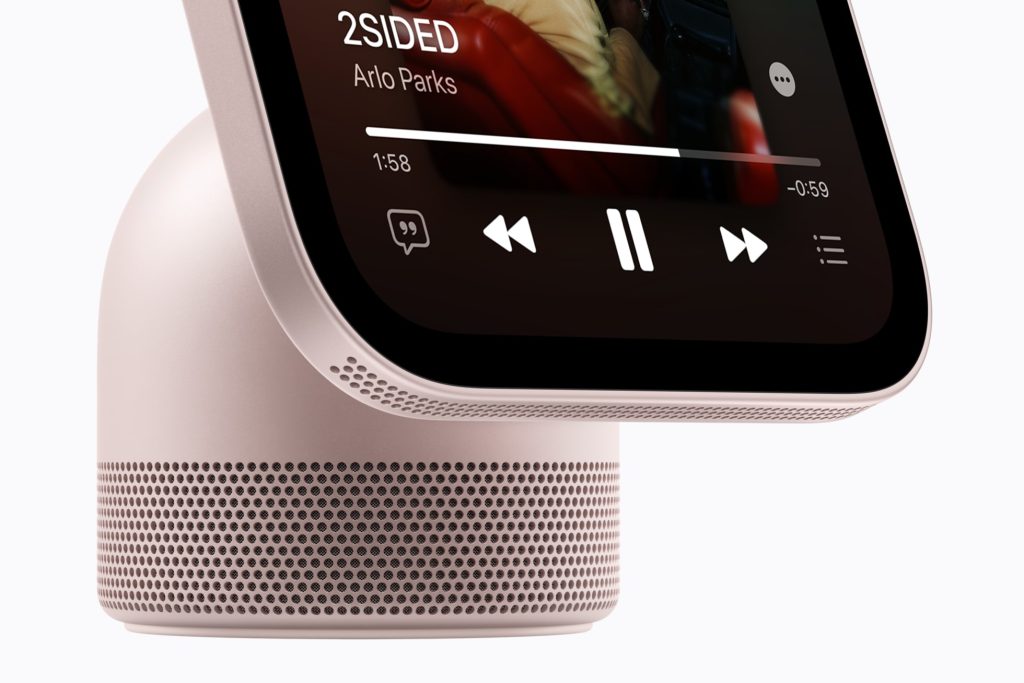
The first listening reports were encouraging. At Apple’s launch event, Gizmodo‘s Raymond Wong played music at 100 percent volume. He reported deep bass without audible distortion and said the nightstand under the unit rattled. Macworld placed the sound above a HomePod mini, though short of a full-size HomePod’s room-filling presence.
The two cited hands-ons do not report an hour-long, multi-speaker test on a busy home network. The whole-home question remains open until retail testing begins.
Apple says multiple HomeView units can play together. The same group can include HomePods and AirPlay-compatible speakers on the same network. Apple’s AirPlay support page explains how to select them and says you can “play audio across multiple speakers throughout your home in perfect sync.” That is a general AirPlay line, and the page does not mention HomeView. Together, those pages establish the feature without showing how well several rooms stay synchronized.
AirPlay is Apple’s wireless-audio system. Current Echo speakers do not support AirPlay 2, so they cannot join a HomeView group. We would need to keep Alexa as a separate system or replace speakers over time.
How I would test HomeView at home
Apple requires a compatible, current iPhone or iPad for setup and multiuser support. A paired device unlocks personal content such as messages. Calendar-based Siri requests need an iPhone or iPad that supports Apple Intelligence. We already own Apple products. A household with no compatible iPhone or iPad would need one for setup.
Apple documents timers, compatible lights, AirPlay with Apple TV 4K and selected third-party media apps from an iPhone. Apple lists its Siri AI as a beta in HomeView software version 27.2 and does not list unit conversion, so before replacing anything I would ask HomeView for our cup-to-gram conversion, tell it to turn on the television and check each device we already use.
I would start the same song in the kitchen, walk through the house and stop in the room where our current system starts to fall behind. I would keep it running for an hour because a short demonstration cannot answer the question.
Say I bought four HomeViews. That is only a number for the math, since I have not picked the rooms. Four cost $1,196 before tax, although existing HomePods or other AirPlay-compatible speakers could lower the count. Whole-home sound still costs more than the $299 printed on one box.
The early listening reports put HomeView on my shopping list. I will wait for retail testing that shows several units staying synchronized for at least an hour on an ordinary home network before replacing our Echoes.
- Meet Apple HomeView · Apple
- Apple HomeView Technical Specifications · Apple
- Apple HomeView · Apple
- Use AirPlay to Stream Audio · Apple Support
- Multi-Room Music Doesn’t Play with Alexa · Amazon Support
- Device Unreachable Error During Multi-Room Music Set Up · Amazon Support
- How Amazon Packed Premium Sound into Its Echo Devices · Amazon
- Introducing Echo Studio with Home Camera · Amazon
- Echo Studio 2025 Review · Expert Reviews
- Amazon Echo Studio 2025 Speaker Review · RTINGS
- Amazon Echo Dot Max Review · What Hi-Fi?
- Apple HomeView Hands-On · Gizmodo
- HomeView Quickly Won a Place in My Heart and My Home · Macworld
- Why AirPlay 2 Matters When Switching Multiroom Systems · TechRadar
Reported and edited to HeadLines Decoded newsroom standards. E.G. v4.18 · I.R.G. v1.14 · L.R.G. v1.9 · P.L.G. v1.10.
Editor written. AI used for spelling and grammar only.