Cellular Senescence, Explained Properly
Senescent cells are often described as zombie cells that refuse to die and poison their neighbors. The biology is real. The marketing version is simplified past the point of usefulness. Here is the clearer picture.

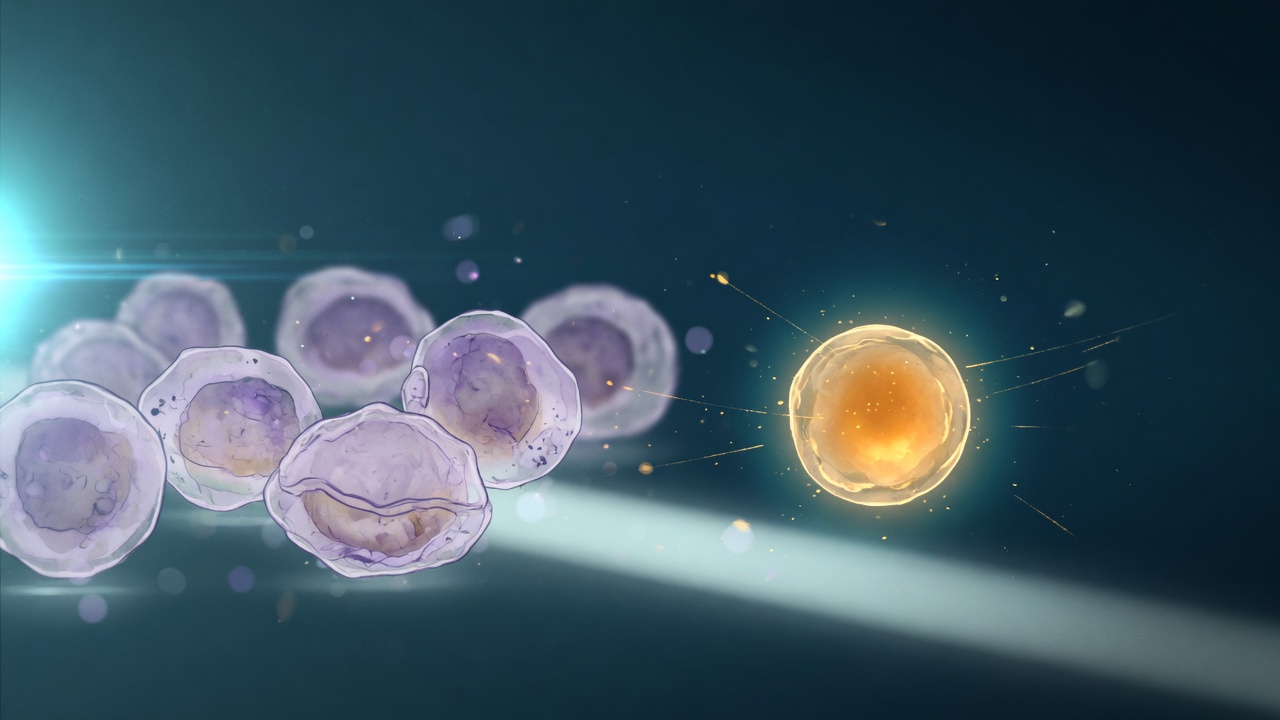
Credit: AI-generated illustration. · HeadLines Decoded LLC
Illustration generated with AI (Grok).
Most of your cells live on a pretty simple schedule. They split when the body needs more of them, they do their job, and when they are worn out they either quietly die off or get cleaned up by the immune system. Some cells don’t follow that script. After enough wear and tear, a bad injury, or just dividing too many times, a cell can slip into a state called senescence. It stops dividing, but it doesn’t die. It just sits there, still switched on, leaking a steady stream of inflammatory chemicals. Scientists gave that stream a mouthful of a name, the senescence-associated secretory phenotype, or SASP for short.
You have probably heard these called “zombie cells,” because they are not really working and not really dead. It is a catchy name. It is also a little misleading. Senescence isn’t one single thing, and it isn’t always the bad guy. That is the part worth getting straight before anyone starts selling you drugs or supplements that promise to clear these cells out.
What Triggers Senescence
There is more than one way for a cell to end up here. The classic one is plain old age at the cell level. Every time a cell divides, the little caps on the ends of its chromosomes, called telomeres, get a bit shorter, and once they wear down far enough the cell calls it quits. But a cell can also flip into this state after a rough time, DNA damage, too much oxidative stress, a cancer-type gene switching on, anything that would make it risky to keep dividing. And here is the surprise: sometimes senescence isn’t damage at all. Your body uses it on purpose while a baby is developing and while tissue is being reshaped.
However a cell gets there, what comes next looks about the same. It slams on the brakes, using proteins with clunky names like p16INK4a and p21CIP1 that basically lock the door on dividing again. It changes shape. And it starts pumping out that SASP mix. What is in the mix depends on the cell and on what tipped it over, but it is usually inflammatory signals and enzymes that start chewing at the tissue around it.
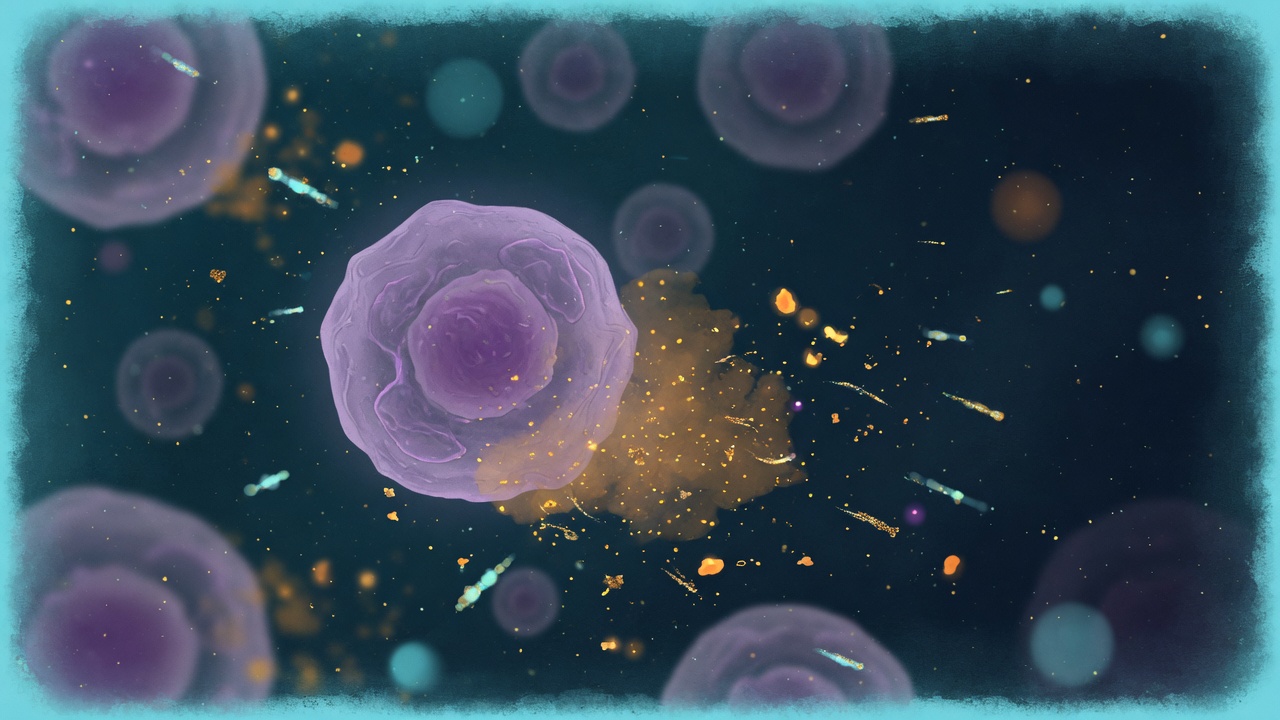
Beneficial and Harmful Roles
In a young, healthy body, one of these cells can actually be doing you a favor. If a cell is damaged or drifting toward cancer, freezing it in place is exactly what you want. Senescent cells also pitch in when you are healing a cut or rebuilding tissue. And when the job is done, a healthy immune system usually finds them and clears them out.
The trouble starts when they stick around too long. As you get older, or if you are carrying a chronic illness or a lot of stress, these cells pile up faster than the body can clear them, and the ones that linger keep leaking that inflammatory stew. That slow, steady drip has been tied, in both animal studies and human data, to a lot of what we call getting old, and to specific problems too, the lung scarring doctors call pulmonary fibrosis, achy arthritic joints, parts of heart disease, and the kind of damage behind some brain diseases.
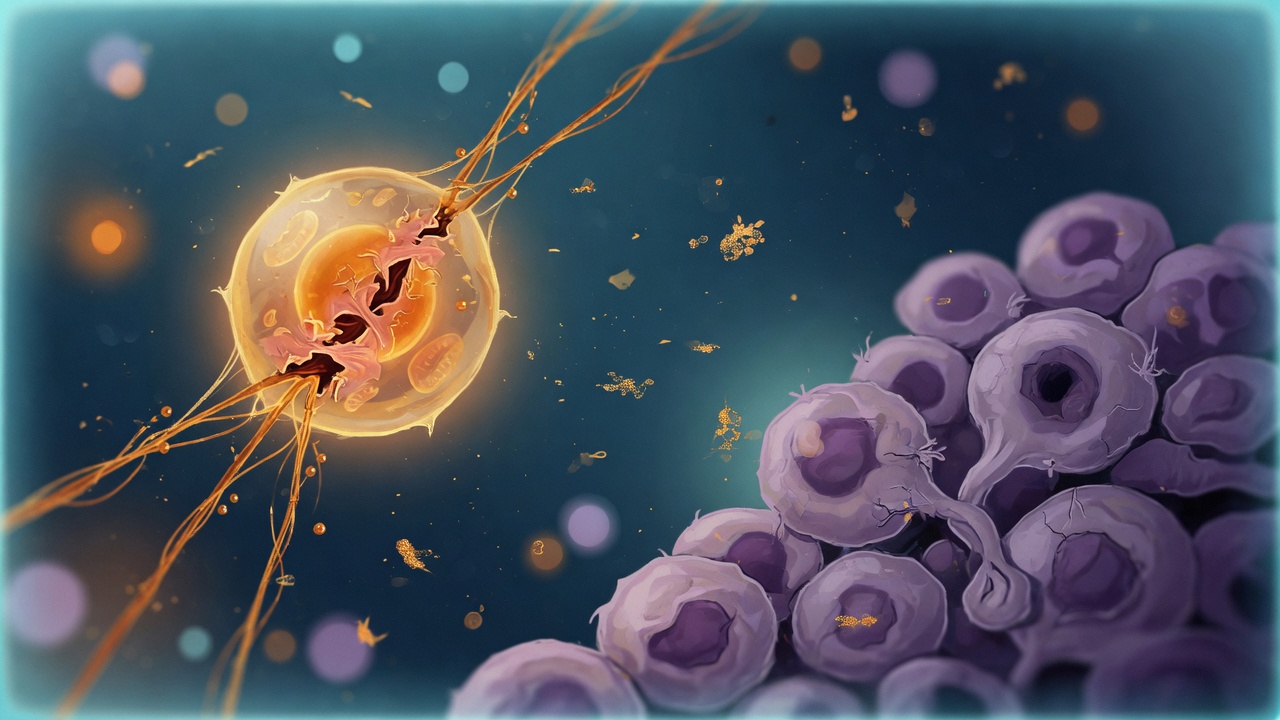
So the goal was never to hunt down and kill every last senescent cell. You actually want some of them around. The trick is clearing out the ones causing trouble while leaving the helpful ones alone. The early attempts were pretty heavy-handed. The newer work is trying to be a lot more picky about it.
How Researchers Identify Senescent Cells
Being picky is harder than it sounds, because there is no single tag that says “this one is senescent.” Researchers have to read a few clues at once, higher levels of those p16 or p21 proteins, a particular marker they can stain for, leftover signs of DNA damage, and that SASP chemical signature. And it changes from tissue to tissue, which is a big reason the animal studies and the small amount of human data can be tricky to read.
The strongest evidence so far comes from mice. Researchers at the Mayo Clinic built mice where they could flip a switch and clear out the senescent cells whenever they wanted, then watched what happened. And what happened got everyone’s attention: the animals moved better, dodged some age-related problems, and in certain groups even lived longer on average. That is the finding that kicked off the hunt for a pill that could do the same thing in a regular body, with no genetic engineering involved.
From Concept to Pharmacological Target
The best-known candidate isn’t one drug, it is a combo. Back in 2015, a team led by James Kirkland at the Mayo Clinic found that an old leukemia drug called dasatinib, paired with quercetin, a compound you will find in plenty of fruits and vegetables, could knock out senescent cells while mostly leaving the healthy ones alone. That pair, usually just called D+Q, is still the one everyone measures against. A few others have turned up since, like fisetin, another plant compound that happens to be concentrated in strawberries, and navitoclax, a repurposed cancer drug. Navitoclax works, but it also drops your platelet count, which is a good reminder that “senolytic” does not mean “harmless.”
When a drug’s whole job is to clear these cells out, it gets called a senolytic. There is a gentler cousin, called a senomorphic, that leaves the cell alive but tries to quiet down the harmful chemicals it is leaking. Both are still very much in the experimental stage when it comes to aging.
Here is the thing to hang onto: a good theory and some exciting results in mice are not the same as a treatment proven to work in people. The gap between those two is the whole ballgame. The next piece in this series digs into what the human trials actually show as of 2026. That distance, between what worked in a mouse and what has held up in an actual person, is the single most important thing to keep in mind before you buy anything built on the “zombie cell” pitch.
So here is the bottom line: senescent cells are real, and they genuinely cut both ways, a help in one moment and a problem in another. The truth is messier, and more interesting, than the “zombie” nickname makes it sound. And that mess is exactly what the marketplace is about to smooth over and sell you.
Built against current standards generation: E.G. v4.16 · I.R.G. v1.13 · L.R.G. v1.9 · P.L.G. v1.10. As of August 2026.
Editor written. AI used for spelling and grammar only.