Amendment 3 Is Sold to Seniors Florida Already Protects Twice
The face on the mailer is a retiree, and for the cash-poor senior the case is real. But the break isn't targeted, Florida already shields seniors two other ways, and the services they lean on are the ones it cuts.

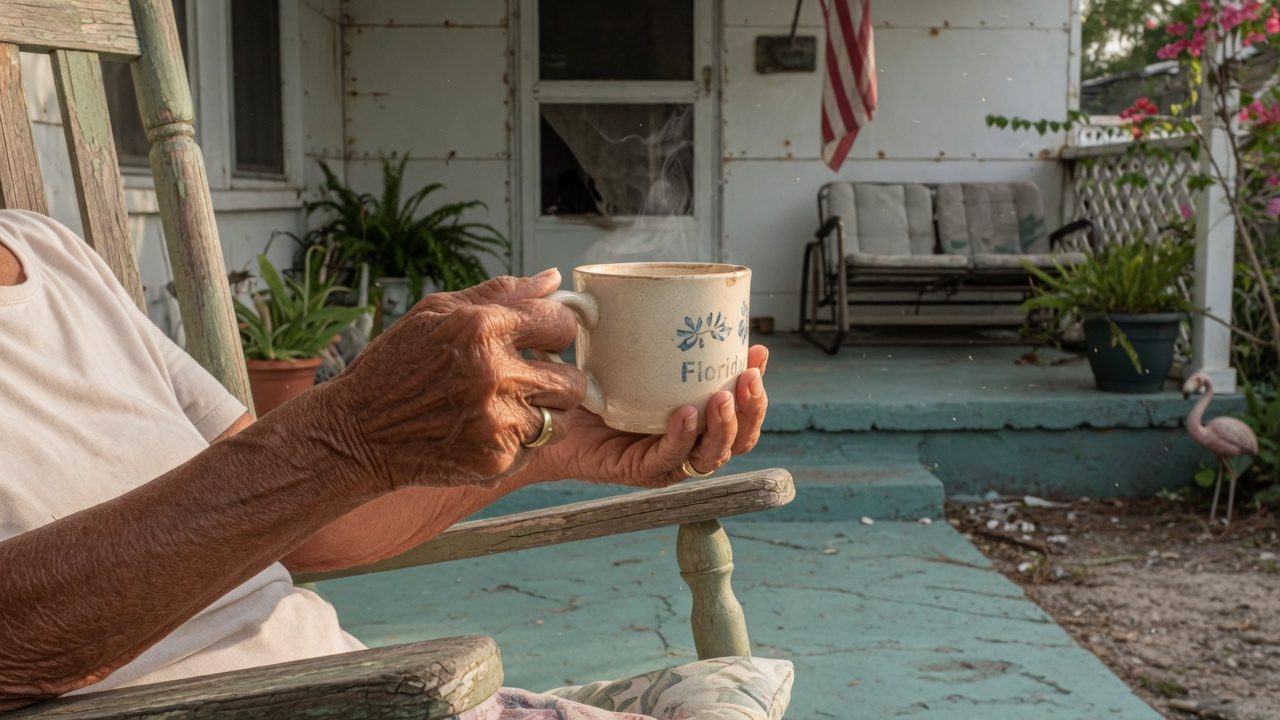
- The strongest case for Amendment 3 is the retiree on a fixed income, and it’s a real case. For a house-rich, cash-poor senior, wiping out the non-school tax bill can mean a month of groceries back in the budget.
- In Lake County, more than a quarter of us are 65 or older, so this reaches a lot of people. And it does it automatically, with no income test and no paperwork.
- The honest catch: the break isn’t targeted. The bigger your home, the bigger your cut, so most of the money goes to seniors who need it least.
- And Florida already shields long-time senior owners two other ways. Meanwhile the services a struggling senior leans on hardest are the ones this cut squeezes.
Every ballot measure gets sold with a face in mind. For Amendment 3, that face is the retiree on a fixed income, and the message is that this one is for her. I want to take that seriously instead of waving it off, because it’s the best argument the yes side has, and it deserves a fair hearing before I complicate it.
The strongest version of the yes case
Consider the owner this pitch is built for. A long-time homeowner on a fixed income, living on Social Security and maybe a small pension, in a house that has been paid off for years. It’s worth a good deal on paper and does nothing to help buy groceries. Every bill holds steady or falls except one. The property tax keeps coming, and it keeps climbing, and no raise is coming to meet it. That is not a rare situation in Lake County, where more than a quarter of residents are 65 or older.
For that owner, Amendment 3 is not abstract. Run the math from Part 3 on a modest paid-off home and the non-school tax bill doesn’t just shrink, it can nearly vanish. A $250,000 exemption swallows most or all of the taxable value on a lot of older homes in this county. That could hand a fixed-income senior well over a thousand dollars a year. To someone counting prescription copays, that is not a rounding error. That is real.
The part I find genuinely persuasive is that it reaches these owners without making them ask. Florida has targeted senior programs already, but they come with income limits and forms and the quiet indignity of proving to a clerk that you’re poor enough to qualify. Amendment 3 skips all of that. It lands automatically, the same way for everyone who owns and lives in their home. In a county where more than one in four residents is over 65, an automatic break with no paperwork is not nothing. Simplicity is its own kind of mercy.
Where the pitch starts to wobble
Now the complication, and it’s not a gotcha. It’s the rest of the picture the pitch leaves out of frame.
The break is not aimed at the struggling senior in particular. It’s aimed at every homesteaded house, and the more the house is worth, the more the owner saves, right up to the cap. The retired surgeon in the lakefront home gets the full benefit. So does the comfortable couple with the boat. A program truly built for the struggling senior would check income, the way the existing ones do. This one doesn’t, which means most of the dollars flow to retirees who were never in any danger of losing the house. If the goal is helping the vulnerable senior, this is a very expensive way to do it, because most of the money goes somewhere else.
There’s a second thing the pitch leaves out, and it surprised me. Florida already protects long-time senior owners from the scary part. The Save Our Homes cap holds the yearly rise in a homesteaded property’s assessed value to 3 percent or inflation, whichever is lower. So the nightmare version, where a long-time owner’s assessment doubles and taxes them out of the house, mostly can’t happen to someone who’s owned for decades. Their taxable value has been crawling, not spiking. On top of that, the state already offers an extra exemption of up to $50,000 for seniors 65 and older whose household income is under roughly $36,600, in counties that adopt it. The most sympathetic person in the pitch, the low-income senior, is the one Florida already helps the most.
The part that actually worries me
What I keep circling back to is this. Seniors on fixed incomes are not just taxpayers. They are, more than most of us, customers of the county. When one of them falls, ambulance response time is a lifeline. The senior-center lunch, the library, the county van that gets someone to a doctor when they can no longer drive, the in-home aide checking in twice a week: those are county services, paid for out of exactly the pot this amendment drains.
Go back to that spending fence from Part 2, the “solely for core public needs” clause. Read the list and ask where the senior van and the meal program sit. Public safety is protected. A hot lunch for an 80-year-old is not obviously on the list. So the same measure that hands these owners a tax cut may thin the services they lean on when the cut isn’t enough. For the comfortable retiree, that trade is a clear win: more money, services he rarely uses. For the frail senior living alone, it’s a real gamble, and that senior is exactly who the pitch puts front and center.
None of this makes the yes case dishonest. A lot of seniors will be helped, some of them meaningfully. It means the slogan and the substance point in slightly different directions. The amendment is sold as targeted relief for the vulnerable, and it works out as broad relief for everyone who owns, weighted toward those who own the most, funded by shrinking the services the vulnerable use.
What it means for you: If you’re a senior on a tight fixed income in a modest paid-off home, this probably helps you, and you should weigh that seriously. Just also weigh what happens to the services you may need later, and check whether you already qualify for the low-income senior exemption, because you might be leaving money on the table right now. If you’re a comfortable retiree, be honest that the case being made in your name fits your neighbor better than it fits you. Part 5 is the last one, and it’s about the politics: who’s pushing this, who’s fighting it, and the one tell that says the most.
- U.S. Census Bureau and Florida Office of Economic and Demographic Research data on the share of Lake County residents age 65 and older.
- Florida’s Save Our Homes assessment cap, limiting annual homestead assessment increases to 3 percent or CPI, whichever is lower.
- Florida’s additional homestead exemption for low-income seniors age 65 and older (income threshold roughly $36,600 for 2026), adopted by county option.
- Text of the proposed constitutional amendment, including the exemption schedule and the “solely for core public needs” spending provision; Lake County Property Appraiser millage rates.
Editor written. AI used for spelling and grammar only.