The Whole Story on Florida Amendment 3, From the Ballot Fight to Your Bill
Florida's Amendment 3 rewrites your property tax bill, and the mailer leaves out most of the machinery. We took it apart in five parts. Start here.

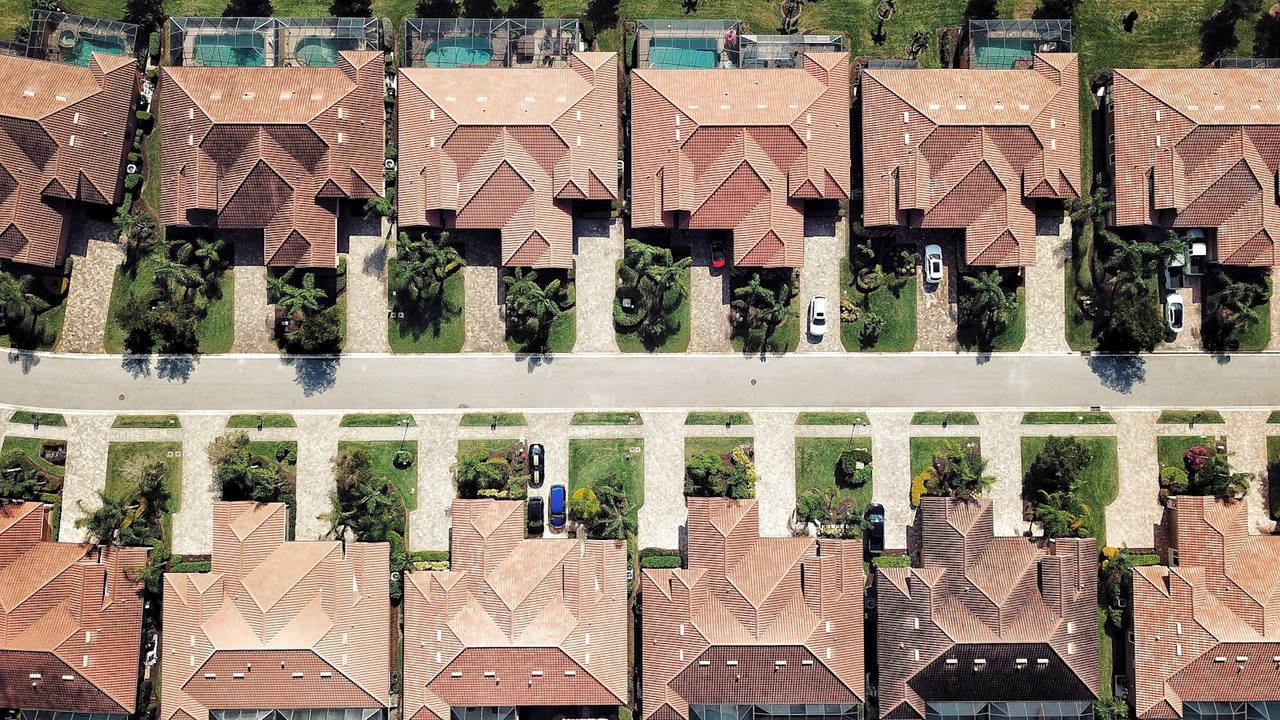
Amendment 3 is on your Florida ballot on November 3rd, and the first thing worth knowing is that the name the state wanted to print on it got thrown out. A Leon County judge looked at “Save Our Homes From Excessive Property Taxes” and said that reads like a pitch, not a description, and a ballot is supposed to explain. That is a fair warning about the whole measure. It does real things to your tax bill, to your county’s budget, and to the services that budget pays for, and almost none of it fits on a mailer.
So we did not try to cram it into one article. We took it apart in five, each answering one plain question, and gathered them here. Start at the top, or jump to the part you actually need.
The short version
If you read nothing else, read this:
- Amendment 3 raises the homestead exemption on the non-school part of your bill from $50,000 today to $150,000 in 2027 and $250,000 in 2028, then lets it climb with inflation. Your school taxes do not change.
- The cut is real. On a modest paid-off home it can wipe out most of the non-school bill. Run through my own Clermont house, it comes to about $1,960 a year once it fully lands.
- Every dollar it cuts is a dollar your county and city stop collecting. The state’s nonpartisan estimators put the recurring loss near $12 billion a year once the full exemption is in.
- It is not aimed at the struggling homeowner. Every homesteaded house gets it, and the more the house is worth, the bigger the break, right up to the cap.
- It also fences what is left of local property tax to “core public needs,” which is where the fight over libraries, senior vans, and county services begins.
The five parts
A series by Todd Ruffner-Schoenfeld.
Since Part 5 ran on Aug. 30, the fight over the ballot wording has gone quiet. The state did not appeal Judge Frank's ruling. Gov. DeSantis said on Aug. 6 that he disagreed with it but would not challenge it, and Jeff Brandes, one of the challengers, said the rewrite "more accurately describes what voters are being asked to decide." No new challenge to the rewritten language had been reported as of Sept. 24.
The polls land on both sides of the 60 percent line. The University of North Florida's Public Opinion Research Lab surveyed 848 likely voters from July 8 to 17, before the wording was rewritten, and found 61 percent support from a basic description. Support fell to 45 percent once people heard an estimated local budget shortfall. The James Madison Institute, a free-market think tank in Tallahassee, polled 1,400 registered voters July 20 to 26 and found 74 percent support, with 55 percent saying the cuts were justified even if local spending had to fall. St. Pete Polls, surveying on Sept. 17, put support at 45 percent. Asked about it the next day, DeSantis said, "It's a live issue. I don't know if it's going to pass with 60%."
Part 5 described a quiet yes side, and that has changed. Florida Realtors launched a Vote Yes on 3 campaign on Sept. 9, with its 2026 president, Chuck Bonfiglio Jr., saying Floridians "need meaningful relief." On Sept. 14 the Republican Party of Florida endorsed the amendment, and its chairman, Evan Power, said it "puts money back in the pockets of people who own their homes." Miami-Dade Sheriff Rosie Cordero-Stutz came out for it on Sept. 23, saying voters "should not be led to believe that saving money on their property taxes must mean fewer deputies or weaker public safety."
That put her at odds with the Florida Sheriffs Association. At a Sept. 15 event urging a no vote, the association's president, Marion County Sheriff Billy Woods, estimated his office could lose about $54 million, roughly a fifth of its budget, and Polk County Sheriff Grady Judd called the measure "a trainwreck." Wayne Bernoska, president of the Florida Professional Firefighters, stood with them. The organized campaign against it is called Save Our Services, No on 3. On Sept. 18, Florida TaxWatch, a nonprofit government watchdog led by former Lt. Gov. Jeff Kottkamp, recommended a no vote. Its analysis says relief "is needed by homestead property owners and non-homestead property owners alike" and warns that without limits on local spending, the lost money "will simply be passed on to non-homestead property owners or replaced with other taxes, fees and assessments."
Newer local estimates have come out as well. Florida TaxWatch projects about $45.8 billion in lost local property taxes over the five budget years from 2027-28 through 2031-32, with Miami-Dade County losing the most, about $5.16 billion, and Lake County, where Part 3 did its math, about $930.9 million. Palm Beach County Property Appraiser Dorothy Jacks puts the loss to the county government's share alone at about $324 million, and on Sept. 23 her office opened an online calculator that shows a homeowner's savings next to the local loss. Miami-Dade County's own estimate, as reported by NBC Miami, puts the initial loss there at about $386 million.
If the amendment passes, it takes effect Jan. 1, 2027, and according to the Pinellas County Property Appraiser the larger exemption first shows up on the TRIM notices mailed in August 2027. Part 3 showed that the gross cut becomes the net cut only if local tax rates hold, so much then depends on the millage rate, the property tax rate each county commission and city council sets every September, and on whether new or higher fees follow, such as the fire and stormwater assessments Part 2 flagged. What "solely for core public needs" allows may also end up in court. If the amendment falls short of 60 percent, the non-school homestead exemption stays at $50,000 and non-homestead assessments can keep rising up to 10 percent a year.
Where to start
New to it, start with Part 1 and read straight through. If you only want the number for your own house, Part 3 is the one with the math you can copy. And whatever the mailer in your driveway tells you, remember that the people who wrote the amendment could not get its own name past a judge.
- Text of the proposed constitutional amendment: homestead exemption on non-school levies rising to $150,000 in 2027 and $250,000 in 2028, indexed to inflation after, with no change to school taxes and a “solely for core public needs” spending provision.
- Florida Revenue Estimating Conference: recurring statewide revenue loss near $12 billion a year once the full exemption is in effect.
- Florida Policy Institute: Amendment 3 ballot summary and the spending-restriction language.
- Leon County Circuit Court, August 2026: ruling striking the state’s proposed ballot title; revised title from the Attorney General.
- Lake County and Pinellas County Property Appraisers: millage rates, the exemption schedule, and county-level revenue estimates. Florida Department of Revenue: TRIM notice and homestead exemption structure; Save Our Homes assessment cap.
- Florida Phoenix and Florida Politics: the politics of Amendment 3, including the sheriffs’ and firefighters’ opposition.
Florida Amendment 3
5 partsA series by Todd Ruffner-Schoenfeld.
Amendment 3 asks Florida voters on Nov. 3, 2026 whether to cut property taxes on the homes people live in, and it got there only after a court fight over its wording. On Aug. 4, Leon County Circuit Judge David Frank ruled the ballot language “clearly and conclusively defective” and threw out the title in the Legislature’s resolution, “Save Our Homes From Excessive Property Taxes,” as “more akin to a political slogan.” The suit came from a nonprofit called Save Our Voters From Misleading Ballot Language, joined by former Republican state Sen. Jeff Brandes and former Democratic U.S. Rep. Al Lawson. Attorney General James Uthmeier filed new wording on Aug. 13. The title voters will see now reads “Increased Homestead Exemption; Lower Cap on Increases in Non-Homestead Property Assessments.”
Lawmakers put the measure on the ballot in a June special session. Rep. Toby Overdorf, a Palm City Republican, carried it in the House, and Sen. Bryan Avila carried it in the Senate. A homestead exemption is the slice of value the county sets aside before it figures the tax on a home its owner lives in full time. If at least 60 percent of voters say yes, the exemption on the non-school part of the bill goes from $50,000 today to $150,000 in 2027 and $250,000 in 2028, then rises with inflation starting in 2029. School taxes do not change, and renters get no exemption at all. People who become Florida residents in 2027 or later start at $50,000 and reach the larger amount in their fifth year. The Revenue Estimating Conference, the state’s official forecasting panel, puts the recurring loss to local governments at about $11.9 billion a year once fully in place.
Todd Ruffner-Schoenfeld wrote the series in five parts. Part 1 explains how the exemption works and what the amendment changes, including a second provision that gets less attention: it lowers the yearly cap on assessment increases for property that is not a homestead, such as rentals and commercial buildings, from 10 percent to 5 percent. Part 2 follows the money and shows that once inflation adjustments begin, the loss grows every year on its own. The part also explains why a line heard at commission meetings, that the amendment wipes out half a city budget, does not hold: property tax is one source of local money among several, and only the homestead share is cut. The smaller cap also makes it harder for a county to make up the difference from commercial property and rentals. The same part looks at a clause requiring what is left of local property tax to be spent “solely for core public needs.” The Florida Policy Institute, a nonprofit that studies the state budget, reads that as a hard limit, and the Pinellas County Property Appraiser’s office reads it as a loose one.
In Part 3, Todd runs the numbers on his own house, rounding its taxable value to $300,000. Using Lake County’s 2025 rates, he finds a gross cut of about $1,960 a year once the amendment is fully in, while the roughly $1,670 school portion of the bill does not move. That figure assumes local tax rates stay put, which nothing in the amendment promises. Part 4 gives its due to the case supporters make to retirees on fixed incomes, then notes that the break goes to every homesteaded house regardless of income, and that Florida already protects long-time owners through the existing Save Our Homes cap on how fast a homestead’s taxable value can rise and, in counties that adopt it, an extra exemption for low-income seniors. Part 5 turns to the politics. Gov. Ron DeSantis said in June he would not formally campaign for this version because “what the Legislature did wasn’t my proposal.” Lawmakers had dropped the state fund for local shortfalls and the school-tax relief he wanted.
If the subject is new to you, start with Part 1. For the figure on your own house, Part 3 walks through the five-minute math using your TRIM notice, the proposed-tax statement your county property appraiser mails every August.
Since Part 5 ran on Aug. 30, the fight over the ballot wording has gone quiet. The state did not appeal Judge Frank's ruling. Gov. DeSantis said on Aug. 6 that he disagreed with it but would not challenge it, and Jeff Brandes, one of the challengers, said the rewrite "more accurately describes what voters are being asked to decide." No new challenge to the rewritten language had been reported as of Sept. 24.
The polls land on both sides of the 60 percent line. The University of North Florida's Public Opinion Research Lab surveyed 848 likely voters from July 8 to 17, before the wording was rewritten, and found 61 percent support from a basic description. Support fell to 45 percent once people heard an estimated local budget shortfall. The James Madison Institute, a free-market think tank in Tallahassee, polled 1,400 registered voters July 20 to 26 and found 74 percent support, with 55 percent saying the cuts were justified even if local spending had to fall. St. Pete Polls, surveying on Sept. 17, put support at 45 percent. Asked about it the next day, DeSantis said, "It's a live issue. I don't know if it's going to pass with 60%."
Part 5 described a quiet yes side, and that has changed. Florida Realtors launched a Vote Yes on 3 campaign on Sept. 9, with its 2026 president, Chuck Bonfiglio Jr., saying Floridians "need meaningful relief." On Sept. 14 the Republican Party of Florida endorsed the amendment, and its chairman, Evan Power, said it "puts money back in the pockets of people who own their homes." Miami-Dade Sheriff Rosie Cordero-Stutz came out for it on Sept. 23, saying voters "should not be led to believe that saving money on their property taxes must mean fewer deputies or weaker public safety."
That put her at odds with the Florida Sheriffs Association. At a Sept. 15 event urging a no vote, the association's president, Marion County Sheriff Billy Woods, estimated his office could lose about $54 million, roughly a fifth of its budget, and Polk County Sheriff Grady Judd called the measure "a trainwreck." Wayne Bernoska, president of the Florida Professional Firefighters, stood with them. The organized campaign against it is called Save Our Services, No on 3. On Sept. 18, Florida TaxWatch, a nonprofit government watchdog led by former Lt. Gov. Jeff Kottkamp, recommended a no vote. Its analysis says relief "is needed by homestead property owners and non-homestead property owners alike" and warns that without limits on local spending, the lost money "will simply be passed on to non-homestead property owners or replaced with other taxes, fees and assessments."
Newer local estimates have come out as well. Florida TaxWatch projects about $45.8 billion in lost local property taxes over the five budget years from 2027-28 through 2031-32, with Miami-Dade County losing the most, about $5.16 billion, and Lake County, where Part 3 did its math, about $930.9 million. Palm Beach County Property Appraiser Dorothy Jacks puts the loss to the county government's share alone at about $324 million, and on Sept. 23 her office opened an online calculator that shows a homeowner's savings next to the local loss. Miami-Dade County's own estimate, as reported by NBC Miami, puts the initial loss there at about $386 million.
If the amendment passes, it takes effect Jan. 1, 2027, and according to the Pinellas County Property Appraiser the larger exemption first shows up on the TRIM notices mailed in August 2027. Part 3 showed that the gross cut becomes the net cut only if local tax rates hold, so much then depends on the millage rate, the property tax rate each county commission and city council sets every September, and on whether new or higher fees follow, such as the fire and stormwater assessments Part 2 flagged. What "solely for core public needs" allows may also end up in court. If the amendment falls short of 60 percent, the non-school homestead exemption stays at $50,000 and non-homestead assessments can keep rising up to 10 percent a year.
Editor written. AI used for spelling and grammar only.