Justice Department Subpoenas Los Angeles Election Employees as Ballot Fight Continues
Subpoenas reached Los Angeles election employees in the middle of the Justice Department's court fight over California ballots. Dates to watch, and what the reporting says about the two sides' main claims.
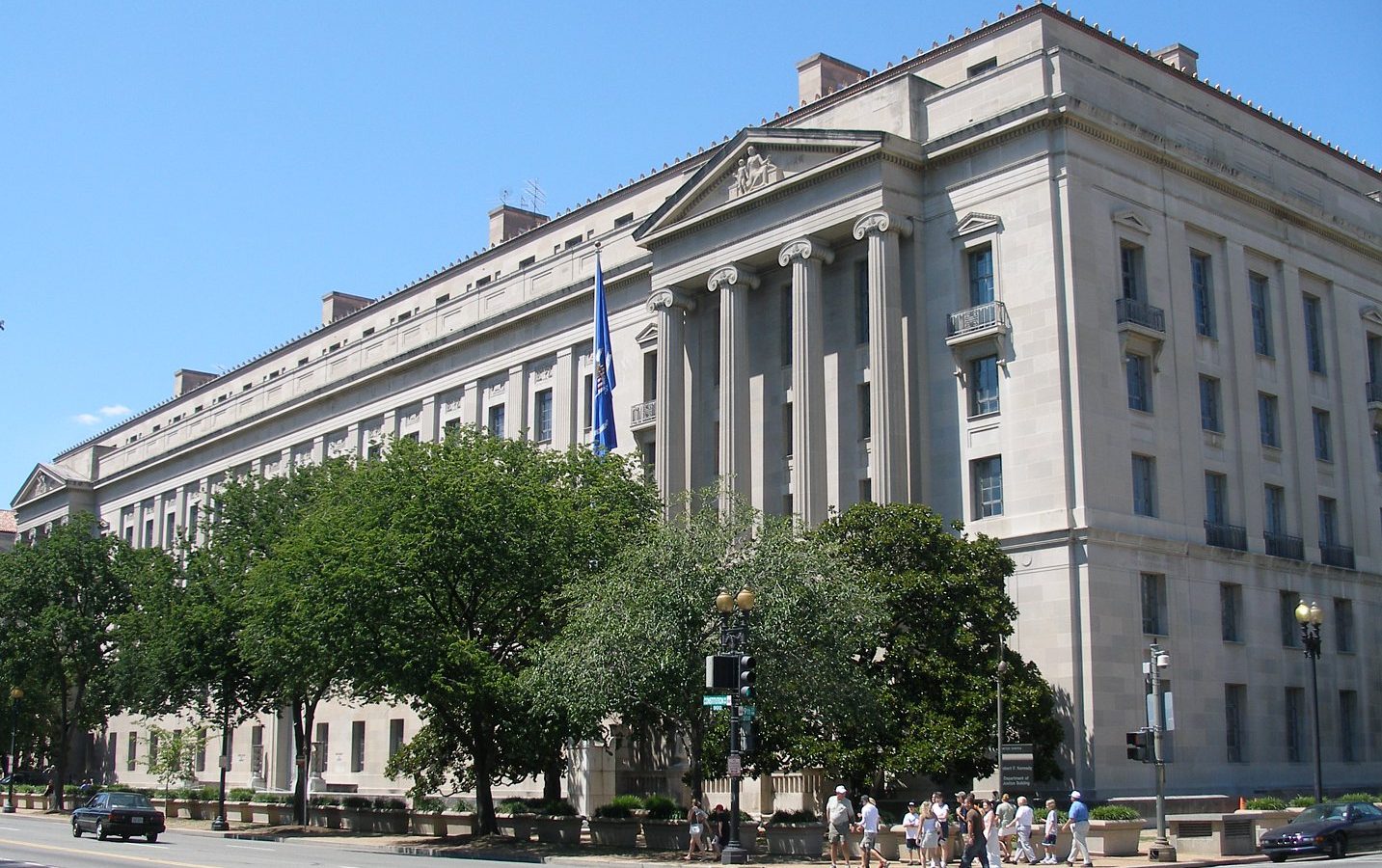
Credit: Photo: Coolcaesar, CC BY-SA 3.0, via Wikimedia Commons
I’ve been watching this story closely, and I’ll be honest: it sits uncomfortably with me. Both sides are accusing the other of election interference just days before the midterms. On one hand, federal law is crystal clear that noncitizens cannot vote in federal elections. On the other, decades of safeguards already exist, and the evidence of widespread noncitizen voting has never matched the rhetoric. So when subpoenas to California election workers come to light in the same week a federal judge wrote that threats against those same workers must stop, I have to ask the question that keeps coming up: is this an effort to stop interference by Democrats, or is the interference coming from the other direction?
Where things stand (October 30, 2026, 2:12 p.m. ET): Judge David O. Carter denied the Justice Department’s request for a temporary restraining order on October 28, and the department is appealing. The case now runs on two tracks, one in the Ninth Circuit and one before Carter, and the dates to watch are listed below.
How the Case Got Here
The department gave California and Los Angeles County a list of more than 20,000 voters it says are likely noncitizens on October 13 and sued on October 15, per Democracy Docket. On October 19 it announced charges against 28 lawful permanent residents (ABC7). Three subpoenas sent October 21 went to employees of the Los Angeles County Registrar-Recorder’s office, six days after the civil suit, ordering them to appear in court on November 4, the day after Election Day, according to LAist and AP. The sources differ on details. ABC News, in a report dated October 30, says the department “on Thursday issued grand jury subpoenas to local election officials in California” and that some Los Angeles employees received them “last week,” while LAist and AP date the three subpoenas October 21 and do not mention a grand jury. Reuters reports that at least 49 of the subpoenas nationwide “were issued under the authority of grand juries,” which does not confirm that the three Los Angeles subpoenas were among them. “Grand jury” in this piece is ABC’s term, and the subpoenas themselves are not among the documents linked here.
ABC News reported that the subpoenas seek “any internal documents or communications about the federal government’s requests” to Secretary of State Shirley Weber on noncitizen voting. In a letter to Los Angeles officials, Acting Deputy Attorney General Trent McCotter wrote that noncitizen voting in federal elections “is a federal crime” and that knowingly helping it happen is “equally unlawful,” per the same ABC report. A Justice Department spokesperson told ABC the department “does not comment on leaks about alleged grand jury subpoenas.”
The Los Angeles subpoenas are part of a wider campaign. Reuters reported that the administration has issued more than 100 subpoenas seeking records on tens of thousands of voters in at least 13 states, including at least 17 in California to jurisdictions such as Los Angeles and San Diego counties.
On October 26 the Ninth Circuit dismissed the department’s first emergency appeal, 2-1, because Carter had not yet ruled on its request; Democracy Docket reports the majority said the department had not given him enough time. At the October 27 hearing Carter said he did not want to “just wing it with a ruling” on evidence the government filed the night before, CalMatters reported. On October 28 he denied the restraining order. CBS News describes a 26-page decision in which Carter wrote that “Never before in American history has the federal government, on the eve of an election, sought to coerce a state and local government to abandon their own Constitutional elections procedures and bend to the will of the Executive Branch,” and said he “cannot conclude that plaintiffs’ process is credible.” Democracy Docket reports he found the government likely lacks standing and a cause of action and that the remedy it sought would likely violate several federal voting laws. LAist quotes him warning that the move could “wreak havoc and disrupt the election that is already underway.” The department filed a notice of appeal that night (PoliAlert) and renewed its request to the Ninth Circuit (MyNewsLA). On October 29 Carter appointed special master Daniel B. Garrie and set a November 13 evidentiary hearing on the renewed request for a preliminary injunction (LAist, citing AP and NPR). The evidence itself is still untested.
The Next Four Checkpoints
Four checkpoints a reader can follow, in date order.
November 3, Election Day. Watch whether ballot processing keeps going under state law while the appeal is pending (PoliAlert).
November 4, the Los Angeles appearances. Watch whether the subpoenaed employees show up as ordered and whether anyone challenges the subpoenas.
November 13, the evidentiary hearing. Watch what Garrie reports; Carter said he would be tasked with “developing the factual record,” and the judge will rule on the injunction afterward (LAist).
No date set, the Ninth Circuit. The department asked for a ruling “as soon as possible” because of “irreversible ballot processing occurring on an ongoing basis” (LAist, citing AP). None of the cited sources reports a ruling as of 2:12 p.m. ET on October 30. The separate opinions from the October 26 panel do not bind an appeal of Carter’s ruling (Democracy Docket).
Claim Check: Four Claims Against the Reporting
Each card pairs one central claim with how it holds up today. The tag covers only what the linked sources confirm.
CLAIM: About 20,000 California voters are likely noncitizens.
Who says it: the Justice Department.
Verdict: DISPUTED. Carter wrote that he “cannot conclude that plaintiffs’ process is credible” (CBS News). In a court filing, Los Angeles County reviewed a sample of 200 names from the federal list (CalMatters), and the NPR account on LAist says a significant portion “had said in records they were born in the U.S.” Bill Essayli, the first assistant U.S. attorney in Los Angeles, said at the hearing that federal investigators re-reviewed those 200 names and found only four were citizens (CalMatters). Separately, Reuters reports that California officials, calling the list unreliable, said “a review of 200 registrations found nearly 40% appeared to be US-born”; Reuters leaves open whether those are the same 200 as the county’s sample, so the federal and state figures come from different reviews. Nicolas Bartell of U.S. Citizenship and Immigration Services acknowledged the review found four of those people “might have a claim to U.S. citizenship” and, per the same account, said in court filings that his office’s review found none were U.S.-born, while Kassra Oskooi, an expert for the voting-rights groups in the case, told the court the matching “is likely to be unreliable” (LAist, citing NPR). Neither count has been tested in court. Weber’s letter adds that DHS first wrote in July that over 190,000 registered voters might be noncitizens, and that the list given to Los Angeles County held about 20,000 individuals statewide.
CLAIM: Noncitizen voting for federal office is a federal crime, and knowingly facilitating it is equally unlawful.
Who says it: Acting Deputy Attorney General Trent McCotter, in his letter to Los Angeles officials, as ABC reports it.
Verdict: UNSETTLED. The letter exists (ABC News), and those are the only words ABC quotes from it. ABC separately reports that the department “threatened to criminally prosecute election workers who knowingly tabulate ballots belonging to noncitizen voters,” without quoting the letter on that point. Carter has not decided whether the conduct the letter describes is unlawful. What he decided was the department’s request to stop California from processing the ballots: he denied it, and according to Democracy Docket he concluded the federal ban on noncitizen voting does not let the department override California’s ballot-processing rules (Democracy Docket).
CLAIM: Federal officials are threatening election workers.
Who says it: California officials. Registrar Dean Logan: “Threats and intimidation have no place in elections” (ABC News).
Verdict: CONFIRMED in part. In ABC’s words, the department “threatened to criminally prosecute election workers who knowingly tabulate ballots belonging to noncitizen voters” (ABC News). At the October 27 hearing Carter said “it would be wise that any threats to state or county (election) employees cease immediately” (CalMatters), and Democracy Docket reports his ruling condemned the threats: “These threats must stop,” he wrote (Democracy Docket).
CLAIM: Noncitizen voting in California is happening at a scale that justifies setting ballots aside.
Behind the claim: the Justice Department’s request to set the ballots aside, as argued by Bill Essayli. No filing quoted in this piece puts a number on the scale. Essayli asked: “I would ask the state how many illegal votes is OK for them?” and said state officials “just seem disinterested in getting to the bottom of this” (CalMatters).
Verdict: NOT SHOWN so far. In California, the department’s announced prosecutions in that sweep are the 28 people charged on October 19 (the national count is in the section below), and a charge is an allegation (ABC7). California’s Secretary of State’s office says federal officials alleged in July that noncitizens were on the rolls and, when asked for evidence, “refused and provided California with nothing” (NBC Los Angeles, which reports the July figure as about 19,000; the Secretary’s own letter says over 190,000). Attorney General Rob Bonta said the evidence shows “voter fraud is exceedingly rare,” citing counts, recounts, hand counts and audits, in the same NBC report.
The Registration Rules Behind the Dispute
It is a settled point of law that elections for federal office are reserved for U.S. citizens. 18 U.S.C. § 611 makes it unlawful for a noncitizen to vote in an election held solely or in part to choose a federal officer, with up to one year in prison as the penalty. It excepts a noncitizen who permanently resided in the United States before age 16, has parents who were each a citizen (for an adopted person, each adoptive parent) and reasonably believed he or she was a citizen. Separately, 18 U.S.C. § 1015(f) covers knowingly making a false claim of citizenship in order to register or vote, and carries up to five years. The National Voter Registration Act requires the federal registration form to carry an attestation that the applicant meets each eligibility requirement, including citizenship, signed under penalty of perjury. California’s instructions for the National Mail Voter Registration Form ask the same and also ask for a driver license or state ID number, or the last four digits of a Social Security number, according to the Secretary of State’s NVRA manual; Weber’s letter to the Justice Department cites Elections Code sections 2101 and 2111 for the sworn attestation and section 2200 and following for voter list maintenance.
Those safeguards rest on a sworn statement and an identification number rather than on documents proving citizenship; neither California source linked here describes a documentary-proof requirement. That is the policy choice Congress and the states have lived with for more than thirty years. Whether that choice is sufficient is a legitimate policy debate. Whether noncitizens are voting in numbers large enough to decide elections is a different question, one where I have not seen the public record support it at scale.
Who Has Been Charged in California
The October 19 California charges, per ABC7, cover 28 people the department describes as lawful permanent residents. They are charged with making false statements on naturalization applications and submitting fraudulent voter registrations; one, a 72-year-old Belize-born man, is accused of voting illegally in four elections. ABC7 gives no vote totals for any defendant. California had 23,164,977 registered voters in the Secretary of State’s Report of Registration as of September 4, 2026. Twenty-eight charged people is a small number, though it is not zero, and the charges are accusations, not convictions. None of the sources cited here gives a rate of noncitizen voting. Nationally, the same ABC7 report, which is AP copy, says the department said on Monday it had charged 113 people in 20 states with illegal voting and illegal registration offenses over the last several weeks, and that it earlier said it had charged about 90 people for various types of election misconduct this year, including 50 alleged to have voted as noncitizens; the report does not say whether those counts overlap.
None of this means zero noncitizens have registered or voted. Individual prosecutions are appropriate and should continue. It does mean that claims of systematic, election-changing noncitizen voting have not been substantiated by the cases actually brought or by the independent reviews that have been conducted. Georgia offers one data point: state officials there released a citizenship review that “found about 430 voters who cast ballots at some point over the past 30 years may not be citizens,” in a state with nearly 8.2 million registered voters, according to the Atlanta Journal-Constitution. The same article reports that a preliminary Census Bureau analysis of 128 million voters found with “high confidence” that 24,000 noncitizens illegally cast ballots, and that election experts have questioned its methodology, saying it could have generated false positives.
So I ran those numbers out. If every state flagged voters at Georgia’s rate, a national general election would have 738 of them. That figure takes Georgia’s 430 over the 15 federal general elections from 1996 to 2024, against nearly 8.2 million Georgia voters, and applies the result to the 211 million active registered voters the U.S. Election Assistance Commission counted for 2024. The Census Bureau’s disputed 2020 count is the high end. It found over 24,000 noncitizen voter records next to over 128 million it confirmed as citizens, and over 32 million records it has not checked yet. If those unchecked records look the same, 2020 had 29,999 noncitizen voters among nearly 160 million who voted. That is fewer than two in every 10,000.
When could a number that small decide anything? Only when a race comes down to a handful of votes, and only if nearly all of the illegal votes broke the same way. Minnesota’s 2008 Senate race went to Al Franken by 312 votes out of 2,887,646 cast. At the Census Bureau’s high rate, that race would have held 541 noncitizen ballots, and 79 of every 100 would have had to go to the loser to flip it. At Georgia’s rate, it would have held 13. In California, Adam Gray took the 13th District in 2024 by 187 votes. At the high rate, a race needs 997,520 ballots before it even holds 187 noncitizen votes. In a statewide or national race, that comes to next to nothing. Where it could matter is a small local race decided by a few votes, and that is exactly why each case should be prosecuted.
So Whose Interference Is This?
Carter wrote that by moving to have ballots sequestered, the administration embarked on “a broad, ongoing pattern of attempted election interference” (MyNewsLA); that was about the ballot request, and whether the subpoenas and the prosecution warning fit the same description is the open question. If California officials are refusing to act on credible individual leads and are thereby allowing illegal votes to be counted, that is the complaint Essayli voiced, quoted in the last claim card above.
Right now the public record shows a federal judge who has denied the government’s emergency request and has yet to hear the evidence; a small number of actual prosecutions; and a last-minute escalation of subpoenas and warnings of prosecution against the people who run the election. Both parties have an interest in framing the other as the one undermining democracy. The facts that can be verified today do not yet show that noncitizen voting is happening at the scale required to justify upending an election already underway. They also do not show that every safeguard is perfect or that every allegation is frivolous.
That is why this story is troubling. Elections are for citizens. The safeguards have been there for decades. The question of whether this particular set of subpoenas and threats constitutes election interference, and by which side, will be answered by what the evidence ultimately shows, not by the volume of the accusations.
For a voter, the practical points come from the Secretary of State. Mailed ballots must be postmarked on or before Election Day and received no later than seven days after it, which is November 10, and the Where and How to Vote page describes ballot tracking through Where’s My Ballot. The page advises mailing a ballot at least five days before Election Day, which was October 29; a ballot mailed on Election Day needs a hand-stamped postmark from a postal employee inside a United States Post Office. Returning it in person by 8 p.m. on November 3, at a secure drop box, polling place, vote center or county elections office, avoids relying on the postmark. A voter voting for the first time in a federal election who registered by mail or online and did not provide a California ID or Social Security number is told to send a photocopy of ID to the county elections official before voting the ballot; otherwise the county will contact the voter on receipt of the ballot to request proof of identity, and if identity cannot be verified the ballot envelope will not be opened and the ballot will not be counted, per the same page. Nothing in the reporting linked here changes how a California voter casts a ballot on November 3. Official voting information is on the California Secretary of State’s elections page.
Living Article note: This piece will be updated as court filings, subpoena responses or official statements become available. Last checked October 30, 2026, 2:12 p.m. ET.
- Democracy Docket, DOJ bid returns to Carter after Ninth Circuit dismissal (October 26, 2026)
- Democracy Docket, judge rejects DOJ demand (October 28, 2026)
- CBS News, judge rejects Trump California mail ballots (October 28, 2026)
- LAist and AP, judge denies bid to stop processing 20,000 ballots (updated October 29, 2026)
- CalMatters, noncitizen voting court hearing (October 27, 2026)
- PoliAlert, DOJ appeals California ballot case (October 28, 2026)
- MyNewsLA, DOJ renews appeal to Ninth Circuit (October 29, 2026)
- ABC News via Regional Media News, DOJ subpoenas California election officials
- ABC7, 28 charged in California sweep (October 19, 2026)
- Reuters via The Star, broad subpoena campaign (October 29, 2026)
- NBC Los Angeles, Trump administration and LA County
- California Secretary of State, Weber’s reply to DOJ (October 2026)
- California Secretary of State, NVRA manual, chapter 7
- California Secretary of State, Report of Registration (September 4, 2026)
- California Secretary of State, Where and How to Vote
- Atlanta Journal-Constitution, Caleb Groves, the hunt for noncitizen Georgia voters yields few results (September 2, 2026)
- U.S. Election Assistance Commission, 2024 Election Administration and Voting Survey release (June 30, 2025)
- U.S. Census Bureau, Noncitizen Voting in the 2020 Election: A Beginning Analysis (2026)
- Wikipedia, 2008 United States Senate election in Minnesota
- CalMatters, Republicans are spending millions to oust a Democrat who won by 187 votes (October 16, 2026)
- 18 U.S.C. 611
- 18 U.S.C. 1015
- 52 U.S.C. 20508
Reported and edited to HeadLines Decoded newsroom standards. E.G. v4.16 · I.R.G. v1.13 · L.R.G. v1.9 · P.L.G. v1.10.
Editor written. AI used for spelling and grammar only.