The Hard Sell on Whole-House Generators: What Gets Left Out of the First Quote
Hurricane season brings urgency, and some sales pitches bring more. The wiring and gas work behind a quoted price can turn it into something very different, and so can HOA rules. Here is what to get in writing before any money changes hands.


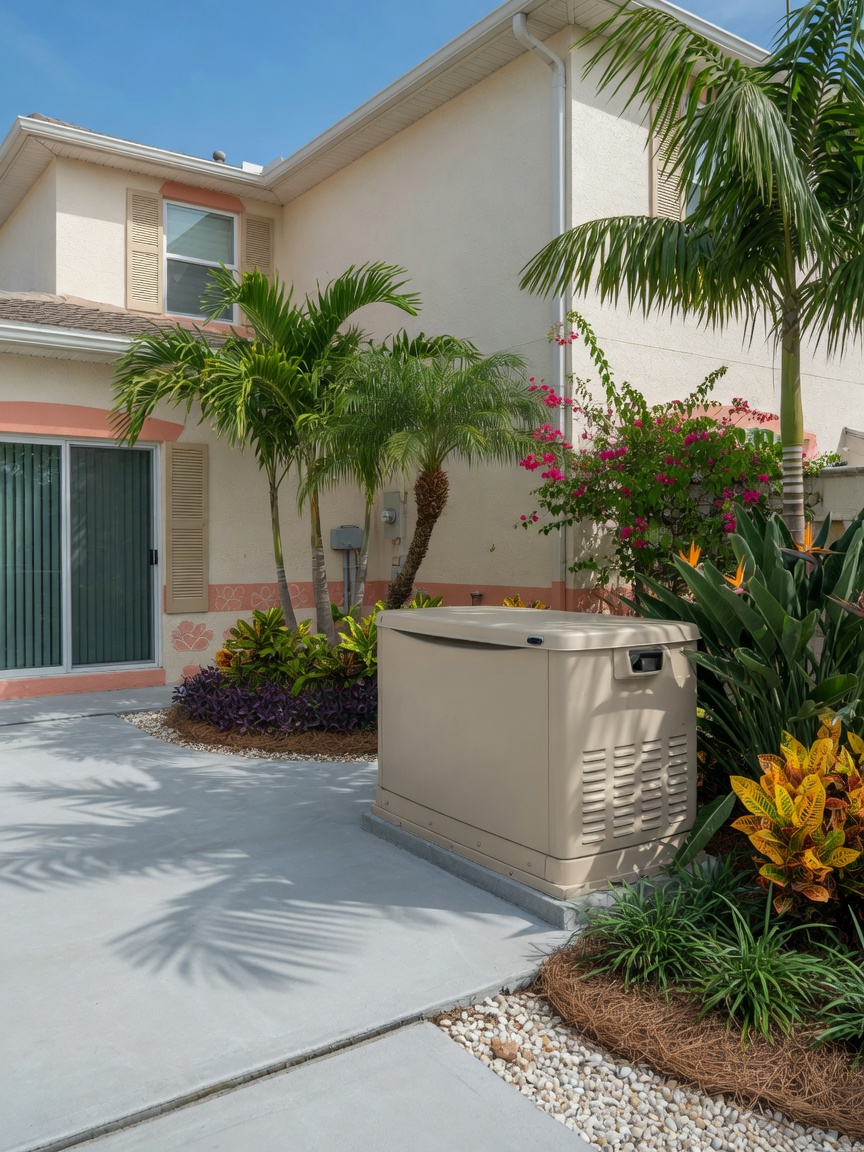
Credit: AI-generated illustration (Grok), generated in-house. HeadLines Decoded. · HeadLines Decoded LLC
Illustration generated with AI (Grok).
The generator on the pad beside the house is usually the honest part of the deal. The number on the first quote is where things get slippery. In Florida, an installed whole-house standby generator commonly runs anywhere from about $5,000 for a small essential-circuits unit to $18,000 or more for a whole-home system, and the spread inside that range is rarely just the machine. It is the electrical work, the gas work, the permits, and sometimes the HOA, and a good deal of it has a way of not appearing until after a deposit is paid.
The machines can be genuinely worth it. The sales process around them sometimes is not. This piece is about the second problem, and about what to get in writing before any money changes hands.
The urgency is real. The pressure is a tactic.
The pitch tends to arrive in the weeks before hurricane season or right after a storm has left the neighborhood dark. The language is consistent: limited inventory, financing that expires if you wait, the danger of the next outage, the duty to protect aging parents or someone on medical equipment. None of those concerns is invented. Multi-day outages are real, and Florida gets more of them than most places.
The tactic is not the concern itself. It is the compression. When a decision is framed so that comparison shopping and a careful read of the contract feel like dangerous delay, that is the moment to slow down rather than speed up. A generator you buy in a hurry is still bolted to your house and your bank account long after the storm has passed.
A single turnkey price is the usual vehicle. It looks like it covers everything. In practice it often covers the generator, a basic transfer switch, and a standard install under ideal conditions. Anything outside ideal, an older or full electrical panel, a long gas run, flood-zone elevation, an HOA review, becomes a change order later, after the unit is ordered and walking away has gotten expensive.
Where the quote quietly grows
These are the line items that most often expand a Florida quote after the fact. None of them is illegitimate on its own. The problem is timing: they belong in the first quote, not the third invoice.
- Electrical panel or service upgrade. Plenty of older Florida homes still run 100-amp service, or panels that are full or obsolete (Federal Pacific and Zinsco panels are common flags). Bringing the service up to spec commonly adds $2,000 to $4,500, and it is often the single largest surprise.
- Gas-line capacity. A large natural-gas standby unit can demand more fuel volume than the existing pipe was sized to deliver. A short run near the meter might add only $300 to $800, but a new or longer run across the yard or from the street can reach $1,500 to $3,000 or more.
- The transfer switch and pad, plus code-required extras. The automatic transfer switch itself runs roughly $500 to $1,500, the concrete pad $300 to $600, and Florida code-required surge protection another $200 to $400.
- Permits and inspections, plus a load calculation. These are required, and they are cheap relative to the job ($150 to $600 in permits). If they are missing from the quote, the quote is incomplete, not a bargain.
- Load management or a bigger unit. If the machine cannot run everything the homeowner pictured, the fix is either a load-shedding module or a larger generator, proposed, again, after the original commitment.
What a license guarantees, and what it does not
Florida requires state-licensed contractors for the electrical and gas portions of a permanent generator install, and that license is not optional. It is also not the same thing as a fair price. A license confirms that the person is allowed to pull the permit and do the work to code. It does not set the price, and it does not stop a sales-driven company from treating the electrical upgrade as a high-margin afterthought.
The practical defense is independent verification. Before you authorize a large change order, especially a panel or service upgrade, it is worth having the electrical scope reviewed by a second licensed electrician who has no stake in the generator sale. You can confirm any Florida electrical or gas contractor’s license and status yourself, free, through the state’s Department of Business and Professional Regulation. The cost of a second opinion is usually small next to the gap between a fair number and an inflated one.
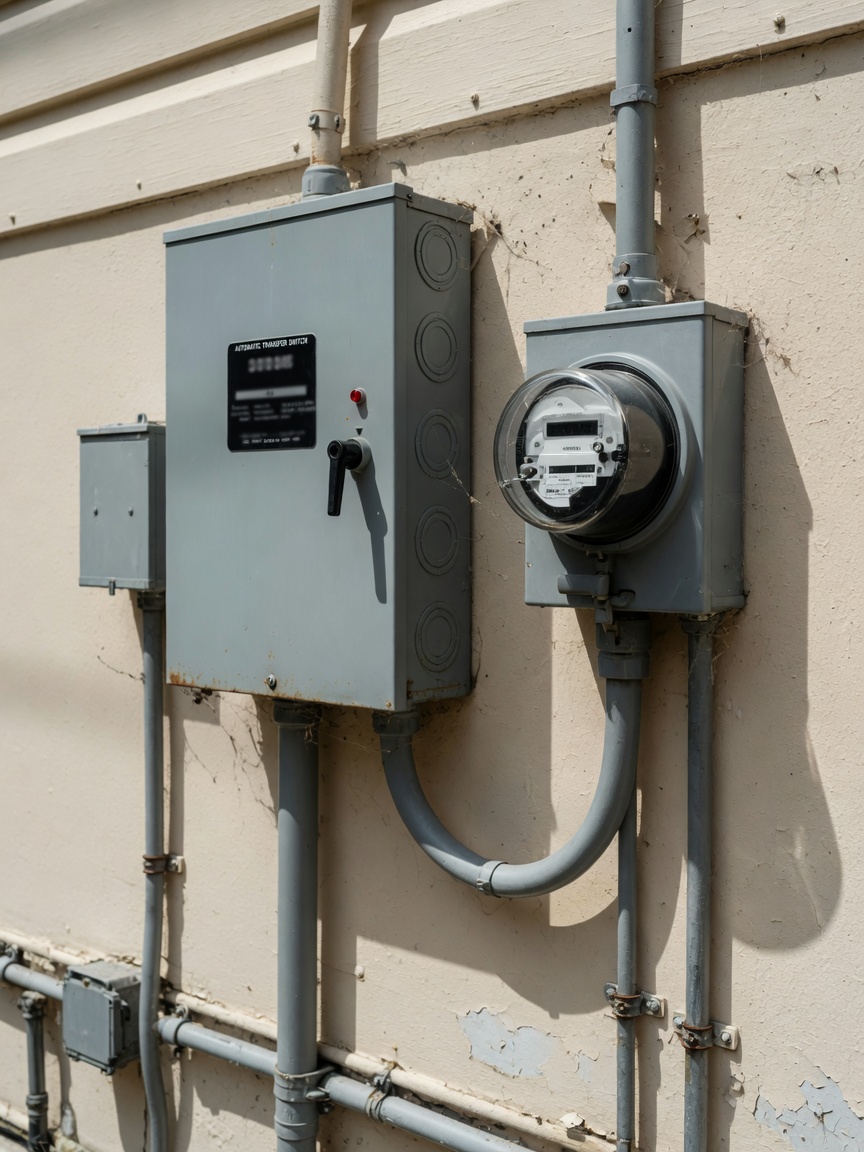
One thing worth knowing about the wiring: a permanent generator is required to connect through proper transfer equipment, an automatic transfer switch like the one above, or a manual interlock. That is what safely separates your house from the grid when the generator runs. It is governed by the National Electrical Code (Article 702, Optional Standby Systems) and the Florida Building Code. Any setup that skips it, such as a cord backfeeding a wall outlet, is both illegal and dangerous, and it is not a corner a legitimate installer will cut.
The HOA can have its own rulebook
If you are in a deed-restricted community, the HOA is a second gate, and it can add both cost and time. Florida law is actually on the homeowner’s side here: under a 2024 update to the statutes (Section 720.3045), an HOA cannot flatly prohibit a permanent, fixed generator or its fuel tank as long as the installation meets building code and the association’s own written standards.
What the HOA can still do is regulate the details: it can require screening or landscaping so the unit is not visible from the street, dictate placement and setbacks, ask for the product specifications and a licensed contractor, and require you to submit an architectural application and wait for approval. Those are legal, and they can mean extra materials, a specific location, and weeks of review before a shovel moves. Ask your HOA for its written generator standards in writing before you sign anything, and build the screening and the approval timeline into the plan. A generator that clears code but not the architectural committee is a stalled project, not a finished one.
Your checklist before any deposit
Treat the first meeting as information gathering, not a decision point, and ask for all of it in writing.
- An itemized quote. Generator model and continuous wattage, the transfer switch model, the pad or mount, electrical work, gas work, permits, and labor should each be a separate line. A single lump sum is a warning sign, not a convenience.
- A load calculation. Ask to see the math that justifies the generator size and confirms your existing service can support it. If it shows a panel upgrade is needed, that cost belongs in this quote, today.
- Site-specific conditions. Flood-zone elevation, distance from panel to pad, existing gas-pipe size, and HOA rules should all be addressed before signing, not discovered after.
- A written change-order policy. If more work is found, who approves it and how is the price set? Get the process on paper.
- Licensing and insurance for the trades. Verify the electrical and gas contractors’ current Florida licenses and insurance yourself. The dealer’s license does not cover the people who will actually open your panel and your gas line.
- Timeline and deposit terms. How much is due up front, what is refundable if the job stalls, and what is the real install window? Hurricane-season demand routinely stretches schedules, and vague promises of “a few weeks” are often missed.
- A second opinion on the electrical work. If the quote includes a panel or service upgrade, have an independent electrician review the scope and price before you authorize it.
Two protections most buyers do not know they have
If the sale happened at your home, in your kitchen, on your porch, at a table the salesperson set up in your driveway, a federal rule gives you a three-day right to cancel. The FTC’s Cooling-Off Rule lets you back out of most sales of $25 or more made somewhere other than the seller’s normal place of business, in writing, by midnight of the third business day, with your deposit returned. The seller is supposed to tell you about it and give you the cancellation forms. Many high-pressure pitches conveniently do not emphasize this. (Sales made entirely at the company’s showroom generally do not qualify, so where you signed matters.)
The second protection is the free license lookup above. Thirty seconds on the state’s verification site tells you whether the people about to do the work are actually licensed and in good standing. It is the cheapest due diligence in the whole process.
How this fits the rest of the decision
The five-part series that runs alongside this one, “Power Through the Storm”, walks through what portable and permanent generators can actually do, the safety rules that keep them from becoming hazards, and a practical way to size what a household really needs. That analysis is the foundation. The sales process is the filter that decides whether you end up with a system that matches the analysis or an inflated version of it.
A well-sized, properly installed standby generator can change what a multi-day outage feels like. A rushed purchase that leaves the wiring and gas work as open-ended extras, with HOA approval on top can turn the same project into a lasting source of resentment. The difference is almost always in what got written down before the first check did. Ask for the complete picture while you still have the leverage. The storm will wait. The change order will not.
- Others Electric: Generac generator cost installed in Florida (2026): installed ranges, panel-upgrade and gas-line add-ons
- JADE Learning: NEC Articles 701 and 702, legally required and optional standby systems (transfer equipment)
- Federal Trade Commission: Cooling-Off Rule, sales made at home or other locations (16 CFR Part 429)
- Florida DBPR (MyFloridaLicense): how to verify a contractor’s license
- The Florida Senate: Statutes 720.3045, display of certain items (generators and fuel tanks in HOA communities)
- Storm Smart: Florida HOA hurricane-protection guide (generators, HB 293, written standards)
Written to standard. E.G. v4.17 · I.R.G. v1.14 · L.R.G. v1.9 · P.L.G. v1.10. Consumer-protection companion to the Power Through the Storm generator series. Cost ranges are Florida 2026 installer figures and vary by home and market. Decode. Do not sensationalize. Show the facts and let the reader decide.
Editor written. AI used for spelling and grammar only.