Florida’s Next Long Outage Is Coming. A Generator Is the Difference Between Managing and Losing the Fridge, the Medicine, and the Ability to Leave.
The grid is getting tougher. Storms still win. Here is what days without power actually cost a household, and why the choice of backup power is no longer optional for many Florida homes.

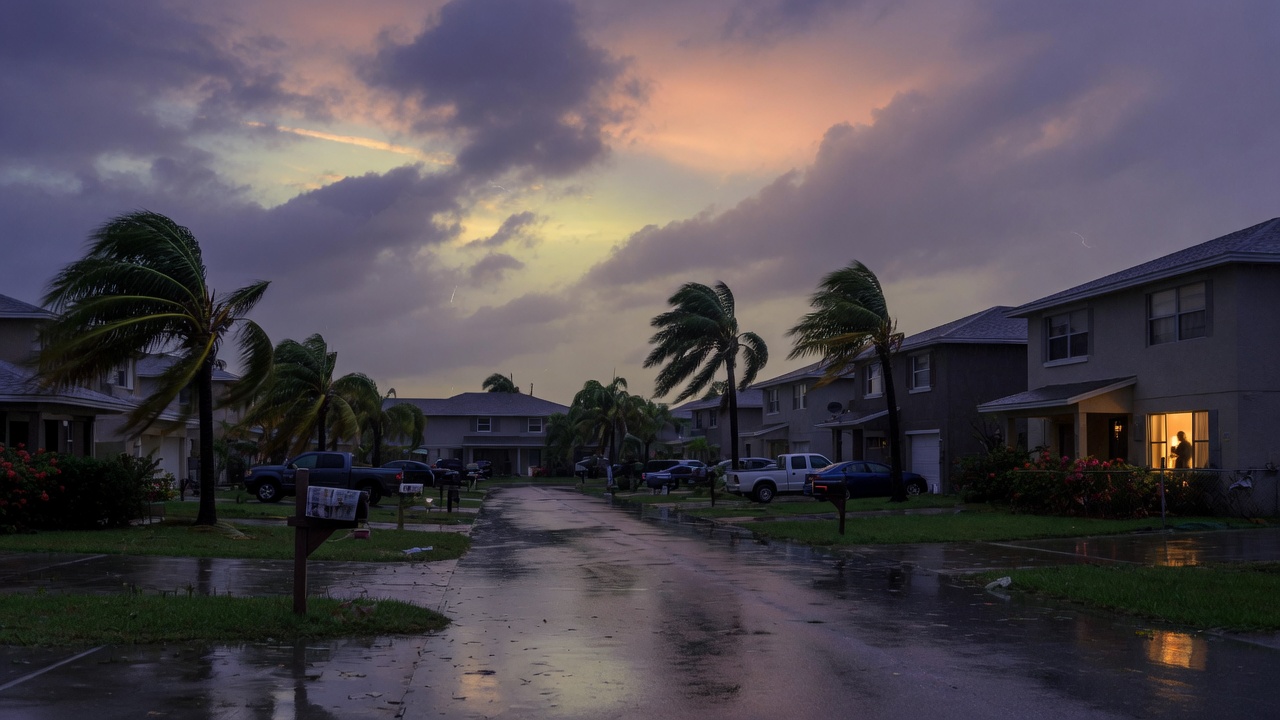
Credit: AI-generated illustration (Grok), generated in-house. HeadLines Decoded. · HeadLines Decoded LLC
Illustration generated with AI (Grok).
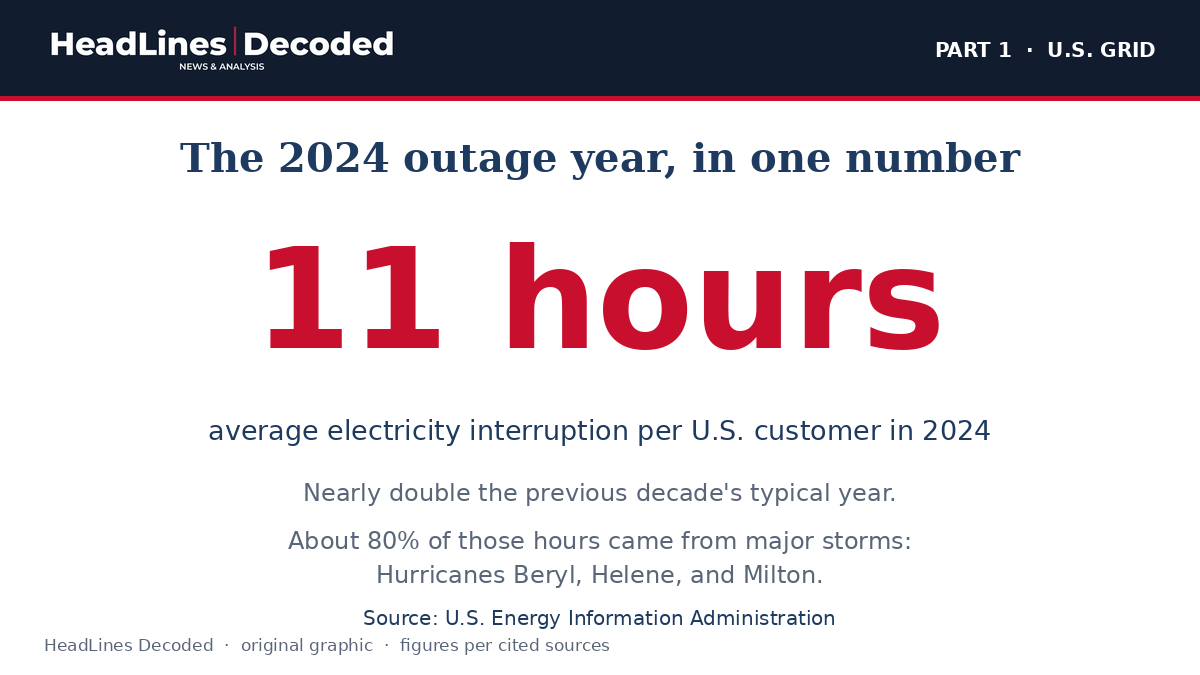
In October 2024, Hurricane Milton left 3.4 million Florida customers without power. Hurricane Helene had already knocked out millions more across the Southeast a few weeks earlier. The U.S. Energy Information Administration later reported that 2024 produced the highest number of hours without electricity in the United States in a decade. U.S. customers averaged about 11 hours of interruption that year, nearly double the previous decade’s norm, and major storms such as Beryl, Helene, and Milton accounted for roughly 80 percent of the hours.
Florida utilities have spent years hardening the grid. Duke Energy Florida reported record-low outage time for its customers in 2025. Florida Power & Light and others have buried lines, added self-healing technology, and pre-positioned crews. Blue-sky reliability has improved. Named storms still rearrange the map.
When the power stays out for three days, five days, or longer, the problems stop being abstract. Refrigerators warm. Freezers thaw. Prescription medicines that need cold storage lose potency. Well pumps stop. Sumps stop. Phones die. Medical devices that plug into the wall become dead weight. Air conditioning fails in heat that does not care about your plans. For households with someone on oxygen, insulin, or powered mobility equipment, the clock starts immediately.
A Direct Relief survey after Helene and Milton found that power loss forced temporary closures at more than half of the safety-net healthcare providers that responded across Florida, Georgia, North Carolina, and South Carolina. In Florida alone, clinics reported thousands of canceled appointments and spoiled vaccines and medicines. The people who depend on those clinics are the same people who often have the least ability to absorb a long outage at home.
This series is about the practical tools that stand between a multi-day outage and a cascade of losses. It covers portable generators, the safety rules that keep them from killing the people they are supposed to help, permanent standby systems, and the growing number of homes that already have solar and battery storage. The goal is not to sell equipment. The goal is to give Florida readers enough clear information to decide what fits their house, their budget, and their risk tolerance before the next long outage arrives.
What actually fails first
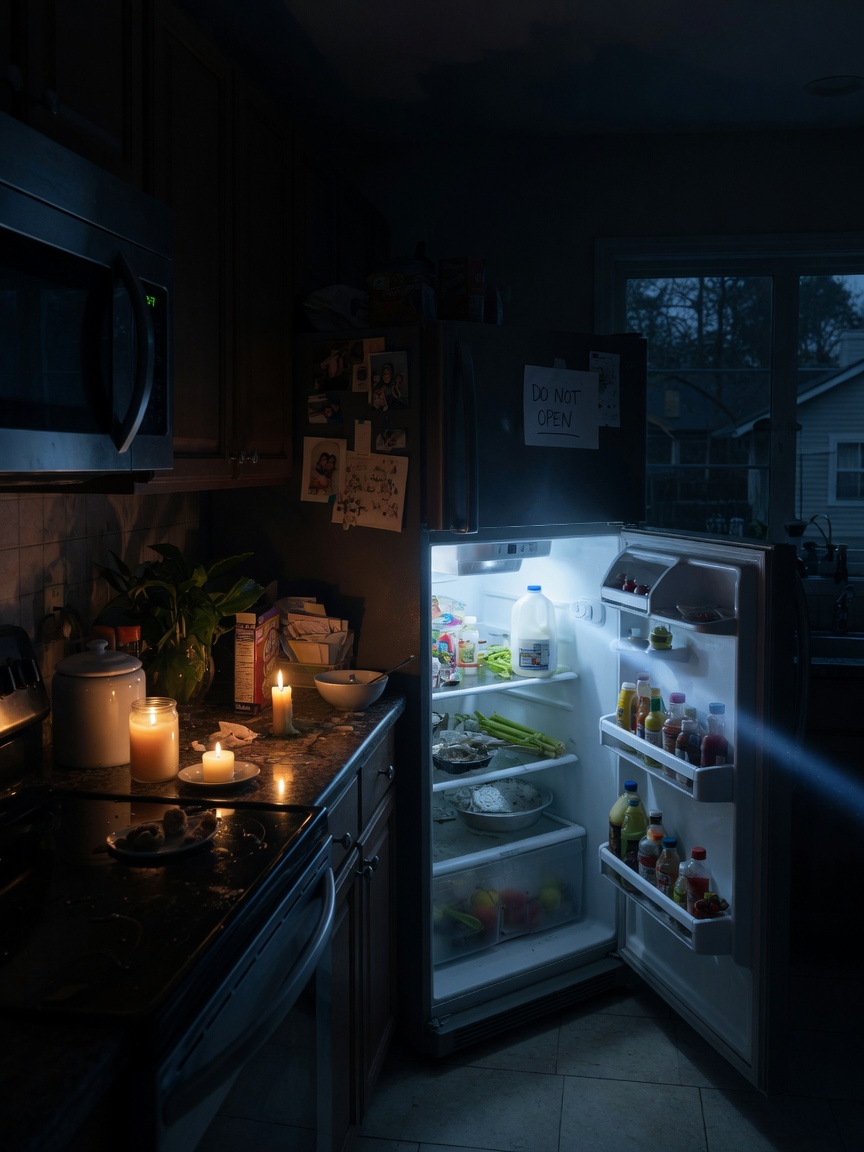
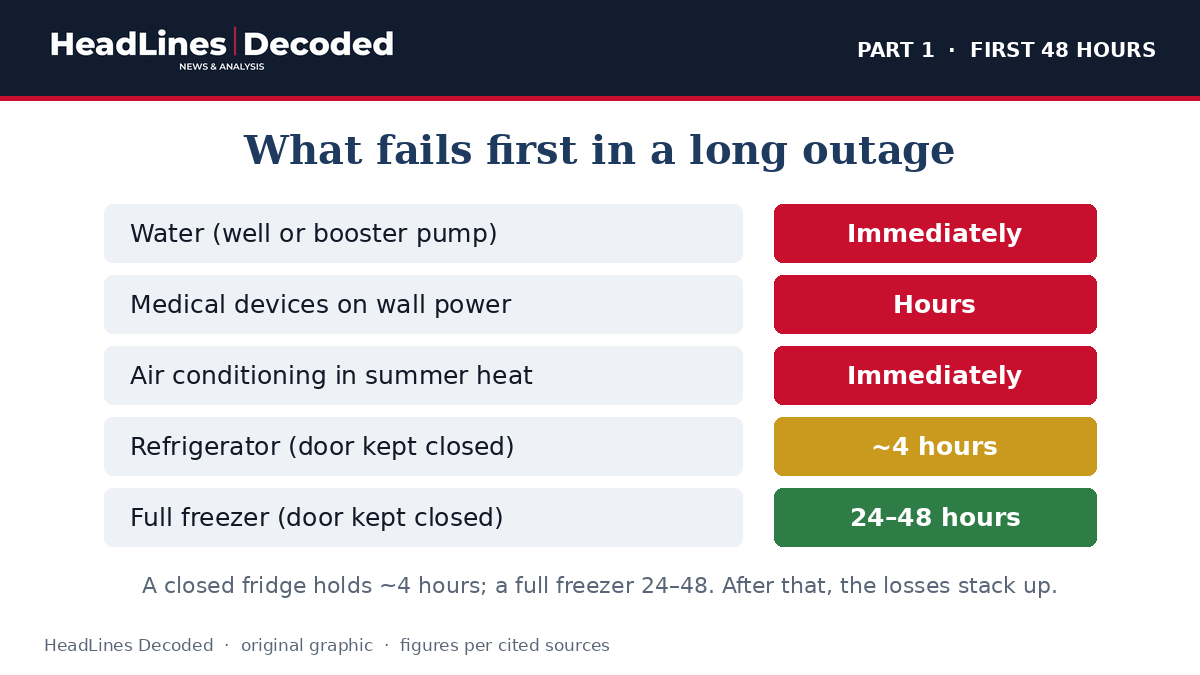
Start with the loads that matter most in the first 24 to 48 hours.
Refrigeration. A closed refrigerator can keep food safe for roughly four hours if the door stays shut. A full freezer holds longer, often 24 to 48 hours. After that, the contents become a liability. In Florida heat, the timeline shortens.
Medical needs. Many households now run continuous positive airway pressure machines, oxygen concentrators, nebulizers, or refrigerated medications. Some of those devices draw modest power. Others do not. A few hours without them is uncomfortable. Longer stretches become dangerous.
Water. Homes on wells lose pressure the moment the pump loses power. Municipal systems can lose pressure too if treatment plants or booster stations go down. Without water, toilets stop working and basic hygiene becomes harder.
Communications and light. Phones and radios need charging. Flashlights and battery banks eventually run down. In a neighborhood where the streetlights are also dark, the sense of isolation grows quickly.
Cooling. Central air and window units are high-draw loads. Many portable generators cannot run a full central system. The choice then becomes which rooms stay livable and which do not.
These are the decisions that turn a power outage into a household emergency. A generator does not solve every problem. It can keep the critical ones from stacking up.
The three broad options Florida homeowners face
Most conversations about backup power fall into three categories.
Portable generators. These are the units you roll out of the garage or shed, fill with fuel, and start by hand or with an electric start. Conventional open-frame models and quieter inverter models both sit in this group. They are the lowest-cost entry point and the most common first purchase after a bad storm season. They require the homeowner to be present, to manage fuel, and to follow strict placement and connection rules.
Permanent standby generators. These are fixed installations, usually natural-gas or propane, that sit on a pad outside the house. An automatic transfer switch starts them when the utility power fails and switches the house (or selected circuits) over without anyone having to do anything. They cost more up front and require permits, licensed electricians, and ongoing maintenance. Once installed, they change the experience of an outage from active management to mostly passive waiting.
Hybrid approaches. A growing number of Florida homes already have rooftop solar and battery storage such as Tesla Powerwalls or similar systems. Those batteries can carry critical loads for hours or a day or more depending on size and weather. A generator can then serve as a way to recharge the batteries during a multi-day outage rather than as the sole source of power. The combination changes both the sizing and the fuel strategy.
None of these is automatically the right answer for every house. A small home with modest critical loads and a careful owner can do well with a well-chosen portable and a proper transfer method. A larger home with medical equipment, a well, and multiple air-conditioning zones often ends up looking at a standby system or a hybrid. The rest of this series walks through the real differences, the safety requirements, the costs, and the decision points.
Why Florida makes the stakes higher
Three factors push Florida past the generic national advice on generators.
Duration. Outages after major hurricanes routinely last days, not hours. Fuel becomes harder to find. Lines form at the stations that still have power and product. A generator that needs frequent refueling becomes a logistics problem as well as a power source.
Flooding and wet conditions. Many coastal and low-lying neighborhoods see standing water. Generators and electrical connections that are not elevated or protected create new hazards. Permanent installations in flood zones must meet specific elevation rules under the Florida Building Code.
Heat and humidity. An outage in January is inconvenient. An outage in August or September is different. The combination of high temperatures, high humidity, and no air conditioning raises the stakes for medical vulnerability and for simple habitability.
Utilities have improved their restoration times through grid hardening and mutual-aid agreements. They cannot eliminate multi-day outages after a direct hit or a widespread storm. That is the gap a household generator is meant to cover.
What this series will cover
Part 2 examines portable generators in detail: conventional versus inverter, fuel types, realistic wattage and runtime, and the practical limits of what a portable can actually power.
Part 3 focuses on safety and setup. Carbon monoxide is the leading killer associated with portable generators. The U.S. Consumer Product Safety Commission has tied portable generators to an estimated 765 carbon monoxide deaths from 2009 through 2019 alone, and its more recent reporting shows the annual toll rising. Most of those deaths occur in residential settings during weather-related outages. Placement rules, transfer switches, interlock kits, fuel storage, and flooding risks all belong in that conversation.
Part 4 covers permanent standby systems: how automatic transfer switches work, natural gas versus propane in Florida, sizing, permitting under the Florida Building Code and the National Electrical Code, and the true installed cost ranges.
Part 5 pulls the pieces together into a decision framework. It includes hybrids with existing solar and battery systems, a practical way to size what you actually need, and a checklist for deciding whether a portable, a standby unit, or a combination makes the most sense for a given house.
Every part stands on its own. Read them in order if you are starting from zero. Jump to the section that matches the decision you are facing if you already own equipment or have a specific question.
One ground rule for the whole series. Safety is not a side topic. Carbon monoxide, backfeeding the utility lines, improper fuel storage, and flooding are the ways generators hurt the people they are supposed to help. Those risks receive the same weight as the benefits.
The practical starting point
Before buying anything, list the loads you refuse to lose for more than a few hours. Write down the wattage if you can find it on the appliance nameplate or in the manual. Note which ones need to run continuously and which can cycle. Include any medical devices. Include the well pump or sump if you have one. Include at least one way to keep a refrigerator cold and one way to charge phones and radios.
That list is more useful than any marketing claim about “whole-house” coverage. Most portable generators cannot run a full central air system and every other load at once. Many standby systems are sized for critical circuits plus some comfort loads rather than every circuit in the house. Knowing the real priority list keeps the conversation honest.
Florida’s hurricane season runs from June 1 through November 30. The window for calm planning is the months before the first named storm, not the week after the lights go out. The rest of this series is written for that window.
- Part 1: Why Florida’s long outages still happen (you are here)
- Part 2: Portable generators: power and limits
- Part 3: Setup and safety
- Part 4: Permanent standby systems
- Part 5: How to decide what you need
- U.S. Energy Information Administration, hours without power in 2024
- Direct Relief, “Lights Out” (Helene and Milton)
- Duke Energy Florida, record-low outage time in 2025
- Utility Dive, Hurricane Milton power outages
- U.S. Consumer Product Safety Commission, carbon monoxide fatality report
- Centers for Disease Control and Prevention, Generator Safety Fact Sheet
Reported and edited to HeadLines Decoded newsroom standards. E.G. v4.16 · I.R.G. v1.13 · L.R.G. v1.9 · P.L.G. v1.10. Part of our Power Through the Storm series.
Editor written. AI used for spelling and grammar only.