The SAVE Act, Part 7: Who Feels the Impact, and What the Evidence Shows
Who actually gets caught by a documentary proof requirement, and what the evidence says about how many people that is.

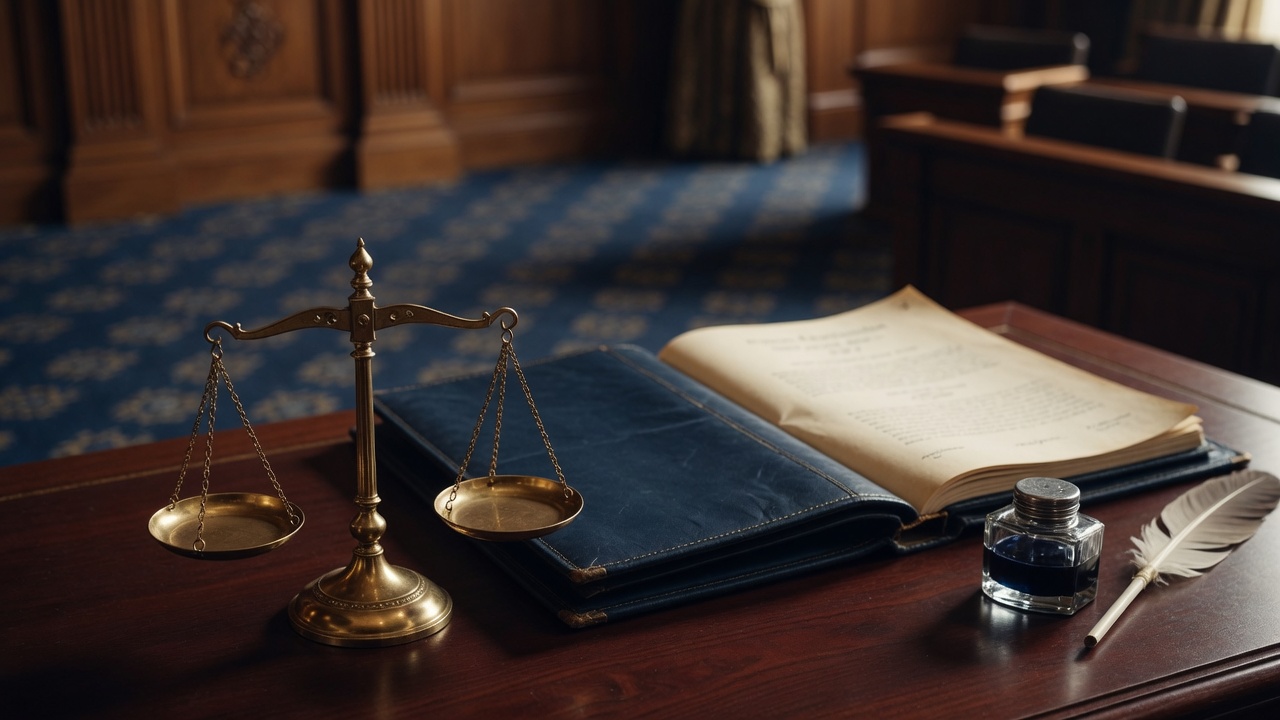
Credit: AI-generated illustration. · HeadLines Decoded LLC
Illustration generated with AI (Grok).
‹ Part 6: States’ Rights and Federal Power
In the 2016 general election, officials in jurisdictions responsible for about 23.5 million votes went looking for noncitizens who had cast ballots. They found roughly 30 suspected cases. That ratio, a few dozen out of tens of millions, is the size of the problem the SAVE Act is built to solve, and it sits at the center of the whole argument.
Because here is the tension. The bill aims at a problem that, by the best available evidence, is very small. And the fix it uses would land on a group of eligible citizens that is very large. Both of those facts are real, and any honest look at the SAVE Act has to hold them at the same time.
- The people most likely to get tripped up include married women with a name mismatch, young voters, elderly voters, low-income and rural citizens, and some naturalized citizens.
- A 2023 survey for VoteRiders, the University of Maryland, and the Brennan Center found about 21.3 million voting-age citizens, roughly 9 percent, lack easy access to proof of citizenship. At least 3.8 million have none at all.
- Noncitizen voting is already a serious crime and, by most studies and audits, extremely rare.
- When Arizona and Kansas tried documentary proof-of-citizenship rules, they blocked tens of thousands of applicants who turned out to be citizens, and courts struck the requirements down for federal elections.
Who would feel it most
A rule that treats everyone the same still lands harder on some people than others, because it collides with the ordinary shape of their lives. A few groups stand out.
Married women with a name mismatch are the biggest. Without a passport in their current name, they need both a birth certificate and a document connecting the old name to the new one. Young, first-time voters are less likely to own a passport and may never have needed a certified birth certificate for anything. Older voters can struggle to dig up decades-old records or to travel to an office that has moved its services online. Lower-income and rural citizens feel the fees, the travel, and the time off work more sharply than someone with money and a flexible schedule. And naturalized citizens, who usually hold naturalization papers that qualify, can still hit a wall over a name change or a lost document. The clerks running elections would absorb their own share of the strain, in training, verification, and handling the applications that come up short.
How many citizens are we talking about
The most-cited number comes from a 2023 national survey run for VoteRiders, the University of Maryland’s Center for Democracy and Civic Engagement, and the Brennan Center. It found that about 21.3 million voting-age U.S. citizens, roughly 9 percent, do not have ready access to a document proving citizenship, and that at least 3.8 million have none at all. Layer on the fact that about half of Americans do not hold a valid passport, and you can see the shape of the affected group. None of this means 21 million people would be permanently barred from voting. It means that is roughly how many would face new steps, fees, and waits to do something they can do today with a signature.
How common is noncitizen voting, really
Voting as a noncitizen in a federal election is already a federal crime, one that can bring prison and deportation. So the question is not whether it is illegal. It is how often it actually happens. The bulk of the research and the government audits point the same direction: very rarely. The Brennan Center’s review of the 2016 election, covering places that handled 23.5 million votes, turned up about 30 suspected cases referred for further action. That is a rate of roughly one in a million. Isolated cases and registration mix-ups do happen, and supporters argue that even a small number justifies a stronger check at the front door. Opponents argue that a one-in-a-million problem does not justify putting new obstacles between millions of citizens and the ballot. That is the trade, stated as plainly as it can be.
What happened when states actually tried this
This is not purely hypothetical, which is the most useful thing about it. Two states have already run documentary proof-of-citizenship experiments, and the results are on the record.
Arizona started under a 2004 ballot measure, Proposition 200. A federal court later found that at least about 31,500 applicants were blocked by the requirement, and in 2013 the Supreme Court ruled, in Arizona v. Inter Tribal Council of Arizona, that the state could not tack its extra document demand onto the federal registration form. Kansas went further under its secretary of state, Kris Kobach. Its rule blocked or suspended 31,089 would-be voters, about one in eight new registrations over three years. When the case went to trial, the state was able to point to roughly 39 noncitizens who had gotten onto the rolls over nearly two decades. A federal appeals court struck the law down in 2020, and the Supreme Court declined to revive it. In both states, the filter caught tens of thousands of citizens while turning up only a trickle of noncitizens. That track record is exactly what supporters and opponents are arguing about when they argue about the SAVE Act.
The Kansas case is worth slowing down on, because it is the closest thing we have to a live test of what the SAVE Act proposes. Kobach, one of the loudest voices in the country on noncitizen voting, personally defended the law at trial in 2018. Given the chance to prove the problem was big, the state laid its evidence on the record: over roughly two decades, it could identify a few dozen noncitizens who had reached the rolls, while its own rule had blocked more than 30,000 people, the overwhelming majority of them citizens. The judge found the law violated both the Motor Voter law and the Constitution, and an appeals court agreed. For opponents of the SAVE Act, Kansas is Exhibit A: a proof-of-citizenship rule, tested in open court, that caught something like a thousand citizens for every noncitizen.
What this means for you
Look at the list of groups that feel this most and ask where you land. If you have a passport in your current name, you are largely in the clear. If you are a young first-time voter, or you have changed your name, or your birth record is old or out of state, you are closer to the edge, and getting your documents in order early is the difference between a minor errand and a lost chance to register on time. The evidence does not tell you what to think about the bill. It tells you the two things you have to weigh: a very small problem on one side, and a very large group of inconvenienced citizens on the other. What that trade is worth is a judgment, and it is yours to make.
- Brennan Center for Justice and VoteRiders research on citizens without ready access to proof of citizenship (2023 survey, published 2024)
- Brennan Center, “Noncitizen Voting: Vanishingly Rare”
- Arizona v. Inter Tribal Council of Arizona, 570 U.S. 1 (2013)
- Fish v. Kobach / Fish v. Schwab and the Tenth Circuit ruling on the Kansas requirement
E.G. v4.14 · I.R.G. v1.10 · L.R.G. v1.8 · P.L.G. v1.9
Editor written. AI used for spelling and grammar only.