The AI Memory Tax: Why RAM Prices Exploded in 2026
RAM prices tripled and nobody at the checkout knew why. The answer runs through every AI data center built last year.

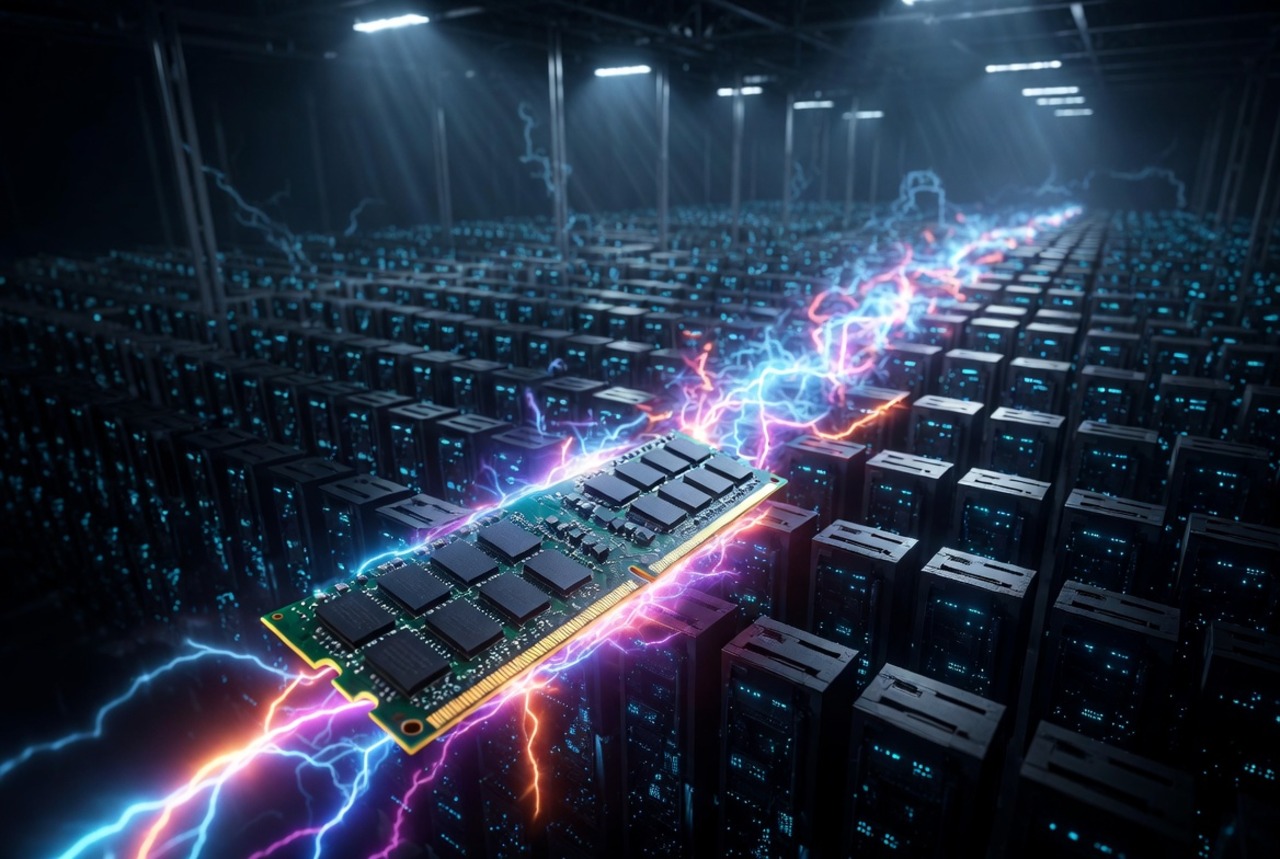
Credit: AI-generated illustration (Grok), generated in-house. HeadLines Decoded. · HeadLines Decoded LLC
Illustration generated with AI (Grok).
A 32GB DDR5 memory kit that could be purchased for roughly $95 to $120 in mid-2025 now commonly costs $350 or more at major retailers, with some of the faster kits now running past $500. In many cases, popular kits are out of stock or have extended shipping times.
This sharp increase is not limited to enthusiasts building or upgrading gaming PCs. Major computer manufacturers have begun signaling that higher memory costs will push up the average price of new laptops and desktops by 15 to 20 percent this year. Apple CEO Tim Cook stated in recent comments that the current surge in memory and storage component costs is unlike anything he has seen in more than 40 years.
The effects are already appearing in broader market forecasts. Gartner projects that global PC shipments will decline more than 10 percent in 2026, while smartphone shipments are expected to fall nearly 8.5 percent, as higher component costs dampen demand.
Why this matters for everyday people? Memory is no longer a niche component. It powers laptops used for schoolwork, video calls, photo editing, and small business accounting. When RAM prices spike this sharply, the cost of staying productive with technology rises for millions of households and workers who are not directly involved in AI development.
Why RAM? Decoding the AI Connection
The story begins with a fundamental mismatch between explosive demand and constrained supply concentrated in the hands of just three companies: Samsung, SK Hynix, and Micron.
Modern AI systems, especially large language models (LLMs) and generative tools, are extraordinarily memory hungry. Training and running them requires enormous amounts of very fast memory. The specialized type used in AI accelerators is called High Bandwidth Memory (HBM). A single NVIDIA Blackwell B200 GPU, for example, uses 192 GB of HBM3E more than double what the previous generation H100 required.
Because HBM commands dramatically higher margins than standard DRAM, memory manufacturers have been reallocating production capacity away from conventional DDR5 and DDR4 chips (the kind in ordinary PCs and phones) and toward HBM. New fabrication lines take years to build and qualify. In the short term, there simply isn’t enough advanced memory manufacturing capacity to satisfy both the AI boom and normal consumer/enterprise demand.
Industry analysts now project that in 2026, AI data centers and high-performance servers will consume roughly 70% of global advanced memory production up from around 30% just two years earlier.
This is not a temporary hiccup. Major suppliers have stated that their HBM capacity is sold out through at least the end of 2026 and in some cases into 2028. The same factories that once produced memory for consumer devices are now prioritized for the highest-paying customers: hyperscale cloud providers and AI developers.
It’s Not Just RAM, The Wider Ripple
Because the same memory manufacturing ecosystem feeds smartphones, tablets, gaming consoles, automotive systems, and industrial equipment, the effects are spreading. Gartner has forecast that global PC shipments will fall more than 10% and smartphone shipments nearly 8.5% in 2026 as higher prices dampen demand.
There is also a secondary channel: electricity. Large AI data centers are driving up power demand in several U.S. regions, contributing to higher residential electricity rates in data-center-heavy areas.
What Comes Next?
Analysts generally expect memory prices to remain elevated through the rest of 2026 and into 2027. New fabrication capacity is coming online, but much of it is already committed to AI customers. Meaningful relief for standard consumer DRAM is more likely in late 2027 or 2028.
This is a classic supply shock caused by a new technology getting built out faster than the factories can keep up. The benefits of better AI are real. In the near term, however, part of the cost of building that future is showing up in the price of upgrading a laptop or keeping existing hardware running.
Another piece of hardware quietly getting smarter this year: Autofocus Glasses Are Coming: How Close Are We to Replacing Fixed Prescriptions?.
The same pattern is now working its way through household robots, where a federal security listing has cut off new foreign-made models and left retailers selling down the inventory they already have.
- TrendForce, IDC, and Counterpoint Research: DRAM and HBM pricing and supply data, 2025–2026.
- Gartner: global PC and device cost forecasts.
- Tom’s Hardware: retail memory price tracking.
- The Wall Street Journal and company statements from major memory suppliers, as of June 2026.
HeadLines Decoded examines claims, framing, and evidence behind major stories. All figures were checked against the sources above as of June 2026.
at the versions shown. What this means
Editor written. AI used for spelling and grammar only.