How to Vote in Person Early in the 2026 Midterms
Vote early and in person this year. It leaves time to fix a registration or ID problem before November 3. Check the roll now. I needed three trips in Texas. Most of you will need one.

Update, October 15: Early voting is now open in 20 states, and registration has closed in Texas and many others. Five new sections below the guide cover early-voting dates, registration, and the court fights over mail ballots and voter rolls. The new Texas count of wrongly flagged voters is in the last two.
The case for voting early
I personally had issues in Texas. I had to go a total of three times before I had exactly the right combination of documents. That is embarrassing to admit and useful to say out loud. The clerk was not inventing a maze for sport. The list of what counts is picky, and picky plus a purged or flagged file is how a Tuesday becomes three Tuesdays.
When the rolls get it wrong
Voter-roll cleanup is legal, and sometimes the roll is wrong. Texas this summer told counties to reinstate people who had been flagged as possible noncitizens after state driver-license records showed they had already proved citizenship. The National Voter Registration Act still tells states to finish systematic voter-roll purges 90 days before a federal election, though how strictly that 90-day line applies is being fought over in court in 2026. You do not need to settle that legal question to protect your own vote. Look yourself up now. If your name is gone, ask your elections office whether you can register again in person.
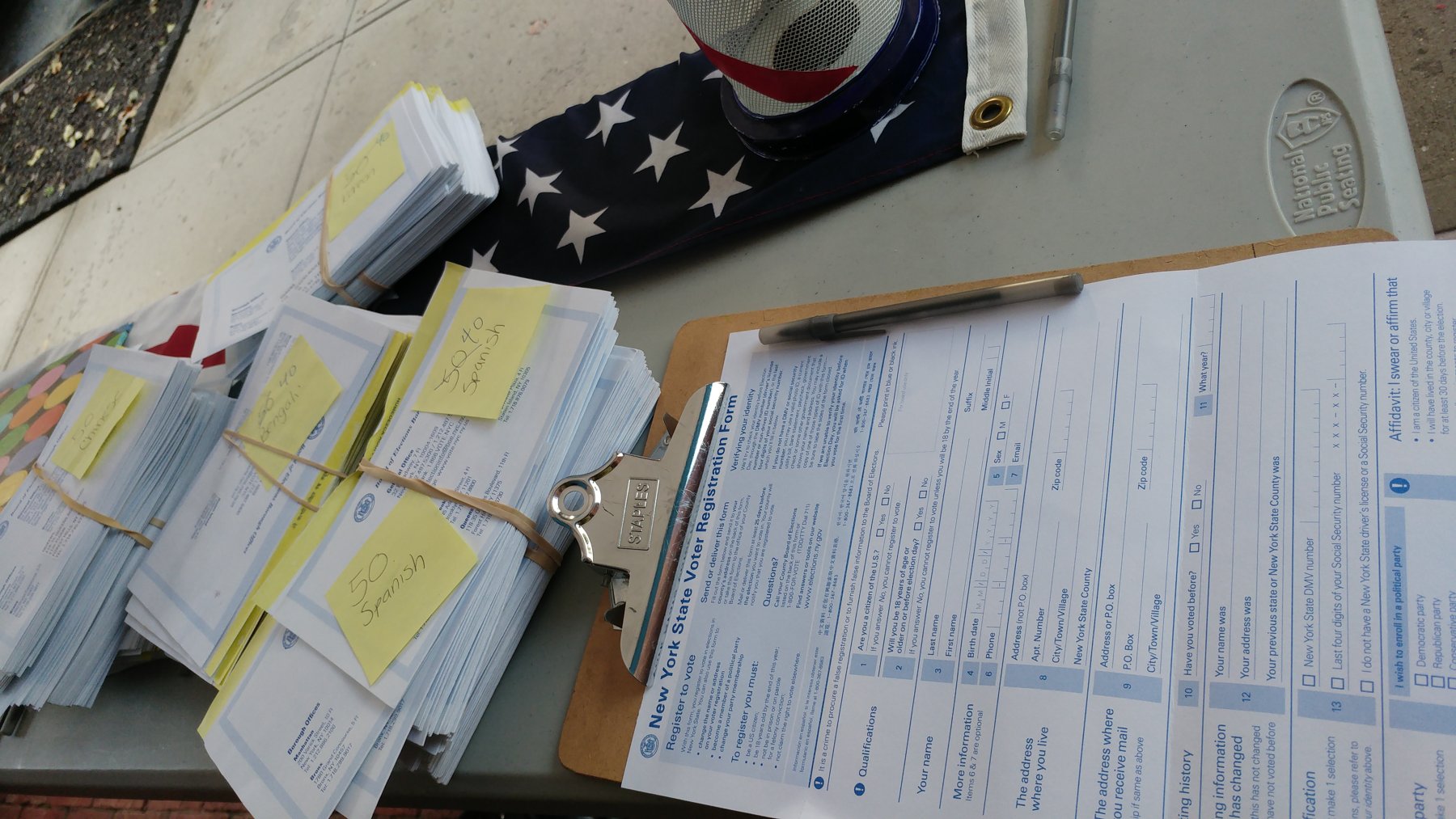
Take all of this as a cautionary tale. I assume a good many of us will walk in, show the license, and be done in twenty minutes. Plan for that. Pack for the other twenty minutes.
The small checklist
If you need a ride
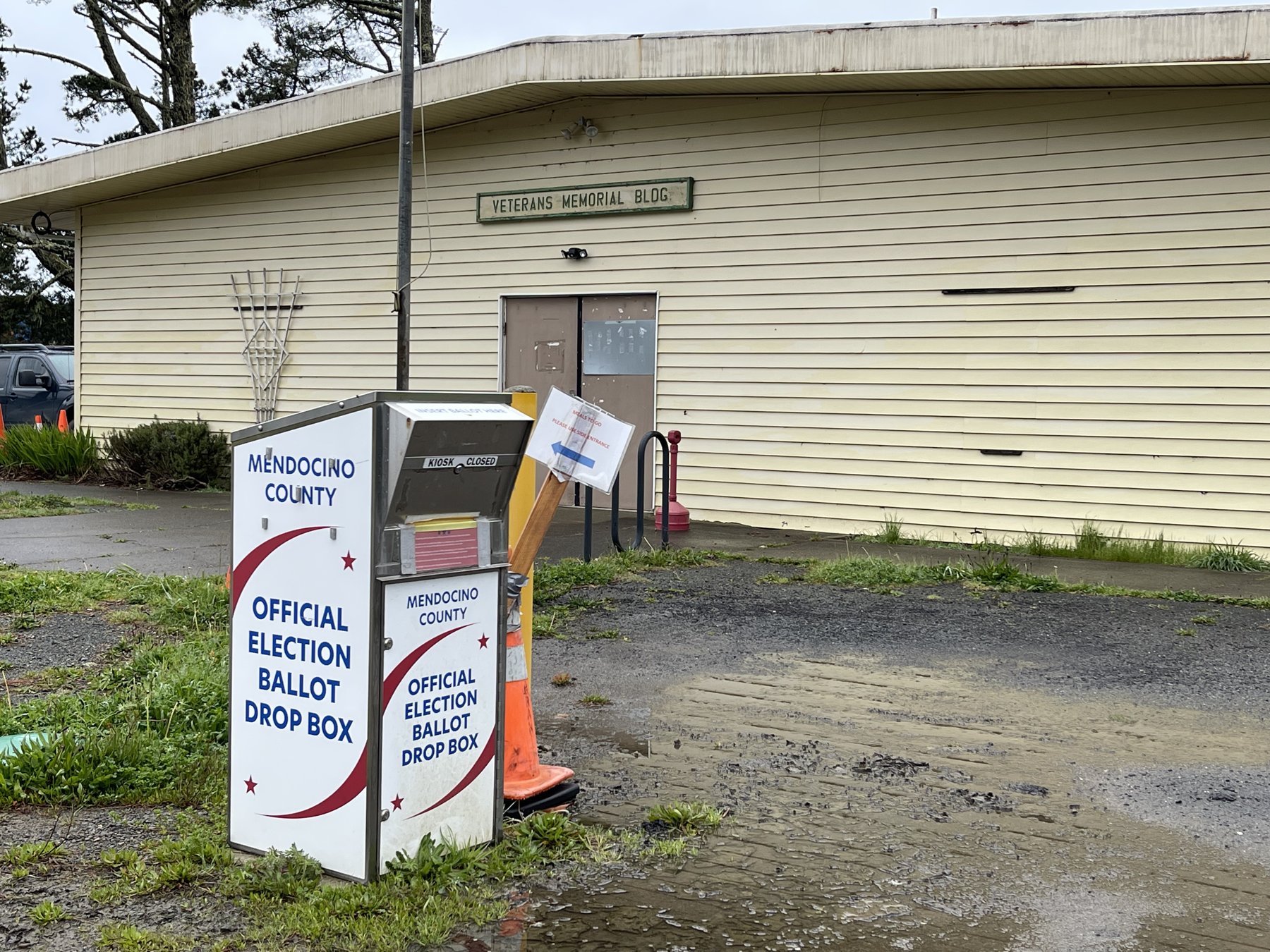
These are national or nationally coordinated programs that can help you reach a polling place or an early-vote site. Coverage is uneven by county, so call early and do not wait for Election Day morning.
If you are helping a student or a first-time voter get on the list, HeadCount is built for exactly that, and its site is headcount.org. National Voter Registration Day was September 15, and in many states the deadline to register has also passed, as the section on registration deadlines below shows.
What I would do
The mailbox is not broken everywhere. But I would rather not bet my own ballot on the post office and a clean spot on the roll both holding up in the same week. Early, in person, papers in the bag. If the first visit is a miss, you still have calendar left. That is the suggestion.
A right most of the world lacks
One last thing, and it has nothing to do with paperwork. The right to walk in and choose your own leaders is not the human default; for most of history, and across much of the map today, it has been the exception. Freedom House, which grades political rights country by country, rates just 88 of the world’s nations as Free, and reckons that only about 21 percent of people live in one of them, down from 46 percent two decades ago. For a lot of the planet, a competitive ballot is either rigged or simply not on offer.
So the twenty-minute errand this piece keeps nagging you about is, by global standards, a privilege, and a hard-won and fairly recent one even here. People marched, and in some cases died, so that the line at your local library would be open to you. None of that obligates you to a party or a candidate. It obligates you to show up. So show up, and bring the papers. Much of the world would trade a great deal for the chance.
Early voting windows on October 15
Dates are from Ballotpedia’s calendar for the November 3 election, read October 15, and the grouping is our own. A county can set its own hours inside the state window.
| Status today | States and first day |
|---|---|
| Open now (20 states) | Minnesota, South Dakota, Vermont and Virginia opened September 18 or 19; Illinois on September 24; Maine on October 4 (the US Vote Foundation says October 5); Montana and Nebraska on October 5; Indiana, New Mexico, Ohio and Wyoming on October 6; Arizona on October 7; Georgia and Idaho on October 13; Iowa, Kansas, Rhode Island and Tennessee on October 14; North Carolina today. |
| Opens October 16 to 19 (9 states) | Washington on October 16; Massachusetts and Nevada on October 17; Alaska, Arkansas, Colorado, Connecticut, South Carolina and Texas on October 19. |
| Opens October 20 to 22 (8 states) | Hawaii, Louisiana, Missouri, Utah and Wisconsin on October 20; West Virginia on October 21; Delaware and Maryland on October 22. |
| Opens October 24 or later (6 states) | Florida (statewide; some counties start earlier), Michigan, New Jersey and New York on October 24; Oklahoma on October 28; Kentucky on October 29. |
| County schedules | Pennsylvania voters can cast a mail ballot in person at county offices until October 27, with start dates that vary by county. California does not appear in Ballotpedia’s table, so its county election office has the dates. |
| No no-excuse early voting | Alabama, Mississippi and New Hampshire. North Dakota counties may offer early voting in the 15 days before the election. Oregon votes by mail and lets voters mark a ballot in person until 8 p.m. on Election Day. |
The windows differ a great deal in length. Minnesota’s runs 46 days, from September 18 to November 2. Texas gives 12 days, from October 19 to October 30. Louisiana and Maryland give 8 each, Florida guarantees at least 8 in every county with some counties adding days (Florida Department of State), Oklahoma gives 4, and Kentucky gives 3, from October 29 to October 31. Seven states stop on Friday, October 30: Arizona, Georgia, Idaho, Massachusetts, Nevada, Texas and Utah. Maine, Maryland and Tennessee stop on Thursday, October 29, and Louisiana stops on Tuesday, October 27, a week before Election Day.
For Texas, Ballotpedia and a KPRC voter guide published on October 2 both give October 19 to October 30. KPRC also lists the acceptable photo IDs: a Texas driver’s license, Election Identification Certificate, personal identification card or handgun license, a U.S. military photo ID, a citizenship certificate with a photo, or a U.S. passport. Voters ages 18 to 69 can use one of those IDs for up to four years after it expires. Voters 70 and older can use an otherwise valid ID regardless of how long ago it expired. If you do not have one of those IDs and cannot reasonably get one, you can still cast a regular ballot: show a supporting document, such as your voter registration certificate, a current utility bill, a bank statement, a paycheck or a certified birth document, and sign a Reasonable Impediment Declaration, according to the Texas Secretary of State. If you have an acceptable ID but left it at home, you can vote a provisional ballot and show the ID to the county voter registrar within six calendar days, or go back before the polls close and vote a regular ballot. Ask the election workers about these options before you leave.
Correction, October 24, 2026: An earlier version gave Florida’s statewide early-voting window as every county’s full schedule and left out Texas’s Reasonable Impediment Declaration and the six-day provisional-ballot rule.
Registration deadlines and the Texas backlog
Newsweek’s state-by-state list from early October shows that the deadline has already passed in Texas, Florida, Georgia, Arizona and Ohio (all October 5), North Carolina (October 9), and Kansas, New Jersey and Oregon (October 13). It is still open in Pennsylvania, Alabama and South Dakota until October 19, in Nebraska until October 23 for in-person applications, and in New York and Massachusetts until October 24.
Some states let a voter register at the polls. The Newsweek list names Maine, Minnesota, Montana, Nevada (in person), New Hampshire, New Mexico and Wisconsin for registration at the polling place on Election Day, and California, Connecticut, Hawaii, Utah and Wyoming for registration during the voting period. NPR reports that same-day registration is not available in more than half the country, so a voter who has not checked the roll should start with the state election office.
Texas has one more route for a voter who was registered and then dropped. The Texas Tribune reports that, under state law, a voter whose registration was canceled for not answering a citizenship notice can be reinstated by showing proof of citizenship to an elections office or at a polling location.
A separate Texas problem affected people who registered or updated their records through the driver-license portal of the Texas Department of Public Safety (DPS). The Texas Tribune reported on September 23 that some of those applications never reached county registrars because of incomplete records, with transactions dating back to October 2025. Newsweek later reported that Texas officials say they have cleared a backlog of more than 500,000 registration-related records statewide, with Dallas County receiving 68,104 late records on September 23 and Harris County about 75,000 over several weeks. Secretary of State spokesperson Alicia Pierce said the registration takes effect on the day of the DPS transaction, so one made on or before October 5 counts for November 3. A voter who registered through the DPS portal but is missing from the roll can cast a provisional ballot, which officials count once they confirm the registration with DPS.
Late mail ballots and the Postal Service rule
The Supreme Court ruled 5 to 4 on June 29, in Watson v. Republican National Committee, that federal law does not stop states from counting mailed ballots that arrive after Election Day if they were cast and mailed by then. Justice Amy Coney Barrett wrote the opinion, joined by Chief Justice John Roberts and Justices Ketanji Brown Jackson, Elena Kagan and Sonia Sotomayor. Justice Samuel Alito dissented, writing that the ruling risks undermining public confidence in elections. Votebeat counts 14 states and the District of Columbia that accept mail ballots arriving after Election Day, a rule called a grace period. In the 11 of those 15 places it studied, more than 745,000 ballots came in late in 2024, at most about 3 percent of the vote in any state.
Pamela Smith, president of Verified Voting, said the ruling keeps a postal delay outside a voter’s control from erasing a lawfully cast ballot. Republican National Committee chairman Joe Gruters said Democrats are inviting chaos by allowing elections to drag on for days and weeks, and that the committee will keep fighting to have elections end on Election Day. Newsweek counts 35 states that require receipt by Election Day. Texas accepts a mailed ballot until 5 p.m. the next day if it is postmarked by 7 p.m. on Election Day.
A second fight concerns a March 31 executive order from President Trump, EO 14399, that told the Postal Service to build new rules for ballot mail, including official envelopes with barcodes and advance lists of eligible mail voters from each state. The Postal Service issued a final rule on August 21 but said it would not use it in 2026 unless courts allow.
The courts acted in steps. In June, Judge Indira Talwani blocked parts of the order. On August 24 the Supreme Court lifted that June injunction, saying the challenge came too early because the order had not yet become a final rule. Talwani then blocked the final rule as an attempt to take over state powers, and a second federal judge, Carl Nichols in Washington, also blocked it. A coalition of 23 states plus D.C. argued the president has no such authority and the states had no time to comply, and Arizona Attorney General Kris Mayes vowed to fight the rule in court. The Trump administration told the courts the plan was meant to help elections run smoothly. On September 14, the Supreme Court refused the administration’s emergency request, leaving the rule blocked. For November, mail rules stay as each state set them.
Voter purges near Election Day
The 90-day rule quoted earlier is the line the courts are testing. NPR reports that the 90-day no-purge period for this election began August 5. Republican state officials in Arizona and Ohio, whom NPR does not name, argue that removing noncitizens falls outside it, or that their removals are individualized rather than systematic. In Ohio, a lawsuit under the 90-day rule against Secretary of State Frank LaRose, League of Women Voters of Ohio v. LaRose, challenges the state’s monthly noncitizen checks, according to Democracy Docket. A Ninth Circuit panel ruled in 2025 that Arizona’s citizenship-based cancellations, which relied on database comparisons, violated the law. On June 29 the Supreme Court agreed to hear Republican National Committee v. Mi Familia Vota, the Arizona case, and a decision is not expected until next year. The Justice Department argued in a June filing in a Georgia lawsuit that the rule would not bar a state from removing people one at a time if the federal government flags them.
The Texas list is a concrete example of why the dispute matters to a voter. The Texas Tribune and Votebeat report that in October 2025 the Secretary of State’s office sent counties 2,724 registered voters marked as possible noncitizens when the roll of about 18 million was run against SAVE, a federal citizenship-verification database. Counties mailed notices, and registrations were canceled if the voter did not answer within 30 days. The state did not compare the list with driver-license records first. It asked DPS, which keeps proof of citizenship for driver licenses, to do so on May 4, and DPS finished on June 16. Voting-rights groups sued in March over the missing check, and the case is pending in federal court.
On September 15 the Texas Tribune reported that the Secretary of State’s office had confirmed 578 of the flagged voters are U.S. citizens, and that 506 of them were flagged because their passport information reached SAVE only after Texas ran its first check. The office also referred 117 potential noncitizen-voting cases to Attorney General Ken Paxton, who announced charges against seven people in Tarrant County. The Tribune set that against more than 11 million ballots cast in Texas in November 2024. Kristin Miles, president of the Texas Association of County Election Officials, praised the state’s due diligence in the reinstatement order.
Still unconfirmed
No one has published how many of the 2,724 flagged voters were canceled, or whether the 578 confirmed citizens are back on the roll. State elections director Christina Adkins said in July that she could not yet say how many had given DPS proof, and Miles said then that the state has no exact count of citizens wrongly canceled. The Supreme Court will not settle the 90-day question before November 3. Texas voters can check their status at VoteTexas.gov or with their county elections office.
- In July 2026 Texas ordered counties to restore registered voters whom driver-license (DPS) records showed to be citizens. Texas Tribune; Votebeat.
- The National Voter Registration Act bars systematic voter-roll purges within 90 days of a federal election; in 2026 Republican officials and the Justice Department pushed to reinterpret how close to an election a purge can run. NPR.
- Free help with voter ID and required documents. VoteRiders.
- Election Protection voter-help hotline, 866-OUR-VOTE (866-687-8683). 866ourvote.org.
- Transportation and where-to-vote help: dial 211 (211.org); Eldercare Locator, 1-800-677-1116 (eldercare.acl.gov); League of Women Voters (vote411.org).
- National Voter Registration Day was September 15, 2026. nationalvoterregistrationday.org. Uber and Lyft have run Election Day ride discounts in past cycles; confirm any 2026 program on their sites.
- Global context on voting rights: Freedom House, “Freedom in the World 2026,” reports 88 countries rated Free, with 21 percent of the world’s people living in them, against 46 percent twenty years earlier. Freedom House.
- Ohio voter-roll lawsuit: Democracy Docket. Maine early voting start: US Vote Foundation.
- Texas DPS online registration backlog: Texas Tribune, September 23; Newsweek.
- Early voting dates for the November 3, 2026 election, read October 15: Ballotpedia.
- Texas early voting dates and acceptable photo IDs, October 2, 2026: KPRC Click2Houston.
- Registration deadlines by state, early October 2026: Newsweek. Mail ballot receipt deadlines by state: Newsweek.
- Supreme Court ruling on late-arriving mail ballots, June 29, 2026: Votebeat.
- Executive order on ballot mail and the court rulings that followed: Votebeat; National Association of Counties.
- Texas charges and the count of flagged voters confirmed as citizens, September 15, 2026: Texas Tribune.
Editor written. AI used for spelling and grammar only.