For the first time in 12 U.S. federal elections, no invitation for OSCE observers
The Organization for Security and Co-operation in Europe has observed every U.S. federal election since 2002. This year Washington has not invited it and has not said why. Here is the record, and the case each side makes.
 Todd Ruffner-Schoenfeld
Editor in chief. A knack for the fine print, and likes it.
Todd Ruffner-Schoenfeld
Editor in chief. A knack for the fine print, and likes it.

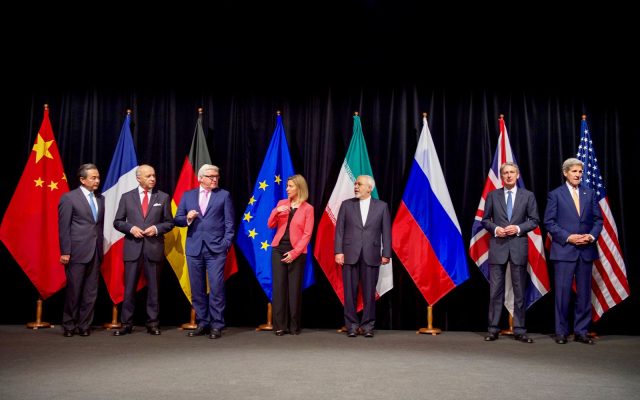
Credit: Photograph: OSCE Parliamentary Assembly. Licensed via Flickr under CC BY-SA 2.0.
For the first time since 2002, the United States has not invited the Organization for Security and Co-operation in Europe to watch a federal election. The OSCE’s election office and its assembly of lawmakers said so in a joint statement on Sept. 23. They called the decision “regrettable” and said the Nov. 3 midterms “will be the first U.S. federal elections since the OSCE began observing in the country for which the OSCE has not received an invitation.”
As of Friday, Sept. 25, neither the State Department nor the White House had said why. Several news outlets asked, and Human Rights Watch wrote to the State Department. None had received an answer. An invitation could still come, but time is short.
What the OSCE is
The OSCE is a group of 57 countries in Europe, Central Asia and North America, including the United States. Its headquarters are in Vienna. It started during the Cold War as a place where East and West could talk. In 1975, after two years of talks in Helsinki and Geneva, 35 countries signed the Helsinki Final Act, a set of promises that included respect for human rights. Those promises are political commitments. No court enforces them.
After the Cold War ended, the members set up permanent offices. In 1990 they agreed to open an Office for Free Elections in Warsaw. In 1992 it was renamed the Office for Democratic Institutions and Human Rights, which goes by ODIHR. ODIHR is the part of the OSCE that watches elections. The OSCE Parliamentary Assembly, a body of lawmakers from the member countries based in Copenhagen, usually sends its own observers to join ODIHR around election day.
The promise to invite observers dates to June 29, 1990, when the members adopted what is called the Copenhagen Document. In paragraph 8, they agreed that observers “can enhance the electoral process,” and that each country would invite observers from the others “to the extent permitted by law.” Observers, in turn, agree “not to interfere.” The Sept. 23 statement cited that document and said the U.S. decision “is not in line with the commitments” in it.
ODIHR does not show up on its own. Its rule is to send a team only after the country holding the election invites it. “We are currently waiting on that invitation from the United States,” an ODIHR spokesperson told Democracy Docket on Sept. 16. In 2024, the invitation came early enough for ODIHR to send an advance team in May.

What observers have done here
ODIHR first came to a U.S. federal election in 2002, after the United States invited it. Counting the lawmakers’ assembly, which came alone in 2014, the OSCE observed 12 federal elections from 2002 through 2024, six of them midterms. Administrations of both parties sent the invitations. The first Trump administration invited ODIHR in 2018 and again in 2020.
The recent missions have been small next to the full missions ODIHR sends to some countries. ODIHR calls them “limited” missions: a core team in Washington plus observers spread across a number of states, who spend weeks studying election laws, campaign money, news coverage and how ballots are handled. Lawmakers from the Parliamentary Assembly join them for election day.
| Election | Core team | Long-term observers | Election day |
|---|---|---|---|
| 2018 midterms | 14 people | 36, covering 47 states | 136 observers from 34 OSCE countries and one partner country |
| 2020 general | 15 people | 30, covering 32 states and D.C. | 102 observers from 39 countries |
| 2024 general | 15 people | 64 | 250 observers from 45 OSCE countries |
An invitation from the federal government does not get observers into every polling place. States set those rules. ODIHR’s 2024 statement listed California, Missouri, Nebraska, New Mexico and the District of Columbia as places whose laws expressly allow international observers. It said that in 17 states the law bars them, and that in practice many other places keep them out too. ODIHR has criticized that in report after report.

What the reports found
After each election, ODIHR publishes a statement the next day and a final report months later. For 2020, 2022 and 2024, the findings on how the vote itself was run were much the same.
- 2020: the elections “were competitive and well managed despite legal uncertainties and logistical challenges.” The same statement said “evidence-deficient claims about election fraud created confusion and concern among election officials and voters.”
- 2022: the elections “were competitive and professionally managed, with active voter participation.” It described the campaign as free but “very much polarized and marred by harsh rhetoric.”
- 2024: the elections “demonstrated the resilience of the country’s democratic institutions, with a well-run process in a highly polarized environment.” The final report, issued in April 2025, said “claims of potential electoral fraud made by some candidates during the 2024 campaign were unsubstantiated, and all candidates accepted the results.”
The reports also carry recommendations. The 2024 final report made 31 of them. They include advice that “U.S. authorities should reassess the Electoral College system,” that Washington, D.C., and the U.S. territories “should be provided with full representation rights in Congress,” that limits on voting by people with felony convictions “should be reviewed,” and that federal and state law should give observers “unimpeded access.”
The case made against the observers
The administration has not tied its decision to any argument. The closest thing on the record is a statement the United States gave at an OSCE meeting in Vienna on Dec. 4, 2025. Brendan Hanrahan, a senior State Department official, said much of the OSCE’s “public-facing work reads like a catalogue of ideological projects that many of our societies have rejected or reversed.” He went on: “The OSCE has rightly stood up for human rights and freedoms for generations. That is not the same as dictating national social policy. The OSCE must stop treating transformation of domestic political life as one of its core functions. The important work of monitoring … can only be effective with the full cooperation of the states involved. This is a forum created to prevent wars; it is not an international ombudsman.” Elections were on his list of the kinds of monitoring he meant, along with borders and reforms. He said the United States expects the OSCE’s yearly budget to shrink by at least 15 million euros by December 2026.
Pushback from the states is older. In October 2012, after civil-rights groups asked the OSCE to watch states with new voter-ID laws, Texas Attorney General Greg Abbott, now the governor, wrote to ODIHR: “Groups and individuals from outside the United States are not allowed to influence or interfere with the election process in Texas.” He added, “The OSCE may be entitled to its opinions about Voter ID laws, but your opinion is legally irrelevant in the United States.” He warned that observers who came within 100 feet of a polling place could face prosecution. Iowa’s secretary of state at the time, Matt Schultz, said Iowa law “is very specific about who is permitted at polling places, and there is no exception for this group.” In 2024, ODIHR itself reported that several state election officials “refused or ignored requests to meet” with its observers “due to perceived concerns over foreign interference.”
The December statement did not name any ODIHR recommendation. But some of them, like reassessing the Electoral College or giving D.C. seats in Congress, are questions Americans and their parties disagree about.
The case made for inviting them
One argument for the invitation comes from the U.S. government itself. On Feb. 1, 2024, when Russia declined to invite OSCE observers to its presidential election, the U.S. mission to the OSCE said: “For decades, the United States has invited OSCE observers to assess our own elections and encouraged fellow participating States to do the same.” It added, “By choosing not to invite OSCE observers, the Russian Federation demonstrates just the opposite.”
American election officials of both parties once said the same. Secretaries of state run elections in many states, and their national association voted in 2010 for a resolution that “welcomes OSCE international election observers” in states where state law allows them. The association renewed it in 2015, and it expired in 2020. In 2012, while Texas and Iowa were objecting, State Department spokesperson Victoria Nuland said, “we think we have an excellent system to display to the world,” and added that the OSCE team “has a duty to comply with U.S. law.”
The OSCE’s leaders made the same case in their Sept. 23 statement. “Election observation is not a judgment on a country or its institutions,” ODIHR Director Maria Telalian said. OSCE Parliamentary Assembly President Pere Joan Pons called the decision “a significant departure from an established democratic practice.” Others joined in on Sept. 25. Switzerland, which chairs the OSCE this year, said through Nicolas Bideau, the head of communications at its foreign ministry, that “support for election observation missions is a priority for the Swiss OSCE Chairmanship.” Human Rights Watch, an advocacy group, said that the administration was “mimicking” governments the United States has criticized for avoiding outside scrutiny.
My view: do we need them at all?
Here is a question I kept coming back to while reporting this. I don’t think we have problems with federal voting, and the observers’ own reports back that up. So is the OSCE needed at all? And if it isn’t, why does it matter that it wasn’t invited?
On the first part, the plain answer is no. Counties count the ballots. State law, party poll watchers, canvassing boards and the courts check the work, and all of that happens whether or not observers come from Warsaw. The Copenhagen promise is a political pledge, not a legal requirement. State laws already kept observers out of many polling places. And much of what ODIHR recommended over the years was never going to be adopted here.
But turn the question around. If anyone is worried about how an election will be run, what does it hurt to let the OSCE, which has watched every federal election since 2002, come one more time? The missions were small. They wrote public reports that anyone can read, including reports that found the 2020 and 2024 votes well run. In 2024, the United States criticized Russia in writing for not inviting these observers.
With or without observers, the same local officials count the votes under the same laws. But when a practice has run for more than 20 years, under Democratic and Republican administrations, and has done no harm, the default should be to keep it unless someone explains why this year is different. As of this writing, no one in the government has explained it.
What happens next
The midterms are Nov. 3, less than six weeks away. In September 2025, the country of Georgia invited ODIHR about 25 days before its Oct. 4 local elections. ODIHR declined and said that inviting it “at such a late stage prevents meaningful observation.” If the State Department or the White House gives a reason, we will add it to this story.
Decoded
The claim going around online is that 2026 will be the first U.S. federal election without an invitation to OSCE observers since the group started watching U.S. elections in 2002. That part is accurate. Anything beyond it, including claims about why the invitation was not sent, is a guess until the government says. The observers’ past reports are public, and they found the last three federal elections competitive and well run while listing changes they wanted.
- ODIHR and OSCE Parliamentary Assembly joint statement on the 2026 U.S. midterms, Sept. 23, 2026. OSCE/ODIHR.
- Democracy Docket on the missing invitation, with the ODIHR spokesperson’s comment, Sept. 16, 2026. Democracy Docket.
- AFP on the OSCE statement, Sept. 23, 2026. CP24.
- swissinfo on the Swiss chairmanship and Nicolas Bideau’s comment, Sept. 25, 2026. swissinfo.ch.
- Human Rights Watch, “US: Trump Administration Rejects External Election Observers,” Sept. 25, 2026. Human Rights Watch.
- OSCE history: Helsinki Final Act, Charter of Paris and the 1994 renaming. OSCE.
- Document of the Copenhagen Meeting of the Conference on the Human Dimension, June 29, 1990 (paragraph 8). OSCE.
- ODIHR, 2018 U.S. midterm elections, final report. OSCE/ODIHR.
- ODIHR, 2020 U.S. general elections, statement of preliminary findings, Nov. 4, 2020. OSCE/ODIHR.
- ODIHR, 2020 U.S. general elections, final report, Feb. 9, 2021. OSCE/ODIHR.
- ODIHR, 2022 U.S. midterm elections, final report, May 9, 2023. OSCE/ODIHR.
- ODIHR, 2024 U.S. general elections, statement of preliminary findings. OSCE/ODIHR.
- ODIHR, 2024 U.S. general elections, final report, April 2025. OSCE/ODIHR.
- ODIHR on the 2018 mission deploying at the invitation of the U.S. government. OSCE/ODIHR.
- U.S. statement to the OSCE Ministerial Council, Vienna, Dec. 4, 2025. OSCE.
- U.S. Mission to the OSCE on Russia declining to invite observers, Feb. 1, 2024. U.S. Mission to the OSCE.
- National Association of Secretaries of State resolution on international election observers, 2015. NASS.
- Texas Tribune on Attorney General Greg Abbott’s warning to observers, Oct. 23, 2012. Texas Tribune.
- The World on Iowa and the OSCE observers, Nov. 1, 2012. The World.
- State Department press briefing, Nov. 2, 2012. GlobalSecurity.org.
- ODIHR on Georgia’s late invitation, Sept. 2025. GlobalSecurity.org.
- NCSL, policies for election observers. NCSL.
- Related from HeadLines Decoded: How to vote in person early in the 2026 midterms. HeadLines Decoded.