Birthright Citizenship Survived Its Supreme Court Test. Both Sides Were Reading the Same History.
Birthright citizenship survived the court. The striking part is that both sides were reading the same history.

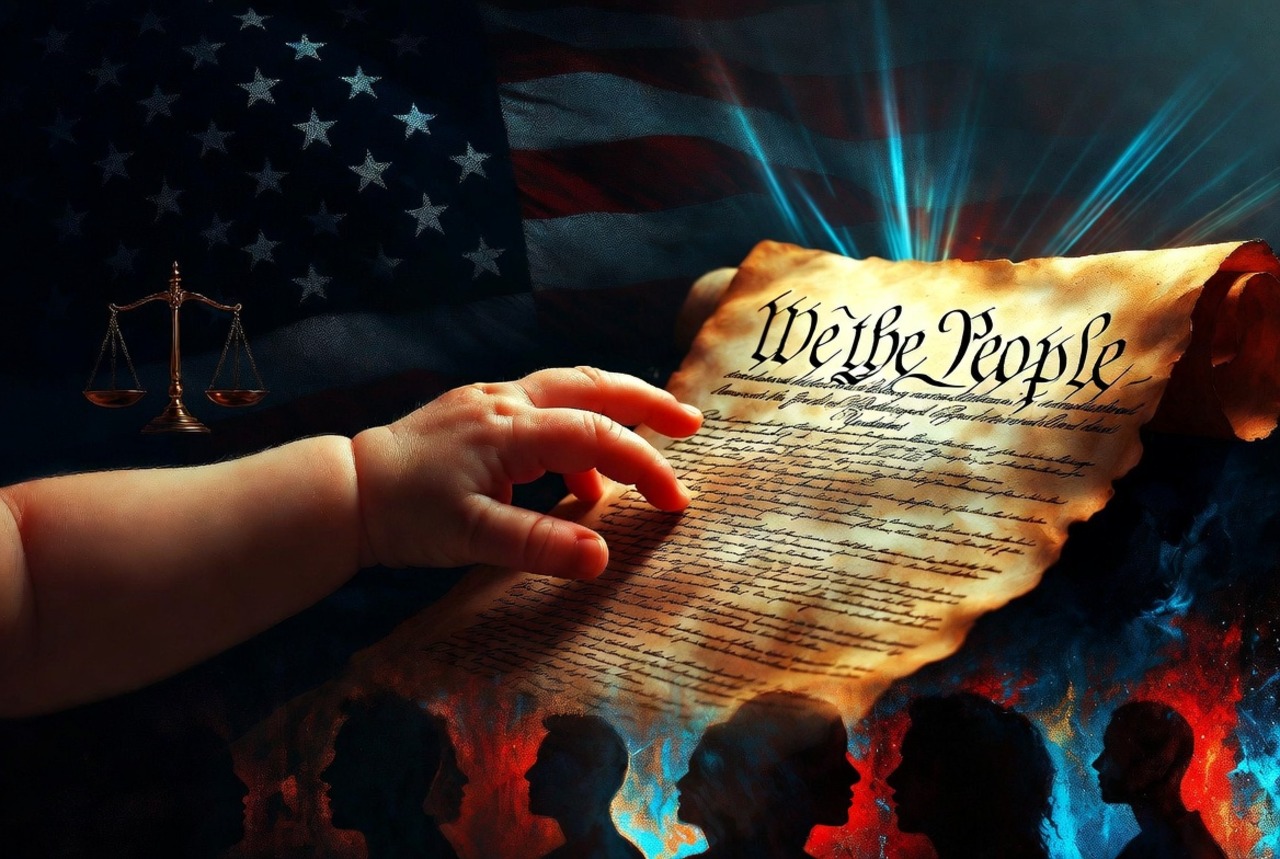
Credit: AI-generated illustration (Grok), generated in-house. HeadLines Decoded. · HeadLines Decoded LLC
Illustration generated with AI (Grok).
On June 30, 2026, the Supreme Court ruled 6–3 that a president cannot strip citizenship from a baby born in an American hospital. The argument that produced that ruling started in 1857, and neither side of it has ever fully gone away.
One side sees birthright citizenship as a core American promise: anyone born on U.S. soil starts life as a full citizen. The other sees it as a modern loophole never intended by the people who wrote the rule.
- In 1857, Dred Scott ruled that Black Americans could never be citizens, even if born free on U.S. soil.
- The 14th Amendment (1868) was written to reverse that, and Wong Kim Ark (1898) read it broadly: born here means citizen here.
- In June 2026 the Supreme Court reaffirmed that reading 6–3, striking down Executive Order 14160.
- Both the majority and the dissent were reading the same history. The fight over “subject to the jurisdiction” is older than any of us, and it continues.
What most Americans don’t realize is that, in important ways, both sides are drawing from real history.
The men who shaped the 14th Amendment after the Civil War were trying to build something fairer than what came before. They were responding to a catastrophic Supreme Court failure. They used language that was both specific to their moment and broad enough to create lasting principle. Courts later interpreted that language in ways that expanded inclusion. That process text, context, precedent, and adaptation is how American constitutional law has always worked when the original design had gaps.
The Catastrophic Gap: Dred Scott
In 1857, the Supreme Court ruled in Dred Scott v. Sandford that Black people, even those born free in the United States, could never be citizens. The decision didn’t just deny rights to one man. It declared that the Constitution itself treated an entire group of people born on American soil as outsiders by blood.
The ruling was morally indefensible and legally shaky even at the time. It ignored the long practice in many states of recognizing free Black citizens. It contradicted the natural-law language in the Declaration of Independence. Most importantly, it created a permanent underclass of people who could never fully belong, no matter how many generations their families had lived here.
The 14th Amendment was written to close this gap.
Its Citizenship Clause was the nation’s direct constitutional answer to Dred Scott.
What the 14th Amendment Actually Said
The Citizenship Clause reads: “All persons born or naturalized in the United States, and subject to the jurisdiction thereof, are citizens of the United States and of the State wherein they reside.”
Senator Jacob Howard of Michigan, the clause’s principal author, explained its scope during the 1866 debates. He said it would not include children born to foreign diplomats or ministers accredited to the U.S. government. But, he continued, it would include “every other class of persons.”
The amendment’s main purpose was clear: to constitutionalize citizenship for the freed slaves and their descendants, overruling Dred Scott. The framers focused on people who had been held in bondage on American soil and now owed no allegiance to any other power.
At the same time, the text they chose did not limit citizenship to “children of citizens” or “children of legal residents.” It used broader language that echoed the common-law tradition the United States had long followed: being born on the soil, under the protection and authority of the country, generally makes one a citizen.
Wong Kim Ark: The Court Fills the Gap
In 1898, the Supreme Court confronted one of the open questions in United States v. Wong Kim Ark.
Wong Kim Ark was born in San Francisco in 1873 to Chinese parents who had lived in the United States for years as legal residents. At the time, the Chinese Exclusion Act barred Chinese immigrants from becoming naturalized citizens. When Wong, a 21-year-old cook, returned from a visit to China, immigration officials told him he was not a U.S. citizen and could not re-enter the country of his birth.
He sued. In a 6–2 decision, the Supreme Court ruled that Wong Kim Ark was a citizen. Justice Horace Gray’s majority opinion held that the 14th Amendment had affirmed the “ancient and fundamental rule of citizenship by birth within the territory.” The phrase “subject to the jurisdiction thereof,” the Court said, referred to people who were subject to U.S. law and authority while present in the country not to diplomats or invading soldiers.
“The Amendment… includes the children born, within the territory of the United States, of all other persons, of whatever race or color, domiciled within the United States.”
U.S. Supreme Court, Wong Kim Ark (1898)
The decision explicitly included children born to “resident aliens.” It did not require the parents to be citizens or even eligible for citizenship. Wong Kim Ark’s personal victory became the foundation for the modern understanding of birthright citizenship that has stood for 128 years.
The Modern Debate and the June 2026 Ruling
More than a century later, the same constitutional language returned to the center of national argument.
In January 2025, President Trump issued an executive order directing federal agencies to treat children born in the United States to parents who were unlawfully present or temporarily present as not “subject to the jurisdiction” of the United States and therefore not automatic citizens.
The order was immediately challenged. On June 30, 2026, the Supreme Court ruled 6–3 in Trump v. Barbara that the executive order was unconstitutional. Chief Justice John Roberts, writing for the majority, relied heavily on Wong Kim Ark and the common-law tradition it recognized. The Court held that children born on U.S. soil to parents who are not diplomats are “subject to the jurisdiction” of the United States in the constitutional sense.
Justices Thomas, Alito, and Gorsuch dissented. They argued that the original understanding of “jurisdiction” required a stronger form of allegiance or domicile from the parents, and that the primary historical purpose of the clause securing citizenship for freed slaves did not require extending it so broadly.
Both the majority and the dissent were engaging with the same historical sources. They reached different conclusions about how broadly those sources should be read today.
Why the Stakes Feel So High
For families, the rule is not abstract. A child born in a U.S. hospital to undocumented parents is, under current law, a U.S. citizen from the moment of birth. That child can sponsor parents for green cards later in life and will never face deportation based on their own status.
Critics argue that automatic citizenship for children of people who entered or remained unlawfully creates perverse incentives and treats the children of citizens and lawful immigrants differently than the original understanding intended.
Supporters argue that punishing children for the choices of their parents violates a core American principle, and that the text and precedent are clear.
Public opinion remains divided. When polls focus specifically on children of undocumented parents, the country splits close to 50-50, with sharp partisan differences.
A Living Framework, Not a Finished Product
The original Constitution contained compromises on slavery that its drafters knew were imperfect. The 14th Amendment was a later generation’s attempt to make the document more faithful to its own stated ideals of equality and belonging.
The framers left some questions open because no single generation can foresee every future circumstance. Courts filled one of those gaps in Wong Kim Ark by reading the text in light of the common-law tradition and the amendment’s broader purpose.
The American constitutional system has always contained both fixed text and mechanisms for adaptation through amendment, legislation, and judicial interpretation within precedent. When the gaps are large and the stakes are high, the most durable changes have usually come through the amendment process or clear legislative action.
The baby born in an American hospital today enters a country still wrestling with the same fundamental question the 14th Amendment tried to answer:
The question the 14th Amendment tried to answer
Who belongs here from the very first breath, and on what terms?
The Supreme Court’s June 2026 decision reaffirmed the broad reading that has governed for more than a century. It did not and could not end the deeper conversation about whether that reading remains the right one for a nation that continues to argue, as it always has, over the proper balance between inclusion, consent, and sovereignty.
That argument is not a sign of constitutional failure. It is the ongoing work of a system designed, however imperfectly, to be both principled and capable of change.
- 1857Dred Scott v. Sandford: the Supreme Court rules that Black people born in the U.S. cannot be citizens.
- 1868The 14th Amendment is ratified. Its Citizenship Clause is written to overturn Dred Scott and secure citizenship for freed slaves.
- 1898United States v. Wong Kim Ark: the Court rules a child born in the U.S. to Chinese resident aliens is a citizen, establishing broad birthright citizenship.
- Jan 2025President Trump issues Executive Order 14160, attempting to limit birthright citizenship for children of undocumented and temporary visitors.
- June 30, 2026The Supreme Court rules 6–3 in Trump v. Barbara that the executive order is unconstitutional, reaffirming Wong Kim Ark.
A related fight, this one over documentary proof of citizenship, is moving through Congress now. We broke it down in The SAVE Act, Part 1: What It Actually Is.
- Dred Scott v. Sandford, 60 U.S. 393 (1857).
- Congressional Globe, 39th Congress, 1st Session (1866). Senator Jacob Howard’s remarks introducing the Citizenship Clause.
- United States v. Wong Kim Ark, 169 U.S. 649 (1898).
- Trump v. Barbara, 591 U.S. ___ (2026). Supreme Court opinion and oral argument transcripts.
- National Constitution Center and Library of Congress historical materials.
All case citations were read from the opinions themselves. Quotations keep their original punctuation.
at the versions shown. What this means
Editor written. AI used for spelling and grammar only.