Diesel hit $5.85. The tractor does not get a vote.
U.S. diesel set a record this week. One side calls the pain overblown; the other says working families cannot carry it. I pulled four years of numbers into one place: the pump, the farm fuel bill, and the trucks that move what a field grows. They are below.

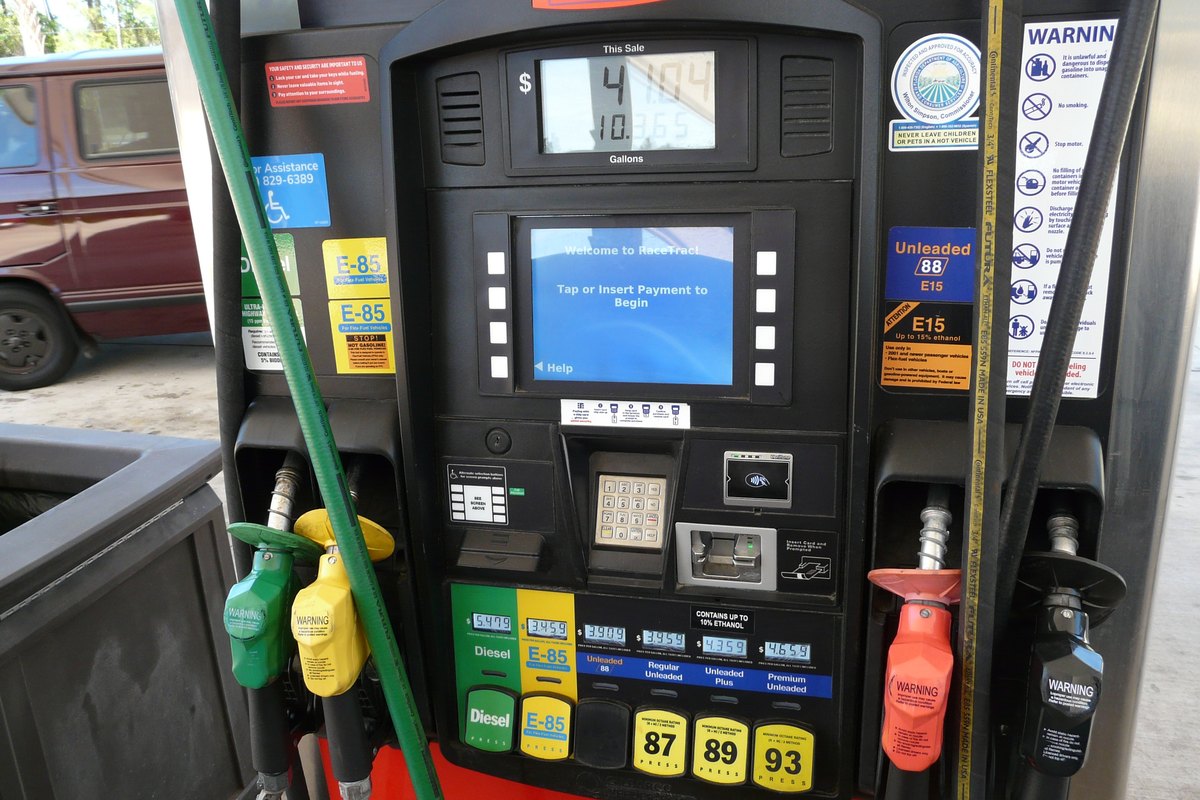
AAA’s national average for a gallon of diesel reached $5.85 on Friday, a record in the plain dollars you hand the clerk. On the eve of the Iran war in late February it was $3.76. That is a jump of more than two dollars a gallon in about six months. The old record was nearly $5.82, back in June 2022, during the first diesel shock after Russia invaded Ukraine. So the sticker has never been higher.
One caveat belongs right at the top, because a number this size invites a cheap fight. Adjusted for inflation, this is not the worst diesel has ever been. The Associated Press put the 2008 peak, about $4.74 back then, at roughly $7.20 in today’s money, and the 2022 record at about $6.56. By that measure the country has driven through worse. By the measure a farmer feels, the dollars leaving the account, it has not. Regular gasoline, for what it is worth, sat at $4.15.
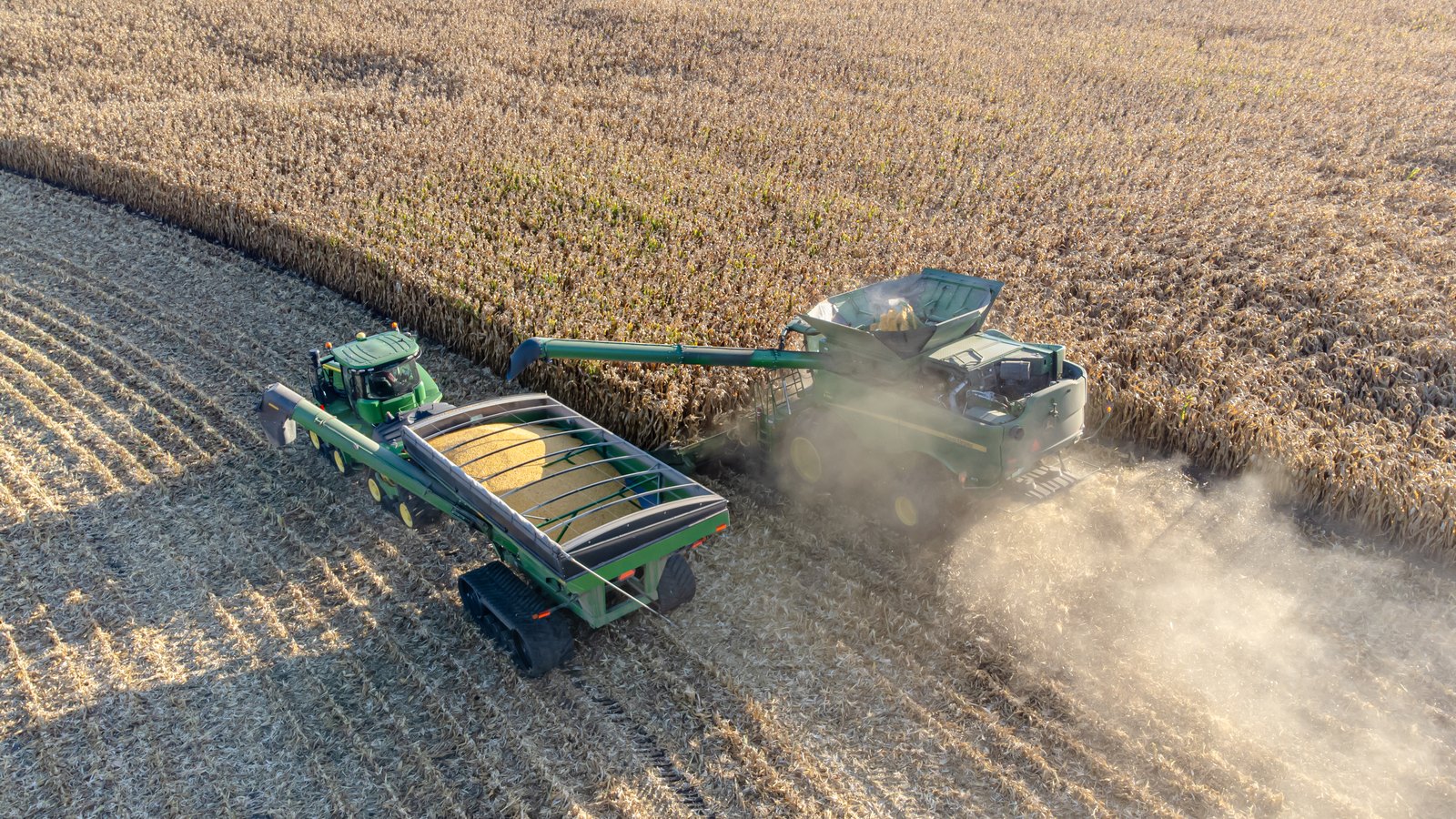
Farms and food do not run on that argument. They run on diesel, and on a lot of it. About three-quarters of the country’s farm equipment burns it, and so do the trucks that haul grain and cattle, milk and the head of lettuce that will not wait, along with the roughly nine in ten school buses headed back to the same towns. The field meter and the highway meter are both running straight into harvest.
Four years at the pump
The shape of it, from the last record to this one, is the boring monthly series worth more than any one day’s viral screenshot.
What a gallon costs in corn
The pump number is the one on the news. The number a farmer actually lives by is quieter, and it comes from USDA’s Illinois farm-diesel report. In the week ending May 1, off-road farm diesel there hit a record $5.41 a gallon, up 95 percent from $2.77 a year earlier. Now set that against what the farm sells. It takes 1.18 bushels of corn to buy a single gallon of that diesel. A year ago it took 0.59, exactly half. The ten-year average is 0.62. The crop got cheaper and the gallon got dearer in the same season, and 1.18 is a record of its own. That ratio is the exchange rate a farmer actually trades in, and it just doubled.
What it adds up to
Now multiply that across a country. USDA’s official books put total farm fuel spending at $15.6 billion in 2025, and 2025 was still one of the cheap years in the table above. The 2026 numbers are worse, and the first hard count is in. The Joint Economic Committee’s minority staff added up the diesel it took just to plant this year’s corn, soybeans, wheat, cotton, and rice: about $1.4 billion more than the same planting a year earlier, a 63 percent jump. Illinois farmers alone paid an extra $163 million, Iowa an extra $151 million. In plain terms from that same report, refilling the tank beside the shed cost about $1,500 more than it did at the 2025 peak, a grain-truck fill-up about $205 more, a tractor about $250.
Marty Richardson, a Missouri farmer, told Bloomberg what that does at one man’s tank: “I usually get 8,000 gallons, and I got 4,000 for what I paid for the 8,000 gallons in January.” That is how a national average becomes a smaller fuel supply and a shorter working day.
On a corn acre it runs about three gallons of diesel to plant and tend, and about three more to bring the crop in and work the ground after. A two-dollar jump on those six gallons is real money before a single truck leaves the farm. Purdue’s Ag Economy Barometer found about two-thirds of farmers now expect their 2026 income to fall, and they name the Iran war when asked why. Fuel is not the whole farm; feed and labor still take bigger bites, and so do rent and interest. It is the bite that grew fastest when the war moved the price of a barrel.
Where the field meets the aisle
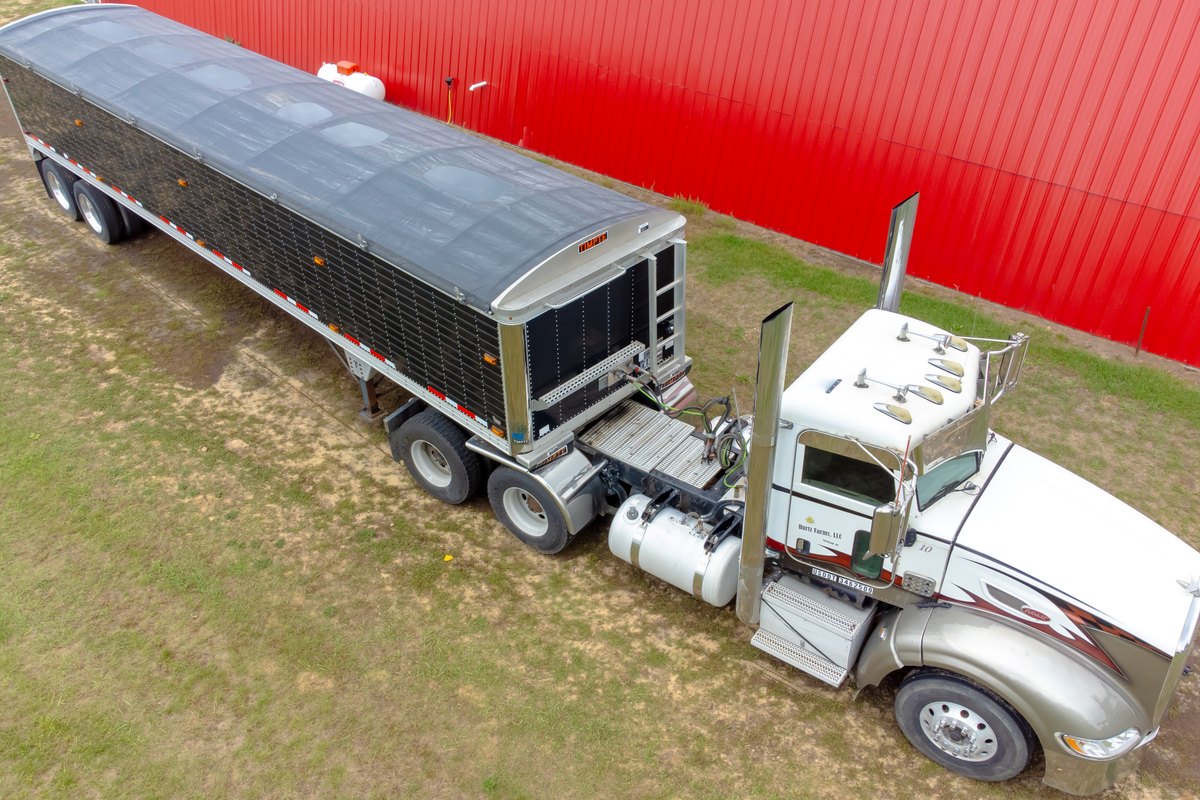
The tractor is only the first meter. Grain leaves on a truck, and so does everything perishable behind it. When the fuel that moves all of it sets a record, the cost does not vanish; it waits. David Ortega, a food economics professor at Michigan State, says the waiting is the tricky part. “Early on, much of the cost increase gets absorbed along the supply chain through existing freight contracts and retailer margins,” he told the AP. “But as contracts reprice and fuel surcharges take hold, more of that cost makes its way to the grocery store.” Perishable food is diesel with a sell-by date. And retailers will be stocking for the holidays on the same expensive gallon, because harvest and Christmas share a calendar more than a downtown office likes to admit.
None of this is one party’s doing, and saying so is not a dodge. The squeeze is global: an Iran war choking the tanker route through the Strait of Hormuz, Ukrainian drones hitting Russian refineries, and refiners running their plants for jet fuel and leaving less diesel behind. A politician can point at the $5.85 sticker or at a promised future drop, and each can find a true fact to stand on. What the field cannot do is wait for them to settle it.
Where that leaves you
I live where food is grown and hauled, and I do not need a fence to tell me that a gallon jumping from the mid-$3s to the high-$5s changes the math on a planted acre and on a truck that cannot idle for free. Measured against history, this is a hard week and not the hardest the country has seen. Measured against the check a farmer wrote last spring, it is a second shock inside four years, with the harvest still to burn and the cost already moving toward the grocery shelf. The record is nominal. The bill is real. The next number that settles the argument is what USDA writes for 2026 fuel when the year closes, and what a loaf of bread and a pound of hamburger do between now and winter. The tractor still has to roll, whatever anyone is shouting.
- AAA national average diesel $5.85 on September 4, 2026; prior record June 2022 nearly $5.82; $3.76 on the eve of the Iran war in late February; regular gasoline $4.15; the 2008 peak (about $4.74) worth about $7.20 in 2026 dollars and the 2022 record about $6.56 (Associated Press). NPR; AP via ABC7.
- Causes and diesel’s reach: the Iran war disrupting shipping through the Strait of Hormuz, Ukrainian attacks on Russian refineries, and refiners prioritizing jet fuel; about 75 percent of farm equipment and 90 percent of school buses run on diesel (NPR and AP).
- USDA AMS Illinois farm (off-road) diesel, week ending May 1, 2026: record $5.41 a gallon, up 95 percent from $2.77 a year earlier; 1.18 bushels of corn per gallon versus 0.59 a year earlier and a 0.62 ten-year average; about three gallons of diesel per corn acre for fieldwork and three more for harvest, via the National Corn Growers Association.
- USDA NASS, U.S. Farm Production Expenditures, 2025 (July 2026): total expenditures $490.3 billion; total fuel $15.6 billion. USDA NASS.
- Joint Economic Committee minority staff, July 2026: about $1.4 billion more diesel to plant this year’s five major field crops than last season, a 63 percent increase; Illinois about $163 million and Iowa about $151 million; an on-farm tank refill about $1,500 more than the 2025 peak. JEC fact sheet.
- Marty Richardson (Missouri) tank example and “biggest diesel shock since 2022,” Bloomberg via Insurance Journal; Purdue Ag Economy Barometer, roughly two-thirds of farmers expecting 2026 income to fall on the Iran war (same report). David Ortega, Michigan State University, on the lag from freight cost to grocery price (Associated Press).
Editor written. AI used for spelling and grammar only.