I like Mark Ruffalo. So I read the whole thing before I made up my mind.
The word "antisemite" got hung on a man I admire this week, over a post about a $111 billion merger. Before I let myself get angry on his behalf, I sat down and read every quote, on both sides, slowly. This is what is actually on the table.

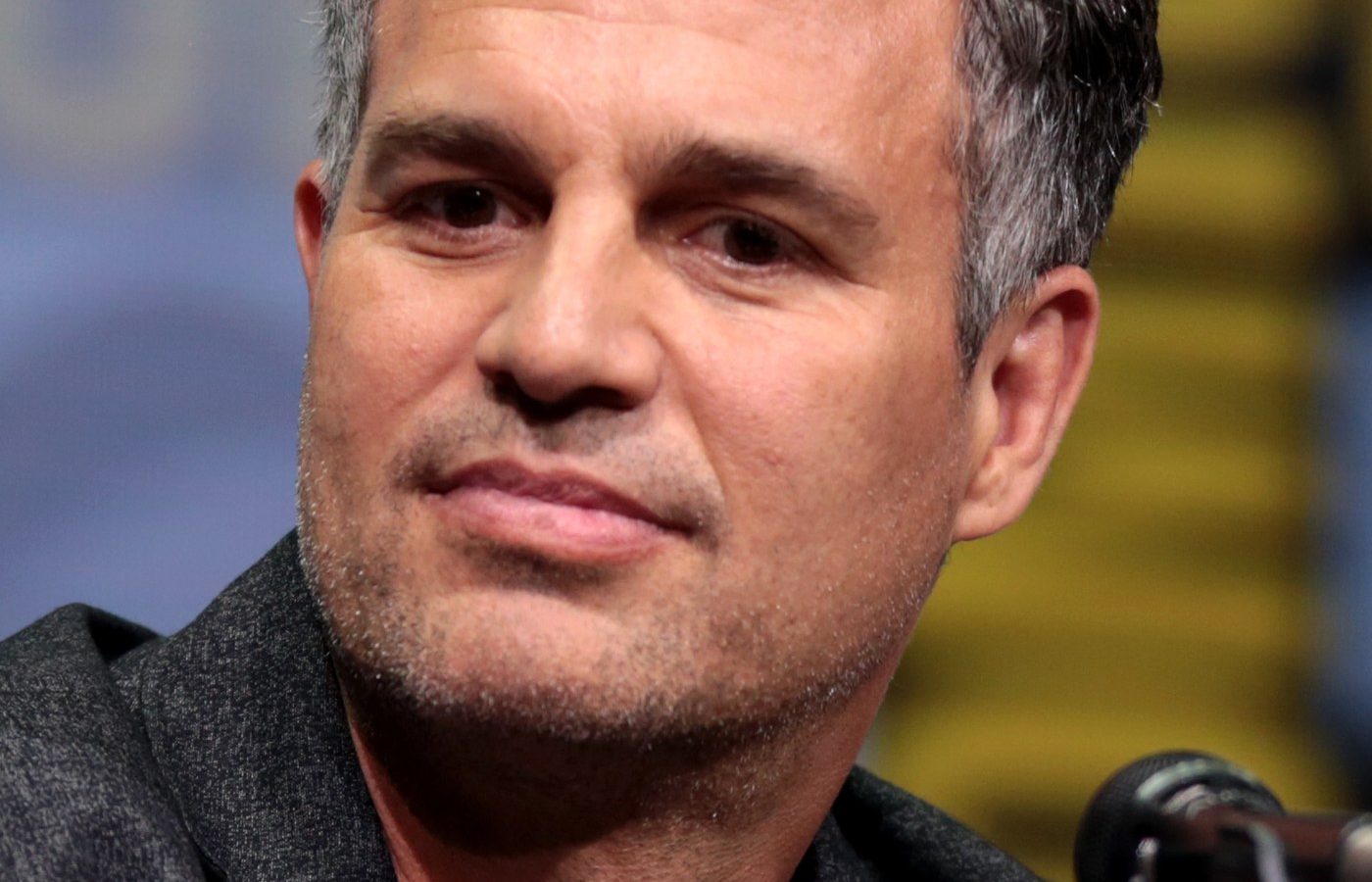
I have liked Mark Ruffalo for a long time, and I should say plainly that I do not know the man. I have only watched him speak, more than once, and I have a hard time picturing someone warmer or more open than the person who shows up at those microphones. So when his name turned up in a week of headlines with the word “antisemite” hanging off it, my first instinct was to be angry for him. My second instinct, the one I have learned to trust more, was to slow down and read the whole thing before I decided anything at all. So I did. This is what it looks like when you take it slowly.
On August 21, Ruffalo shared an old clip of Safra Catz, then Oracle’s chief executive, on his Instagram. In it, she talks about having “really profoundly scary technology at Oracle,” and about making sure “it was available for the effort” after the October 7, 2023 attacks in Israel. Ruffalo wrapped his own words around the clip. He tied Oracle to Larry Ellison, the company’s cofounder, and to the fortune now helping Ellison’s son David buy Warner Bros. Discovery. “This is the company that Larry Ellison is using to fund his son David’s Warner Bros acquisition,” he wrote. He called the elder Ellison “a classic Oligarch,” described what he saw as “a genocide, which was built on an apartheid system,” said it was “powered by Oracle,” and warned the deal would be “catastrophic for our film industry.”
Those are strong words, and they are his. I am quoting them so you can read them for yourself, not so I can grade them. Two people can look at that same paragraph and honestly see two different things, and the rest of this really comes down to those two readings.
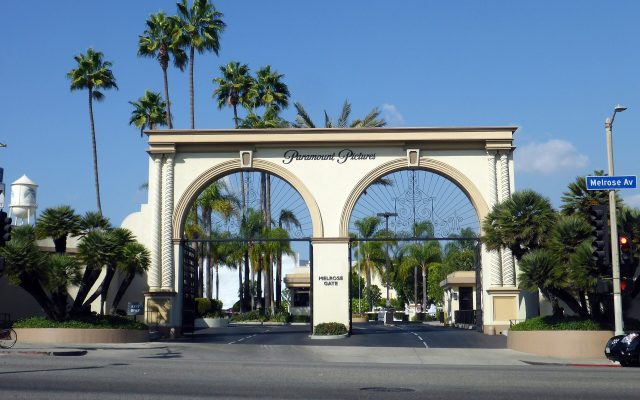
Within hours, Paramount Skydance, the company David Ellison runs, answered. It said it was “troubled when antisemitic tropes are invoked in purported service of a business dispute,” and that the post “exposes the true motivation of some who have advocated opposition to this transaction.”
Ruffalo did not let that sit. He called the accusation “appalling and fundamentally dishonest.” And then he drew the line that, for me, is the whole matter. “Criticizing the actions of the Israeli prime minister, a military technology contract, or the executives who supply it,” he said, “is not the same as criticizing Jewish people.” His views, he added, “come from my own political convictions and should never be interpreted as hostility toward Jewish people, for whom I have deep love and respect,” and he said Jewish friends and mentors had shaped his life in acting and in activism.
I believe that distinction, and I have leaned on it my whole adult life. You can be against a government, a war, or a contract to build the tools of one, and hold nothing against a people. Most of us grasp that instantly when the government in question is our own. It should not get harder to grasp because the government is somebody else’s.
But I promised to read the whole thing, and reading the whole thing means taking the other side seriously instead of waving it off. A great many people did not hear a merger critique in that post. They heard an old and ugly pattern underneath it: a Jewish family, an enormous fortune, a hidden hand shaping the world.
A group of nearly a thousand people in the entertainment industry, calling itself The Brigade, said as much in a public statement. It named producers including Haim Saban, Lawrence Bender, Teddy Schwarzman, Ram Bergman and Matti Leshem, and it did not hedge: “This is not commentary on a merger. It is not a criticism of a government. It is simple antisemitism.” In their reading, Jewish executives were being drawn as a secretive, wealth-hoarding elite that delights in mass death. Several established advocacy groups, among them the Anti-Defamation League, the Simon Wiesenthal Center and Creative Community for Peace, said much the same thing in their own words.
I want to be fair to that reaction, because it is not nothing. After October 7, and after a long and painful rise in attacks on Jewish people, a sentence that puts “oligarch,” a Jewish family and the word “genocide” in a single frame does not land in empty air. You can be certain Ruffalo did not mean the old libel and still understand why people who carry that history flinched at the shape of the words. What a person means and what a sentence does are two different things. He can be right about the first, and they can be honest about the second.
What kept me from taking the easy exit in either direction was the thing that happened next. On September 1, more than 170 Jewish writers, artists and thinkers signed an open letter titled “Enough!” Its signers include Joaquin Phoenix, Joel Coen, Todd Haynes, Hannah Einbinder, Ilana Glazer, Tony Kushner, Wallace Shawn and Miranda July. They called the charge against Ruffalo a “false and dangerous weaponization of charges of antisemitism,” and they wrote that pointing at these connections “is the exact opposite of antisemitism.”
So sit with the plain fact of that. The people calling Ruffalo’s post antisemitic are, many of them, Jewish. The people calling that charge a smear are, many of them, Jewish. This is not one community handing down one verdict. It is an argument inside a community that has every right to have it, and anyone who needs one of those two groups to be the “real” Jews in order to win the point has quietly stopped decoding and started recruiting.
So if it is not one community speaking with one voice, what else is in the room? This is where I think the plainer, less dramatic story lives, and the good part is that it does not require anyone in it to be a villain.
The thing David Ellison is trying to buy is not small. Paramount Skydance’s deal for Warner Bros. Discovery is valued at about $111 billion. Not $111. Not $111 million. Billion, with a B. It is the largest media merger in a generation, and a number that big is a motive all by itself. The Justice Department cleared it in June, with no conditions attached. To finance it, Larry Ellison put his own money behind the bid; Paramount Skydance told the market in late 2025 that he had personally guaranteed some $40 billion of it. The deal is mostly done, but not entirely. Several state attorneys general, California’s among them, are still in a position to fight it in court, and that fight was live the very week Paramount called Ruffalo’s post antisemitic.
Now turn that over slowly, the way you would a log in a fire. If you are the company closing the biggest media deal in a generation, and a movie star with twenty million followers tells the public your financing is tied to Gaza, you do not need a conspiracy to want that sentence gone. You have an ordinary, dollars-and-cents reason to push back hard, in public, and fast. That is not a hidden motive. It is the most visible motive there is. And on the other side of it, the advocacy groups that have spent two years of a war arguing that “genocide” talk is both wrong and dangerous do not need a check from anyone to say so again when a famous man reaches for the word. Conviction is its own engine.
None of this points to a single hand pulling the strings. There is no document that shows one, and I would not print a suspicion dressed up as a finding. The smaller and, I think, truer thing is this: there are $111 billion reasons for a fight to be this loud, and once you can see the money on the table, you do not need a secret to explain the volume.
Standing by a man does not mean pretending his record is spotless, and Ruffalo’s is not. This is not his first turn through this argument. Back in 2021, during an earlier round of Israel-Hamas fighting, he apologized under his own name for posts that, in his words, “suggested Israel is committing ‘genocide,'” language he then called “inflammatory, disrespectful” and something “being used to justify antisemitism here and abroad.” He has since come back to the word. You can hold that honestly in one hand: a man who once decided the term went too far, and later decided the moment asked for it again. That is a person wrestling with a hard thing in public, across years, but not a bigot.
And if you have felt yanked back and forth the whole way through this, he didn’t, he did, he didn’t, you are not reading it wrong. I have felt it all week. Every time I settle onto one side, a true fact on the other side taps me on the shoulder. The deeper in you go, the harder it swings, and at some point the honest thing is to stop fighting the swing and admit that a story with two true sides has no tidy place to set anybody down.
So where does that leave me, still a fan, watching my next movie with the lights low. That heavy word does not belong on a man I have watched be plainly decent, because a word like that should be set down with care, not thrown to win a week of headlines. And the people who flinched at his post are not acting in bad faith either, because a lot of them are carrying a history I am not. The thing I keep coming back to is the plain thing sitting in the middle of the table: a merger, a fortune, a war, and a word that will not sit still. The money is real, and it is enormous, and it explains far more of the noise than any secret ever could. That is where I am comfortable standing. You have every quote I have now. Read them and go stand where you think is right.
- Ruffalo’s August 21, 2026 Instagram post and the Safra Catz clip, and Paramount Skydance’s response, as reported by The A.V. Club and The Hollywood Reporter.
- Ruffalo’s response, verbatim (“appalling and fundamentally dishonest”; “not the same as criticizing Jewish people”), via The New Republic, NBC News and The Hollywood Reporter.
- The Brigade statement and named producers, via Fox News and The Hollywood Reporter; the advocacy-group statements via Variety and TheWrap.
- The “Enough!” open letter, September 1, 2026, full text at Literary Hub; coverage and signatories via Variety and Deadline.
- The merger: Paramount Skydance’s $111 billion acquisition of Warner Bros. Discovery, cleared by the Justice Department in June 2026, via NPR; Larry Ellison’s roughly $40 billion personal guarantee via Variety.
- Ruffalo’s 2021 apology and his earlier statements on Israel and Gaza, via The Forward and CNN.
Editor written. AI used for spelling and grammar only.