The U.S. emergency oil stockpile just hit its lowest level since 1983. Here’s what that number actually tells us.
America's Strategic Petroleum Reserve was built as insurance against severe supply shocks. How it has actually been used, and where the numbers stand now, shows what kind of insurance it really is.

You have probably seen the headline: America’s Strategic Petroleum Reserve has slipped below 300 million barrels, the first time it has been that low in more than forty years. The number is real. The latest Department of Energy figures put the reserve at 298.7 million barrels against a storage capacity of 714 million. Do the arithmetic and it is less than half full, sitting at a level the country has not seen since 1983, back when the caverns were still being filled for the first time.
The headline stops there. The more useful question is the one it skips. What was this stockpile built to do, and how has the way we actually use it changed what that number means?
The original idea was simple
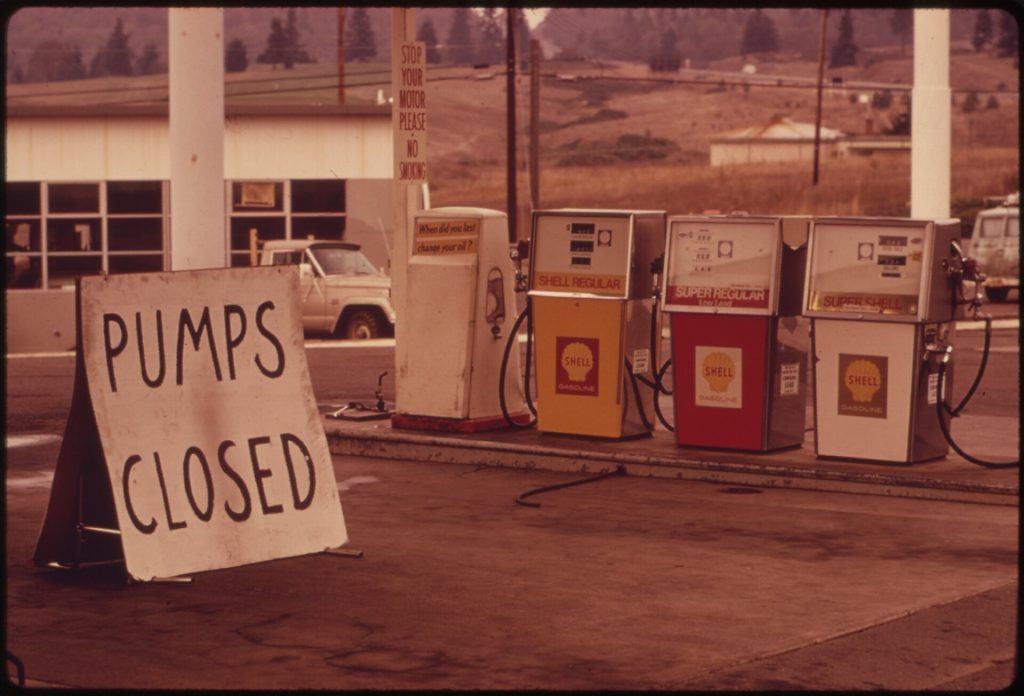
The reserve was born out of a bad year. When Arab producers cut off oil to the United States in 1973, the shock was immediate and visible. Stations ran dry. Drivers sat in lines that wrapped around the block, rationed by odd and even license plates. Prices jumped, the economy sagged, and Washington realized it had no cushion at all. So Congress built one: a government-owned emergency stash of crude, held for the day the market could not right itself fast enough.
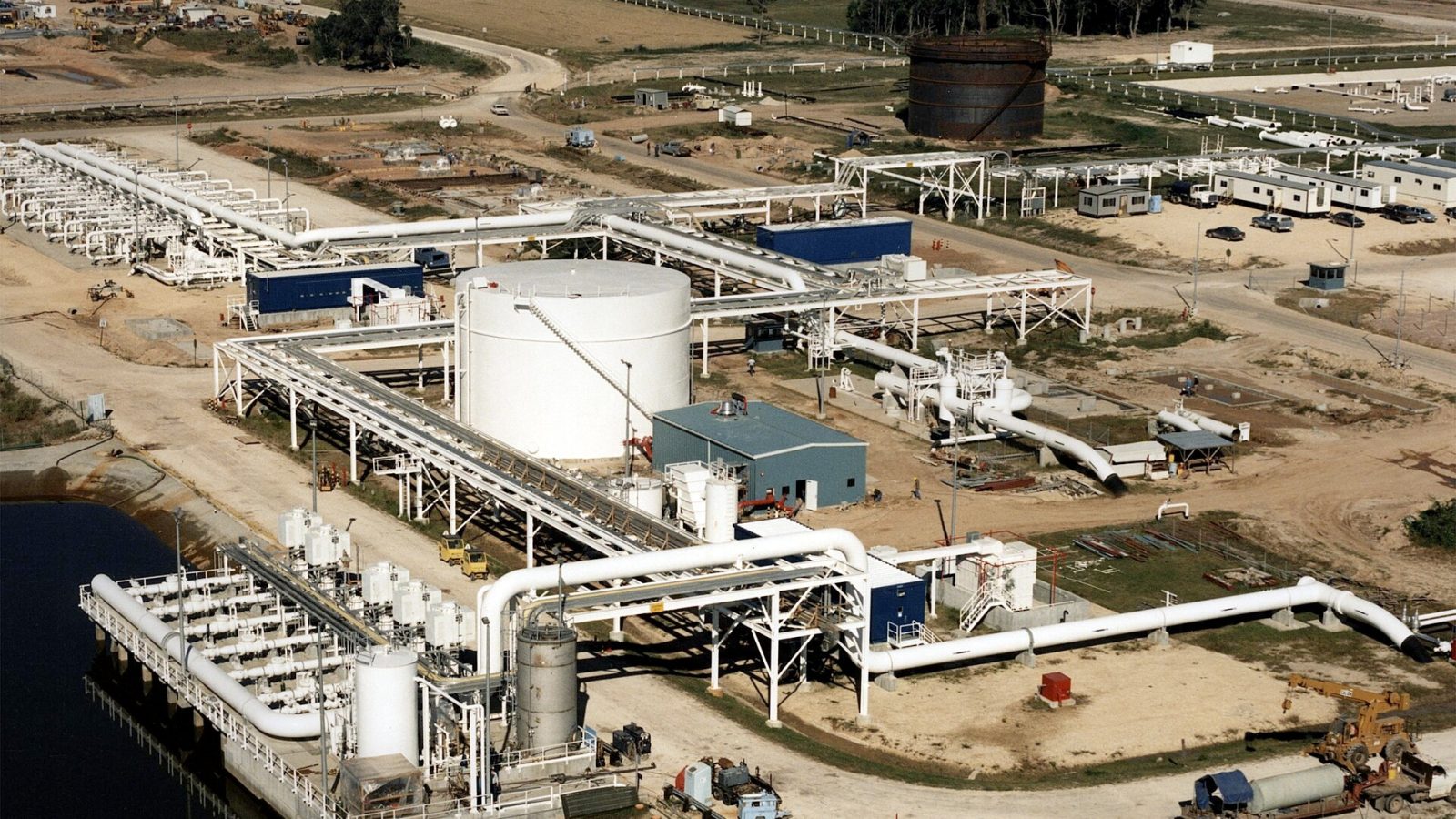
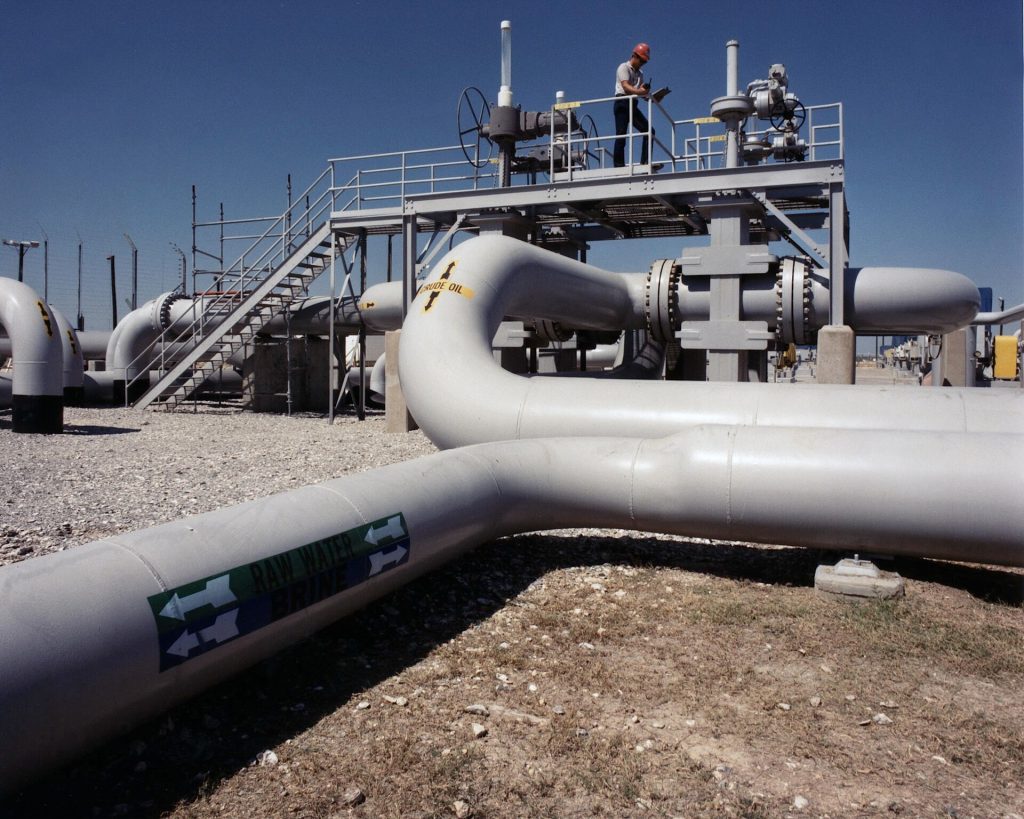
The oil went underground, into a set of huge salt caverns at four sites along the Gulf Coast in Texas and Louisiana. Picture sealed bottles hollowed out of natural salt domes, each one big enough to swallow a skyscraper. Full, the system holds more than 700 million barrels, and once a president signs the order, oil can start reaching the market in about two weeks. That is slow by the standards of a trading desk and remarkably fast by the standards of building anything real.
That was the whole point of it. Insurance, not a checking account. You do not raid it because gasoline got expensive, or because the budget looks tight in an election year. You open it when the alternative is worse.
How the insurance has been used
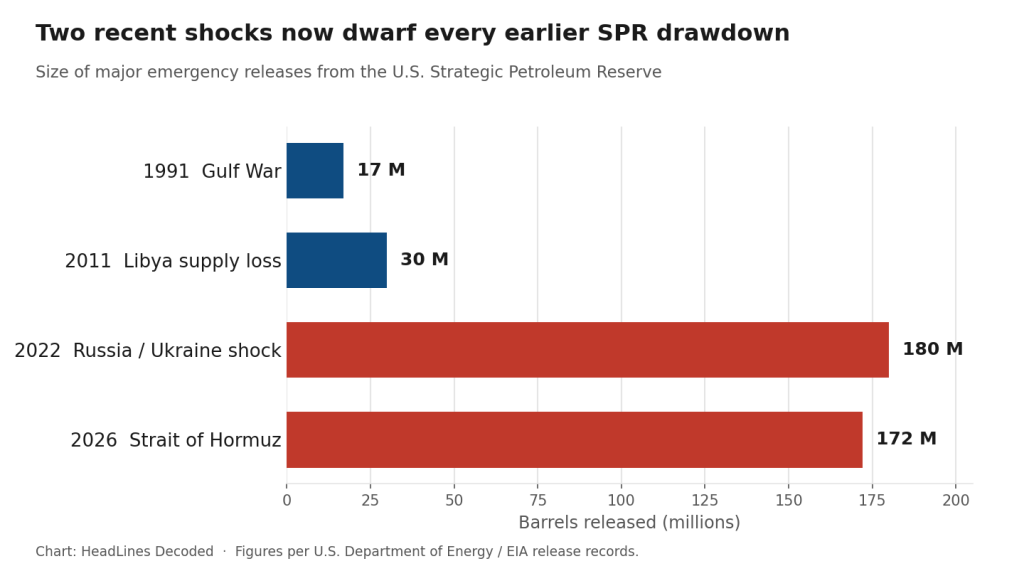
For most of its life the reserve mostly sat there. The first real emergency tap came during the 1991 Gulf War. Hurricane Katrina forced a smaller, practical release in 2005, after the storm knocked out Gulf production and refining. In 2011 the United States joined an international release to cover oil lost in the Libyan civil war. None of it made much of a dent.
Then 2022 broke the pattern. Oil prices spiked after Russia invaded Ukraine, and the government drained about 180 million barrels over several months. That was the largest single drawdown in the reserve’s history, and it showed. Some of the oil got bought back later and some scheduled sales were canceled, but the buffer never climbed back to where it had started.
Early in 2026 came the next big one. With the Strait of Hormuz effectively shut, the United States committed 172 million barrels to a coordinated international response. A lot of that oil is going out under exchange deals, where companies take barrels now and promise to return more later. Even counting those IOUs, the tank keeps dropping. Which is how you arrive at a number last seen in the early 1980s.
Every one of those calls had a genuine crisis behind it. And every one of them spent down the same finite policy.
What the low number actually means
Less than half full still means a lot of oil. Three hundred million barrels is not a rounding error. But the usable figure is smaller than the headline suggests. Older caverns and pipelines have their limits, and the further you draw the reserve down, the slower its maximum daily release rate gets. The insurance is still there. The coverage is just thinner, and the payout takes longer to arrive.
Refilling is the hard part, and it rarely happens on a clean schedule. Buy when prices are high and you overpay with public money. Buy when they are low and domestic producers howl. The exchange deals are a way around that trap, topping the reserve back up with returned barrels instead of a fresh check from Congress. Whether those barrels actually come home, on time and in full, is the thing to watch. It decides how much of the cushion is real.
There is a subtler cost too. The more often the reserve gets tapped for big releases, the more everyone starts treating it like a routine lever instead of a last resort. Traders price it in. Companies may keep less oil of their own, figuring Washington will step in to cover a gap. And the next administration inherits a shallower reserve to work with.
The part worth watching
The Strategic Petroleum Reserve was never going to hold gas prices down forever or untangle every crisis in the Middle East. It was built for one job: the sudden, sharp cutoff that markets cannot ride out on their own.
The low number is easy to misread as failure. What it really marks is a reserve drawn on harder in five years than in the whole four decades before it. Whether that is a sensible answer to bigger shocks or a slow drift in how the country treats its own emergency stash is the argument the current number forces into the open.
The better questions sit underneath it. Do those exchange barrels actually come back, on time and in full? How much of the reserve stays usable once the infrastructure limits bite? And when the next big decision lands, does the oil that is left get treated as emergency coverage or as one more lever to pull?
That is the gap between a frightening headline and an insurance policy that still pays out when the day comes.
- U.S. Department of Energy, “United States to Release 172 Million Barrels of Oil From the Strategic Petroleum Reserve” (official announcement)
- U.S. Department of Energy, Strategic Petroleum Reserve Quick Facts (capacity, salt-cavern storage, drawdown mechanics)
- U.S. Energy Information Administration, Weekly Petroleum Status Report (SPR inventory data)
- CNBC, “Oil in U.S. Strategic Petroleum Reserve falls below 300 million barrels, lowest since 1983” (Aug. 10, 2026)
- PBS NewsHour, “U.S. to release 172 million barrels of oil from Strategic Petroleum Reserve as prices surge”
- Bipartisan Policy Center, “How the U.S. Strategic Petroleum Reserve Works” (background explainer)
Reported and edited to HeadLines Decoded newsroom standards. E.G. v4.16 · I.R.G. v1.13 · L.R.G. v1.9 · P.L.G. v1.10.
Editor written. AI used for spelling and grammar only.