The lever is not a rumor. It is a price.
I have an MBA, and the classes I liked treated interest rates like a switch on the American lifestyle. This week's inflation file is waving a red flag. The lever in kitchen-table terms, and the number the Fed itself wrote down.

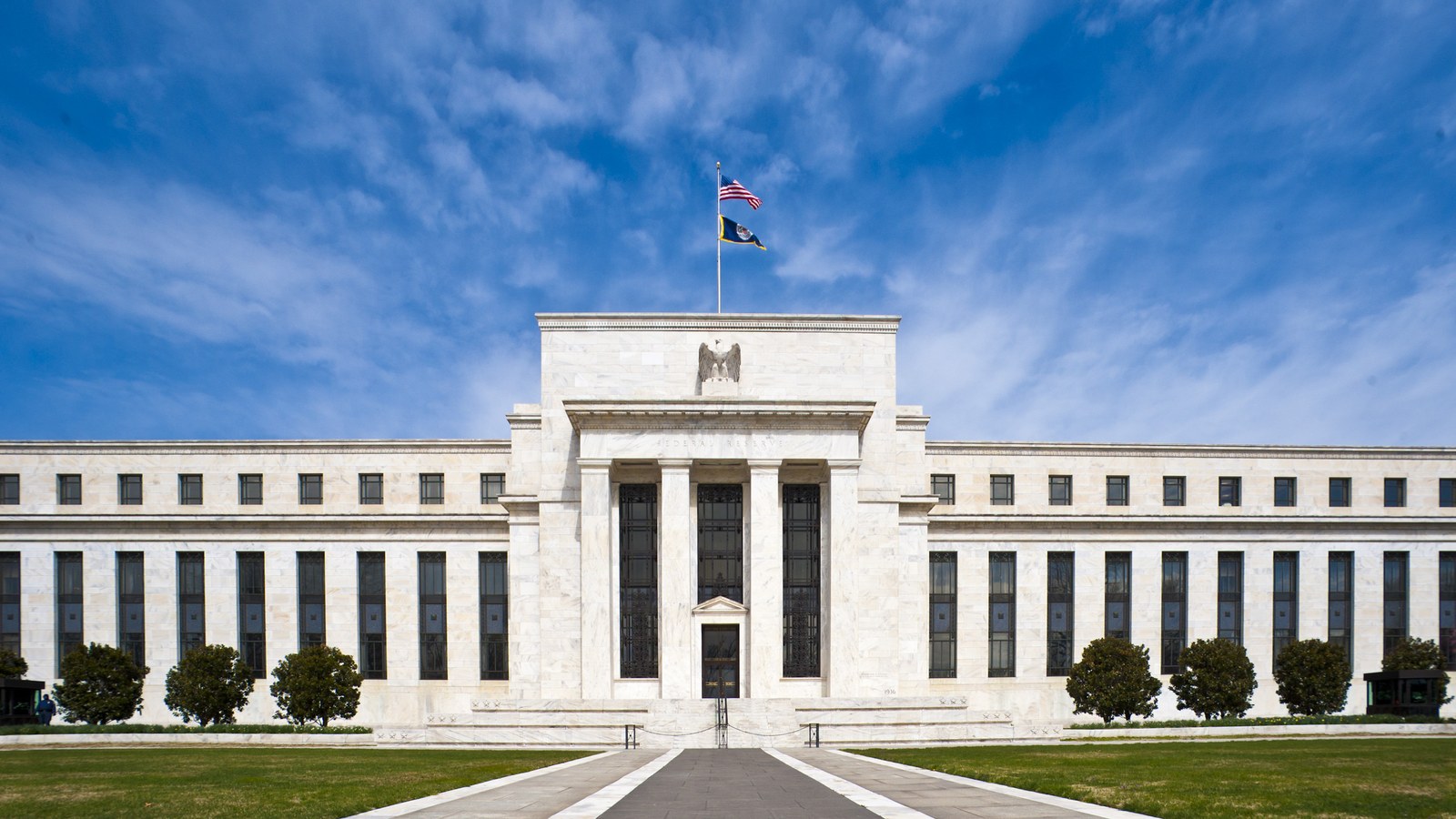
None of this is simple, and I will not pretend it is. But it is not magic either. The Federal Reserve does not print cheaper milk. It changes the price of borrowed money. Almost everything in the lifestyle we call American runs, at some point, through borrowed money. That is the lever.
How the switch actually works
Think of the economy as a house with the air conditioning stuck on a setting that is a little too warm. Inflation is that extra warmth: the same cart costs more this year than last. The Fed’s target is 2 percent on the PCE index, its preferred thermometer. Two percent is not a moral number. It is the speed they think lets prices creep without wrecking wages and contracts.
The federal funds rate is the overnight rate banks charge each other. You never pay it directly. You pay what it becomes after banks, credit cards, auto lenders, and mortgage desks add their spread. When the Fed raises that overnight rate, new borrowing gets more expensive. When it cuts, new borrowing gets cheaper. The current target range is 3.50 to 3.75 percent. It has sat there since December 2025.
| If the Fed | What you feel | What prices tend to do next |
|---|---|---|
| Raises the rate | Card APRs, car loans, new mortgages, and business credit lines cost more. Some projects wait. Some hires wait. | Demand cools. Sellers have a harder time lifting tags. Inflation usually eases, on a lag of months, not days. |
| Cuts the rate | Credit gets cheaper. Houses and trucks get easier to finance. Hiring can pick up. | Demand heats. Tags can rise faster if supply cannot keep up. |
| Holds still | The last setting keeps working through old loans and new ones. Markets argue about the next move. | Inflation follows the leftover heat in rents and energy, plus whatever demand is still in the system. |
Why the lever sticks
That lag is why the job feels thankless. Pull the lever today and the grocery ticket may not notice until winter. Pull it too late and the ticket has already taught a generation that 4 percent is the new weather. Pull it too hard and you get layoffs you did not order.
I used to sit in those classrooms and watch the diagrams. IS-LM. The Phillips curve. They looked clean on a whiteboard. In a real country the lever is sticky. Energy can spike because a strait is a shooting gallery. A tariff can lift the price of a washing machine even when nobody is binge-borrowing. Wages can chase last year’s rent. The Fed does not control a tanker in the Gulf. It controls how eager you are to finance the next tanker of inventory.
The red flag, in the Fed’s own ink

June’s projection was the official confession that 2026 would not glide home to 2 percent. PCE at 3.6 percent for this year, still 2.3 percent in 2027, back to 2.0 percent only in 2028. Core similar. Unemployment around 4.3 percent. That is not a crash forecast. It is a “prices stay hot while we hope the labor market holds” forecast. Between March and June they raised the inflation box and the rate box together. That pairing is the tell. They no longer saw a clean path down without more expensive money.
This week Governor Christopher Waller laid out the September call. Twelve-month PCE is running 3.7 percent, core 3.3 percent, both still too high. The good news is buried in the short window: three-month core has cooled to 3.05 percent, down from 4.76 percent in February, and he called the speed of that drop encouraging. So he is leaning toward a hold. If the data over the next two weeks keep cooling, he would support keeping the rate where it is. If August comes in hot and the progress reverses, a hike is on the table. He was blunt about how little slack he sees: “I judge that policy is currently only slightly restricting aggregate demand, and it may not take much acceleration in inflation to nudge me into supporting tighter policy.” By late August, futures markets put the odds of a hike at the September meeting itself at roughly two in three. Diesel at a nominal record does not make that math easier.
A misplaced pull, and a missed one
The missed pull is leaving money too cheap while demand and shocks are already lifting prices. People keep buying. Firms keep marking up. Expectations settle at “everything rises.” That is how a two-year problem becomes a five-and-a-half-year problem, which is the clock Waller is now reading.
The misplaced pull is the opposite mistake: jack the rate into a labor market that is already wobbling, or into a supply shock the rate cannot fix. You get unemployment without cooling the thing that was never about credit cards. Energy and war are the current version of that trap. A rate hike does not open the Strait of Hormuz. It can still slow the rest of the ticket so an energy spike does not turn into a wage-price loop.
The dual mandate is the adult version of that dilemma. Maximum employment and stable prices. When they fight, someone loses a year. The lever is how the committee picks which pain to schedule.
I will not tell you which way they should vote on September 16. I would rather hand you the way to read the meeting like an old student. If they hike, they are saying the 3.6 percent box is the danger. If they hold, they are saying the three-month cool-down is the signal that counts and diesel is a relative price, not a new regime. If the statement leans on the phrase “slightly restrictive,” remember Waller’s own line about how little it might take to nudge him tighter. That is a man who thinks the lever is only barely on.
Diesel hit $5.85 a gallon in September, a nominal record, and it feeds into the cost of food no matter what the committee does with the funds rate.
The lifestyle I liked studying is the one where a household can plan. Planning dies when the price level is a rumor. The Fed’s job is boring on purpose, and boring is the point. A red flag in its own forecast is the opposite of boring. It is the committee admitting the switch may need another throw before the house finally cools.
- Federal Reserve Summary of Economic Projections, June 17, 2026. Median 2026 PCE inflation 3.6% (March: 2.7%); core PCE 3.3%; year-end 2026 funds rate 3.8% (March: 3.4%); longer-run 3.1%; unemployment 4.3%; PCE 2.3% in 2027 and 2.0% in 2028. Federal Reserve.
- FOMC target range for the federal funds rate: 3.50% to 3.75%, held since December 2025. Next meeting September 15 to 16, 2026. Federal Reserve.
- Governor Christopher Waller remarks, September 3, 2026: 12-month PCE 3.7% and core 3.3%; three-month core 3.05%, down from 4.76% in February; inflation above 2% for five and a half years; leaning toward a hold if cooling continues, open to a hike if August inflation reverses; “policy is currently only slightly restricting aggregate demand.” Waller remarks, reported.
- Market pricing: CME FedWatch showed roughly a two-in-three chance of a 25-basis-point rate hike at the September 2026 meeting (late August 2026). CME FedWatch, reported.
- Federal Reserve dual mandate and the 2% PCE longer-run goal, Statement on Longer-Run Goals and Monetary Policy Strategy. Federal Reserve.
Editor written. AI used for spelling and grammar only.