Only One of Five Ohio Governor Campaigns Answered Our Question
Our one-sentence question asked each campaign to name a first bill and the Ohio household cost it is meant to change.

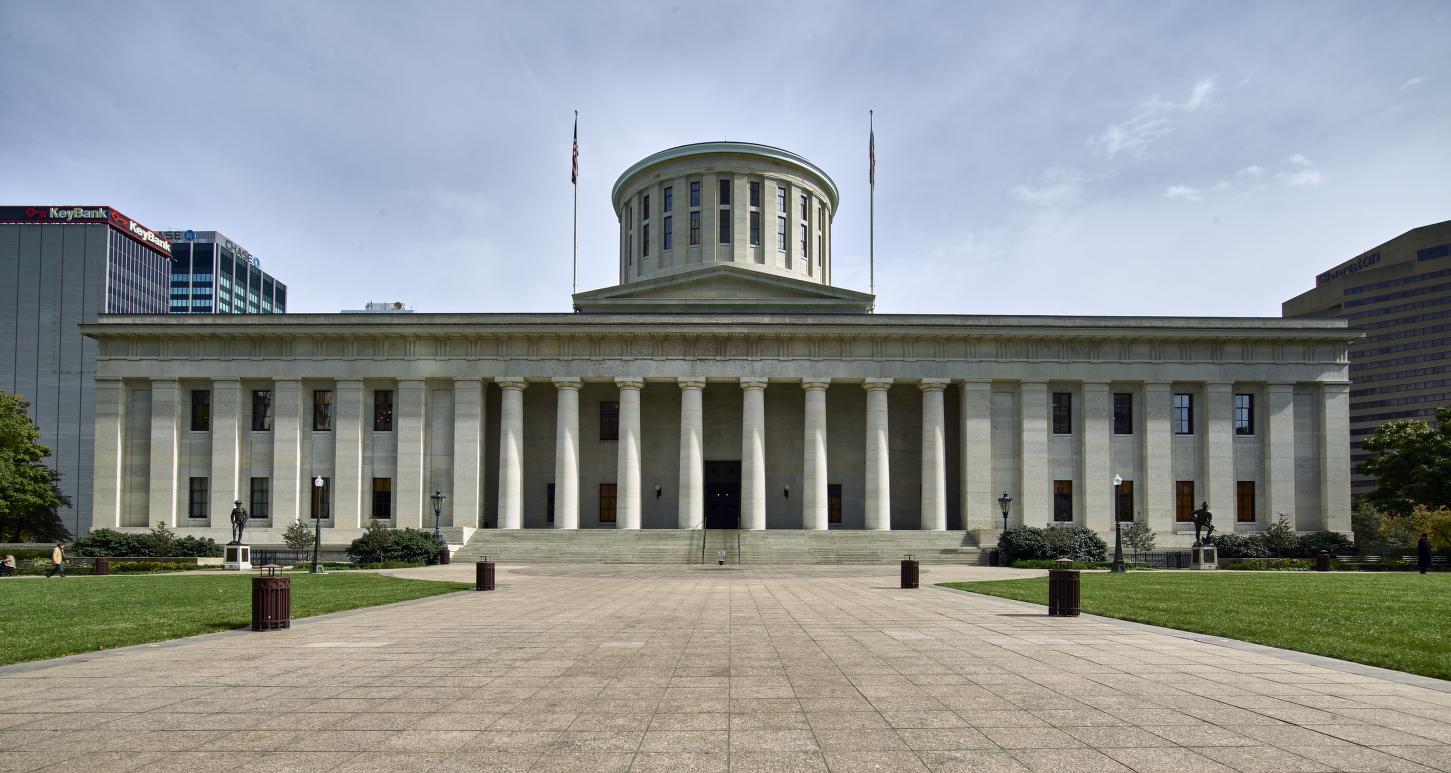
On October 1 we sent the same question to five campaigns for Ohio governor. One answered.
The question was short. Answering it meant picking a first priority and tying it to something an Ohio family pays for:
Name the first bill you would ask the legislature to pass in January, in one sentence, and the Ohio household cost it is meant to change.
No interview was required. The answer could be one sentence and no more than 40 words. We offered to print it unedited.
We sent it to the five campaigns for which we could find working contact information. Three are tickets of a candidate for governor and a running mate: Kissick and Mills (Libertarian), Ramaswamy and McColley (Republican), and Acton and Pepper (Democratic). Two are write-in campaigns for governor: Tim Grady and Heather Hill. The official general-election ballot prints the Republican, Democratic and Libertarian tickets and provides a write-in line. Renea Turner and Ron Ula also appear on published write-in lists, but we could not find campaign contact information for either. Our response count excludes them.
The original deadline was 5 p.m. October 3. We extended it to 5 p.m. October 9 so every contacted campaign had more time. The cards below reflect the response record as of October 5.
The response record
Answered
Don Kissick and James Mills
Libertarian ticket
“My first bill would create a publicly searchable database of every state contract, subsidy and expenditure, because sunshine is the best disinfectant; before asking Ohioans for another dollar, we must find the waste driving taxes and household costs higher.”
James Mills
Candidate for lieutenant governor
Thank you to Mills and the Kissick campaign for taking the time to answer.
No answer as of October 9, 2026
Vivek Ramaswamy and Rob McColley
Republican ticket
Amy Acton and David Pepper
Democratic ticket
Tim Grady
Independent write-in campaign
Heather Hill
Independent write-in campaign
Mills named a searchable database of state contracts, subsidies and spending, and tied it to taxes and household costs. He did not say how much it would save or which household bill it would lower. Only a member of the General Assembly, Ohio’s legislature, can introduce a bill in Ohio, so a governor’s first bill means the first one the governor asks lawmakers to take up. That is what we asked.
The commission that draws the maps
A governor signs or vetoes bills and also sits on the commission that draws the district maps. A first bill is the clearest early sign of what the governor wants to do with that office, so we asked for it. The seven-member Ohio Redistricting Commission is the governor, the state auditor, the secretary of state and four legislative appointees. McColley, Ramaswamy’s running mate, is the current president of the Ohio Senate. Pepper, Acton’s running mate, has made redistricting a central subject of his public work.
Ohio voters approved the commission system for state legislative districts in 2015 with about 71 percent of the vote. They approved a congressional redistricting process in 2018 with 74.89 percent. When those rules were first used after the 2020 census, the Ohio Supreme Court rejected five state legislative plans and two congressional plans. Elections still went forward in 2022 under disputed lines.
In 2024, Ohio voters rejected a ballot issue to replace the politician commission with a citizen commission. 53.7 percent voted no. People still disagree about why it failed. Reasons offered include ballot language that said the proposal would require gerrymandering (drawing district lines to favor one party) and voters not wanting an unelected commission.
We laid out the longer mapmaking fight in They draw the map. You live in the leftover.
Seats compared with votes
Because the governor helps draw the maps, we checked what the maps have produced. The certified 2024 presidential count in Ohio was 3,180,116 votes for Donald Trump, or 55.14 percent, and 2,533,699 for Kamala Harris, or 43.93 percent. Remove the votes cast for other presidential candidates and the two-party split was about 56 percent to 44 percent.
The U.S. Senate race on the same ballot was closer. Bernie Moreno received 2,857,383 votes, or 50.1 percent; Sherrod Brown received 2,650,949, or 46.5 percent; and Don Kissick, the Libertarian now running for governor, received 195,648, or 3.4 percent.
Each Ohio district elects its own representative. The table below sets seats against votes. It shows how many seats each side would hold if the 2024 two-party presidential vote were turned directly into seats. Actual district results are what count.
| Chamber | Republicans | Democrats | Republican share of seats | Seats if split matched the 2024 vote |
|---|---|---|---|---|
| Ohio House | 65 | 34 | 65.7% of 99 | about 55 Republican and 44 Democratic |
| Ohio Senate | 24 | 9 | 72.7% of 33 | about 18 Republican and 15 Democratic |
| U.S. House, current Ohio delegation | 10 | 5 | 66.7% of 15 | about 8 Republican and 7 Democratic |
| U.S. House map adopted October 31, 2025 | 12 lean Republican | 3 lean Democratic | 80% of 15 | about 8 Republican and 7 Democratic |
The 65 and 24 count every seat Republicans hold in the 99-member House and 33-member Senate. A seat can sit vacant between a resignation and an appointment, so the number of Republicans seated on a given day can be lower.
Against a straight 56-44 split, Republicans have about 10 more House seats (65 against about 55) and about six more Senate seats (24 against about 18). The 2025 congressional map gives them about four more Republican-leaning districts than that split would. This compares whole bodies. It does not judge any single district.
Geography, and what the new districts show
The strongest argument against a simple vote-to-seat comparison is geography. Democratic voters are concentrated in Columbus, Cleveland, Cincinnati, Toledo, Akron and other urban communities. Even a map drawn without a partisan target could produce some heavily Democratic districts and a seat split different from 8 to 7.
The district figures show how the adopted lines divide voters. Voting-pattern figures reported by the Ohio Capital Journal put Jim Jordan’s 4th District at about 72 percent Republican and Shontel Brown’s 11th at about 78 percent Democratic. Cincinnati’s 1st District, now represented by Greg Landsman, shifts to about 54 percent Republican. Marcy Kaptur’s Toledo-area 9th moves to about 54.5 percent Republican. Emilia Sykes’s Akron-area 13th remains about 52 percent Democratic. Figures are rounded.
The nonpartisan Inside Elections calculated an efficiency gap of R+20 for the new congressional plan using the 2024 presidential vote, up from R+13 under the prior map. The efficiency gap counts wasted votes: votes for losing candidates, plus votes a winner did not need. A bigger Republican number means Democratic votes are wasted more often. It is one statistical measure, and no court has adopted it here as a ruling. It points in the same direction as the 12-to-3 Republican-leaning district count.
Where the governor fits in mapmaking
On October 31, 2025, the commission unanimously adopted the congressional plan now set for the 2026 election. Democratic commissioners described their votes as a compromise that avoided a possible 13-to-2 plan and preserved more competitive ground. Republican officials pointed to the unanimous vote as evidence that the process worked. The map still gives Republicans a bigger share of seats than of votes.
A map and a bill take different routes. Under the Ohio Constitution, a commission map takes effect when it is filed with the secretary of state, and the governor votes on it as one of the commissioners.
Overriding a veto takes three-fifths of each chamber, or 60 votes in the 99-member House and 20 in the 33-member Senate. Republican members, 65 in the House and 24 in the Senate when every seat is filled, clear those thresholds without a Democratic vote, so a veto cannot stop a bill that every Republican backs.
Mills’s answer
Mills gave Ohioans a proposal they can examine. A public spending database raises its own follow-up questions: what information would it include, and how quickly would it be posted? Those are fair follow-ups for the Kissick and Mills campaign.
Four campaigns had not answered by October 5. Their broader cost-of-living plans are a separate story.
The 5 p.m. Friday, October 9 deadline has passed. If any of the four answers later, we will add the reply to this page.
- November 3, 2026 General Election Ballot · Clark County Board of Elections
- Ohio 2024 Certificate of Ascertainment · National Archives
- Ohio Election Results Data · Ohio Secretary of State
- Ohio Constitution, Article XI · Ohio Laws
- Ohio Constitution, Article XIX · Ohio Laws
- Ohio Constitution, Article II · Ohio Laws
- Ohio Statewide Issue History · Ohio Secretary of State
- 2026 to 2032 Congressional District Maps · Ohio Redistricting Commission
- New Ohio Congressional Redistricting Map Introduced · Ohio Capital Journal
- A Detailed Analysis of Ohio’s New Congressional Map · Inside Elections
- Ohio High Court Upholds Ballot Language for Redistricting Issue · Court News Ohio
- Ohio Supreme Court Orders New Legislative Maps · Associated Press
- A Guidebook for Ohio Legislators, 2025 · Ohio Legislative Service Commission
Written to standard
E.G. v4.18 · I.R.G. v1.14 · L.R.G. v1.9 · P.L.G. v1.10
Editor written. AI used for spelling and grammar only.