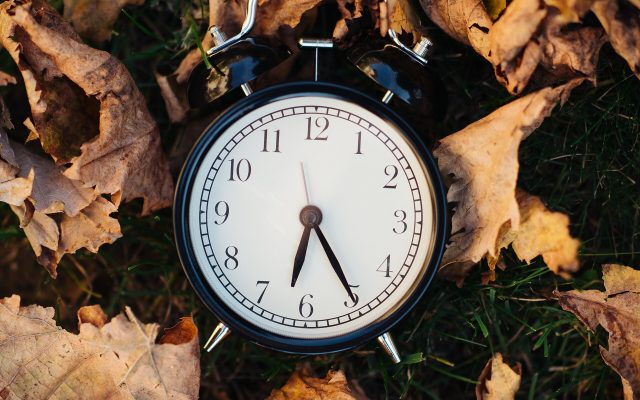
10,000 was an ad. Your legs are not.
A slogan got mistaken for a law.


Update, October 15, 2026: We checked every figure against the original papers. The table below adds Lee, Paluch, Ding and Ahmadi side by side. Three claims changed. In the 2024 Sydney study the best range was 9,000 to 10,500 steps in both sedentary-time groups. The age finding comes from Paluch 2022 rather than the Lancet review. The average American’s 5,100 steps comes from 2003 pedometer data, and we dropped a wearable-abandonment statistic we could not verify.
The frustration is real. I took science for a finished cathedral. It said one number, then walked it back, then walked it somewhere else, and that is not how a finished cathedral behaves. But I had that wrong. Science is a set of measurements that get better when more people wear sensors and more years of deaths and heart attacks get counted. The number moved because researchers measured walking and stopped repeating a slogan.
A pedometer’s brand name
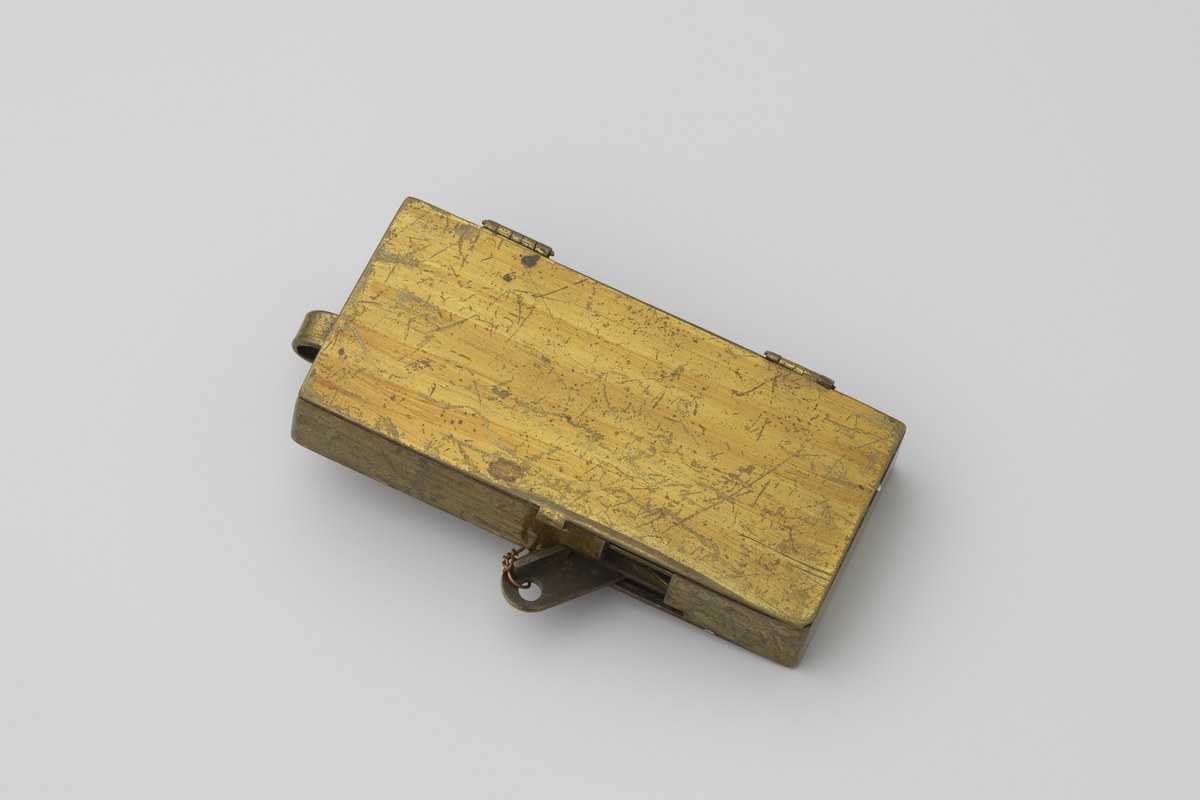
It came from a Japanese pedometer, with no trial behind it. In 1965, riding the fitness wave after the Tokyo Olympics, a company began selling a step counter called a manpo-kei. That translates as 10,000-step meter. The Japanese character for 10,000 even looks a little like a person mid-stride. Catchy. Easy to print on a box. Years later, I-Min Lee, a Harvard epidemiologist, went looking for the science behind the figure and found there was not much there. As she put it, the name was a marketing tool.
Watches and phones adopted the slogan because it is a round target that closes the activity ring on a watch. That is product design. It worked as motivation for some people. It also trained a generation to treat a miss as a moral failure. So when later studies said most of the health payoff shows up earlier, the public heard a contradiction. They were hearing a slogan replaced by a curve showing how much each extra step helps.
Big studies find most of the gain before 10,000
In July 2025, The Lancet Public Health published a systematic review and dose-response meta-analysis by Ding and colleagues. It gathered 57 studies, 31 of them pooled for the number-crunching, all using device-measured steps in adults. Compared with about 2,000 steps a day, 7,000 was tied to a 47 percent lower risk of dying from any cause (HR 0.53, 0.46 to 0.60) and a 25 percent lower incidence of cardiovascular disease (HR 0.75, 0.67 to 0.85). The curve began to flatten between 5,000 and 7,000 steps. The authors called 7,000 a more realistic target than 10,000 for some people. The review gave no sign that 10,000 marks a cliff edge.
This is not the first time the science pointed below 10,000. In 2019, I-Min Lee and colleagues followed 16,741 women, mean age 72, for 4.3 years in JAMA Internal Medicine, with 504 deaths. Those who averaged about 4,400 steps a day had a 41 percent lower rate of dying than the ones near 2,700 (HR 0.59, 0.47 to 0.75). The benefit kept climbing to roughly 7,500 steps, then leveled off. In 2022, Paluch and colleagues pooled 15 cohorts and 47,471 adults in The Lancet Public Health, with 3,013 deaths. The risk of dying leveled off near 6,000 to 8,000 steps for adults 60 and older and near 8,000 to 10,000 for younger adults. Age moves the curve.
A 2024 analysis from the University of Sydney, in the British Journal of Sports Medicine, asked a different question: what about people who sit most of the day? Ahmadi and colleagues followed 72,174 UK Biobank adults (a large British health study) for 6.9 years. For highly sedentary and less sedentary people alike, the lowest risk sat at 9,000 to 10,500 steps a day. Risk of death was 39 percent lower for the highly sedentary (HR 0.61, 0.51 to 0.73) and 31 percent lower in the less sedentary (HR 0.69, 0.52 to 0.92). Among the highly sedentary, cardiovascular disease risk was also 21 percent lower (HR 0.79, 0.72 to 0.86) near 9,700 steps. Half of the benefit showed up by 4,000 to 4,500 steps. The two results fit together. Ahmadi reports the lowest point of the curve and Ding reports where it begins to flatten.
These are all observational studies, so they show association, and people who walk more may differ in other ways. In pedometer data gathered around 2003, the average American adult took about 5,100 steps a day (Bassett and colleagues, 2010). In Lee’s data, going from 2,718 to 4,363 steps went with an HR of 0.59, so the first extra steps off the couch do more work than the last ones toward a trophy number. That is the sentence I wish had been printed on the box in 1965. Walking is the least glamorous item in the whole longevity boom, and one of the best supported.
The numbers
Each row compares higher step counts with a low reference count, which differs by study. A hazard ratio of 0.59 means a hazard of death 41 percent below the reference.
| Study | People | Reference | Hazard ratio (95% interval) |
|---|---|---|---|
| Lee 2019, JAMA Internal Medicine | 16,741 US women averaging 72 years, 4.3 years of follow-up, 504 deaths | 2,718 steps | 4,363 steps: 0.59 (0.47 to 0.75). 5,905: 0.54 (0.41 to 0.72). 8,442: 0.42 (0.30 to 0.60). Levels off near 7,500 |
| Paluch 2022, The Lancet Public Health | 47,471 adults, 15 cohorts, 3,013 deaths | 3,553 steps | 5,801: 0.60 (0.51 to 0.71). 7,842: 0.55 (0.49 to 0.62). 10,901: 0.47 (0.39 to 0.57) |
| Ding 2025, The Lancet Public Health | 57 studies, 31 pooled | 2,000 steps | 7,000: 0.53 (0.46 to 0.60). New cardiovascular disease: 0.75 (0.67 to 0.85). Curve bends at 5,000 to 7,000 |
| Ahmadi 2024, British Journal of Sports Medicine | 72,174 UK Biobank adults, 6.9 years | 2,200 steps | Best at 9,000 to 10,500. Highly sedentary: 0.61 (0.51 to 0.73). Less sedentary: 0.69 (0.52 to 0.92). New cardiovascular disease, highly sedentary: 0.79 (0.72 to 0.86) |
The reference points differ, so the rows cannot be stacked into one curve. They agree on the shape: a steep gain at the start and a flattening after roughly 5,000 to 8,000 steps in most groups.
Dropping the watch
People drop a watch for boring, human reasons: a dead battery, a broken clasp, a goal that started to feel like a scold.
A moving target did not help. If 10,000 was the law, and then it was 7,000, and then a headline said 10,000 again for people who sit all day, a reasonable person figures the experts are making it up as they go. They are publishing different slices of a messy, real association, and the press turns each slice into a commandment. That is the noise. It is fair to be tired of it. Concluding that walking stopped mattering would be a mistake.
Putting the watch to work
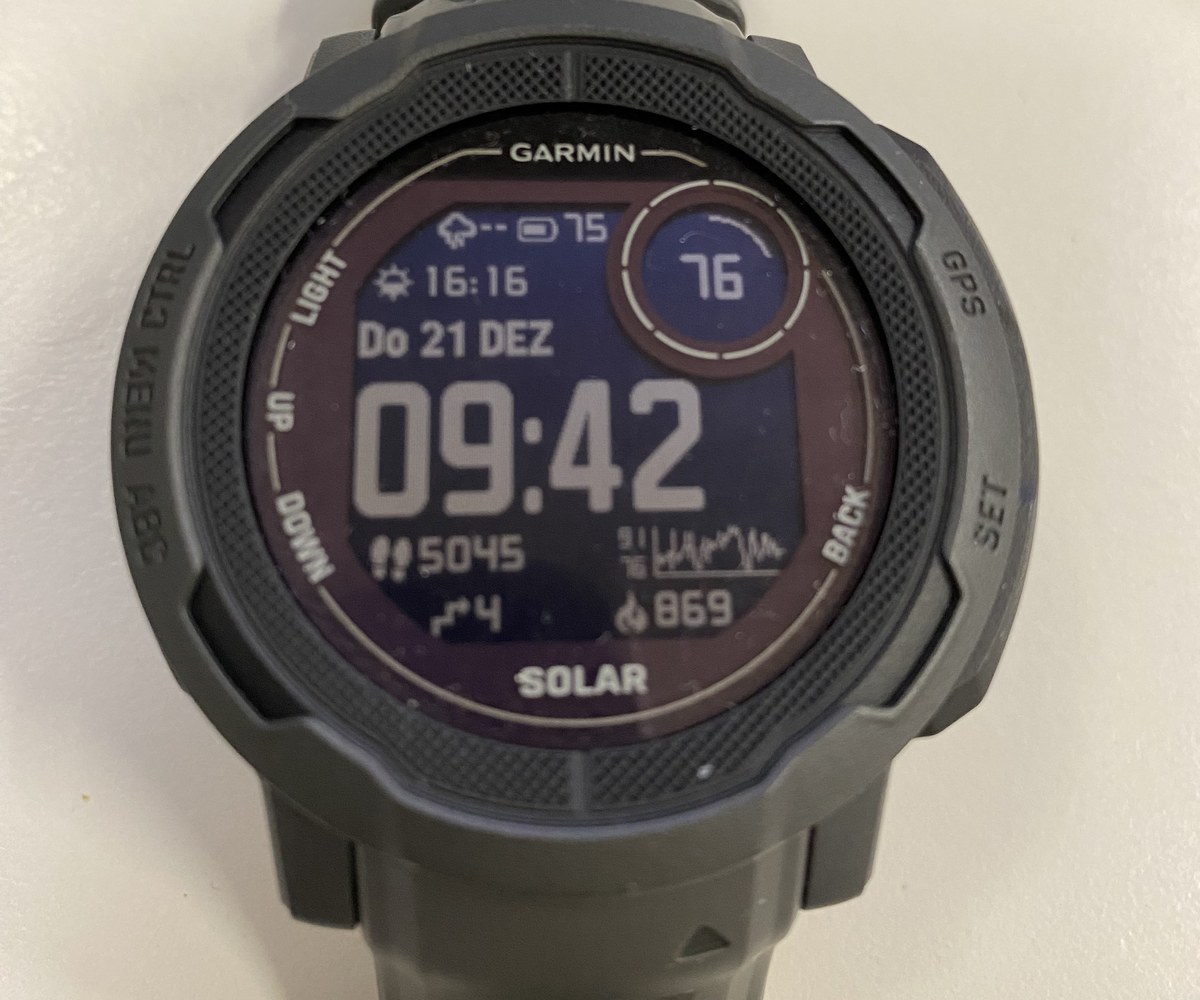
Treat it as a mirror. It reports a number, and you decide what it means.
Start with your baseline. Wear the thing for two ordinary weeks and do not perform for it. Write down the middle number. That one is yours. What your Tuesday already looks like.
Next, pick a bump you can live with. If you sit at 3,500, then 7,000 in a month is a fantasy that will have the band off your wrist inside a week. Add 1,000 and hold it there. The curve is steepest in that first climb, which is the part of the research that survives every headline rewrite.
Then remember what a wrist cannot see. Cycling, swimming, lifting, a long afternoon on your feet in the kitchen. Steps are a proxy for moving a body through space, and fitness covers more. If the watch shames you after a hard day in the garden, blame the watch.
Last, hold the number loosely. The curves bend somewhere between 5,000 and 7,000 steps, and 7,000 is a decent adult target if you want one for the fridge. Ten thousand is a fine stretch if you already clear seven and like the extra. Two to four thousand is where a lot of sedentary people get their first real drop in risk. None of those is a sacrament. Age, sore joints, heat, a short night of sleep, a Florida afternoon that turns the sky black at four o’clock: all of it affects the number of steps. Do not beat yourself up if you miss the target you set.
I am not going back to worshiping a ring. I might glance at a weekly average the way I glance at the fuel gauge in the truck. It is a hint that I have been glued to a chair, and I can walk the dogs an extra loop without waiting for the next meta-analysis to bless the mileage.
What matters is a body that moves enough to stay in the fight, and a watch can help you see whether yours does.
Before you change your routine. This article is health information, not medical advice. The federal Physical Activity Guidelines for Americans (2018) say healthy adults can raise their activity gradually without checking first, while adults with chronic conditions “should be under the care of a health care provider.” If you have heart disease, diabetes, joint pain or another long-term condition, or you have been inactive for a long stretch, talk with your clinician before you raise your step count.
- Ding et al., “Daily steps and health outcomes in adults: a systematic review and dose-response meta-analysis,” The Lancet Public Health, July 2025. 57 studies (31 pooled); vs about 2,000 steps, 7,000 tied to 47% lower all-cause death and 25% lower cardiovascular disease; curve bends between 5,000 and 7,000 (PMID 40713949). The Lancet Public Health; summary.
- Melody Ding (University of Sydney), senior author of the 2025 review, in press coverage. NPR.
- Origin of the 10,000 figure: the manpo-kei (“10,000-step meter”) pedometer, Japan, 1965; I-Min Lee (Harvard) on the number as a marketing tool. Harvard Health.
- Lee et al., “Association of Step Volume and Intensity With All-Cause Mortality in Older Women,” JAMA Internal Medicine, 2019: ~4,400 steps tied to 41% lower mortality vs ~2,700; benefit leveled off near 7,500. NIH Research Matters.
- Ahmadi and Stamatakis (University of Sydney), British Journal of Sports Medicine, March 2024: 72,174 UK Biobank adults; best at 9,000-10,500 steps whatever the sitting time; half the benefit by 4,000-4,500 steps (PMID 38442950). British Journal of Sports Medicine.
- Paluch et al., “Daily steps and all-cause mortality: a meta-analysis of 15 international cohorts,” The Lancet Public Health, 2022 (PMID 35247352). PubMed.
- Bassett et al., pedometer-measured physical activity in U.S. adults, 2010 (PMID 20305579). PubMed.
- Physical Activity Guidelines for Americans, 2nd edition, 2018. Office of Disease Prevention and Health Promotion.
Editor written. AI used for spelling and grammar only.