The High Cost of a Healthy Diet: Organic, Non-GMO, and Whether the Premium Is Worth It
One in three people cannot afford a healthy diet. For those who can, the question is whether organic and non-GMO premiums buy health or mostly peace of mind.

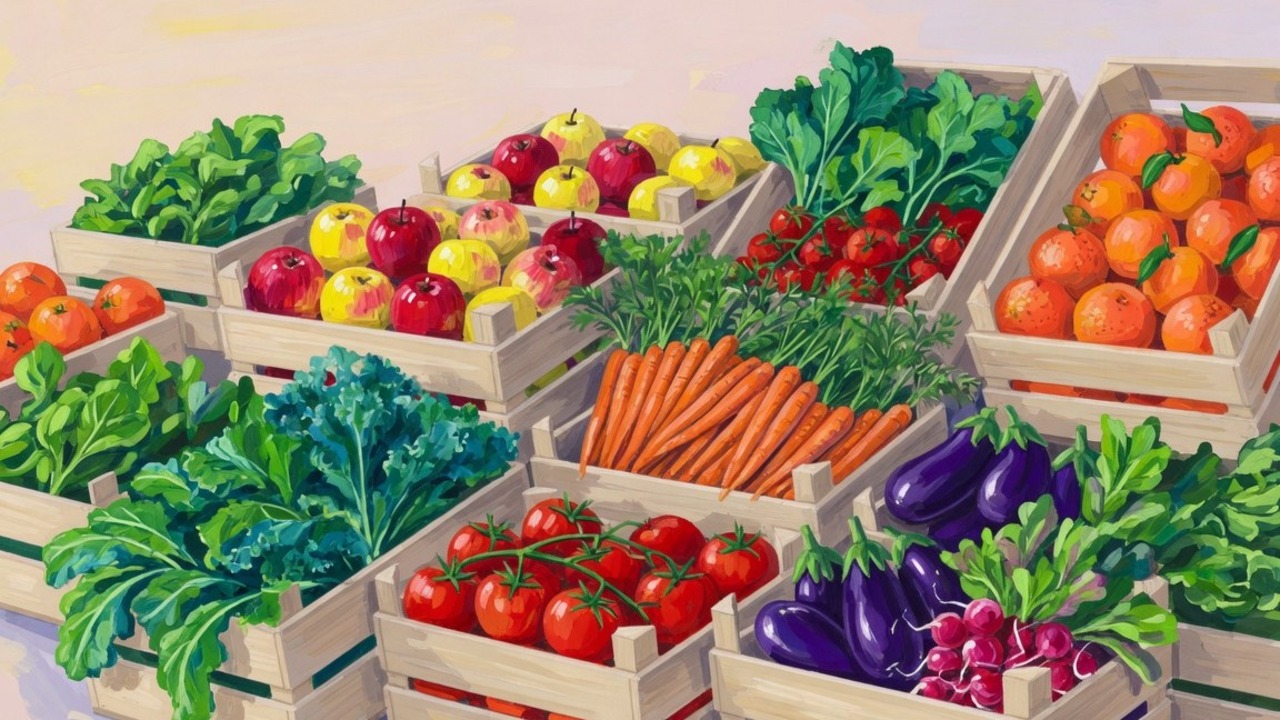
Credit: AI-generated illustration. · HeadLines Decoded LLC
Illustration generated with AI (Grok).
A healthy diet remains out of reach for a large share of the world’s population. The United Nations’ State of Food Security and Nutrition in the World 2026 report, released this week, estimates that about 2.69 billion people, roughly one in three, still cannot afford the minimum cost of a healthy diet. The average global cost has risen to about 4.28 purchasing-power-parity dollars per person per day, and nutrient-dense foods, especially fruits, vegetables, and animal-source foods, account for most of that expense.
In higher-income countries the absolute barrier is lower, yet the relative cost of eating well still shapes daily choices. Two of the most common premiums shoppers pay in search of “healthier” food are organic certification and non-GMO labeling. The practical question is whether those extra dollars reliably deliver better health, or whether they mainly buy preference, reduced pesticide exposure, or peace of mind.
- The 2026 SOFI report finds healthy diets unaffordable for about one in three people worldwide (2.69 billion), at an average cost near 4.28 PPP dollars per person per day, driven largely by the price of nutrient-dense foods.
- Organic produce carries fewer and lower pesticide residues and, in some studies, modestly higher levels of certain antioxidants. Large reviews find little consistent evidence of a superior overall nutrient profile or clear clinical health advantage for the average consumer.
- Major scientific bodies (National Academies of Sciences, WHO, FDA, and EFSA) conclude that currently approved GMO crops are as safe to eat as their conventional counterparts. No robust evidence supports a widespread adverse reaction unique to approved GMO foods.
- The price premium for organic and non-GMO products is real and often substantial. Whether it is worth it depends on the specific goal, whether nutrient intake, pesticide reduction, environmental values, or personal tolerance, rather than a single universal answer.
The global backdrop: healthy diets are expensive
The SOFI 2026 report stresses that the high cost of a healthy diet is not mainly a calorie problem. Energy-dense staples are relatively cheap. The expense comes from the foods that supply micronutrients and dietary diversity: fruits, vegetables, legumes, nuts, dairy, eggs, meat, and fish. In many regions these items drive the large majority of the cost of meeting nutrient requirements, and the burden is deeply unequal. In Africa, about two-thirds of people could not afford a healthy diet in 2025, more than double the rates in Asia and Latin America.
Even in wealthy countries, the same structure appears at the household level. Fresh produce, quality protein, and minimally processed foods cost more per calorie than refined grains, sugars, and many packaged items. That price gap helps explain why diet quality often tracks income more closely than nutrition knowledge alone.
Organic food: what the evidence shows
Organic production restricts most synthetic pesticides and fertilizers. Multiple systematic reviews have compared organic and conventional crops on two main dimensions: nutrient content and contaminant levels.
On nutrients, the differences are generally small. Some studies report modestly higher concentrations of certain polyphenols, vitamin C, or minerals in organic produce. Others find no meaningful difference for most nutrients. A widely cited Stanford review and later analyses concluded that the nutritional advantage, where it exists, is limited and inconsistent across crops and growing conditions.
On pesticide residues the picture is clearer. Organic foods are less likely to carry detectable synthetic pesticide residues, and when residues are found they are usually lower. Conventional produce in regulated markets still typically falls well below established safety limits, but the average exposure is higher. For shoppers whose priority is minimizing pesticide intake, particularly for young children or during pregnancy, organic can reduce that exposure.
Direct evidence that eating organic improves long-term health, such as lower cancer rates or better metabolic health, remains weak. Observational studies are confounded because people who buy organic tend to have higher incomes, different overall diets, and other health behaviors. Randomized evidence is limited.
The cost difference is not small. Organic items commonly carry premiums of 20 to 100 percent or more depending on the product, season, and retailer. Whether that premium buys better nutrition is debatable. Whether it buys lower pesticide exposure is better supported.
Non-GMO and the question of reactions
Genetically modified crops have been reviewed extensively. The U.S. National Academies of Sciences, Engineering, and Medicine, the World Health Organization, the European Food Safety Authority, the U.S. Food and Drug Administration, and other scientific bodies have concluded that the GMO crops currently on the market are as safe to eat as their non-GMO counterparts. Compositional analyses, animal feeding studies, and decades of consumption data have not identified unique hazards for approved traits.
Some people report feeling better when they avoid GMO foods, or symptoms they attribute to them. Controlled evidence has not established a general, GMO-specific adverse reaction in the population. Possible explanations for self-reported sensitivity include the broader dietary changes that often accompany non-GMO or organic eating, nocebo effects, reactions to other components of the food, or individual intolerances unrelated to the genetic modification itself. Rare true allergies to specific proteins can occur with any food, modified or not, which is why regulators require an assessment of allergenic potential before approval.
Non-GMO labeling functions largely as a consumer-preference and marketing category rather than a safety distinction for the traits that have passed regulatory review. The label does not guarantee the absence of all genetic change, since conventional breeding also alters genomes, and it does not by itself improve nutrient content.
Are the additional costs worth it?
The answer depends on what is being optimized.
If the goal is measurable improvement in nutrient intake for the average healthy adult, the evidence does not strongly support paying a large premium for organic or non-GMO versions of most foods. A diet rich in vegetables, fruits, legumes, and appropriate proteins delivers the dominant benefit, and the organic or non-GMO status of those foods is secondary for most people.
If the goal is lower dietary pesticide exposure, organic has a clearer advantage. The absolute risk reduction is still debated because conventional residues are regulated, but the directional difference is real.
If the goal is alignment with personal values around farming practices, environmental impact, or avoidance of genetic engineering for non-safety reasons, the premium purchases that alignment. That is a legitimate preference even when it is not driven by nutrient or acute-safety data.
Budget-constrained households face a sharper trade-off. Money spent on organic premiums is money not available for greater overall volume or variety of produce and protein. In that setting, prioritizing more servings of conventional vegetables and fruits over fewer servings of organic ones is often the higher-yield choice for diet quality.
Practical framing
For most people the largest gains in diet-related health still come from the basics: more whole plant foods, adequate protein, fewer ultra-processed products high in refined starch and sugar, and overall calorie balance when weight is a concern. Within that framework, choosing organic for the items eaten most often, or for produce known to carry higher conventional residue levels, the familiar “Dirty Dozen” logic, is a reasonable targeted approach. Treating every grocery item as needing an organic or non-GMO premium is harder to justify on current nutrient and safety evidence alone.
Claims of widespread poor reactions to GMO foods are not supported by the major scientific assessments. Individual experiences deserve attention and, when persistent, medical evaluation, but they do not overturn the broader safety consensus on approved crops.
The high cost of a healthy diet is a real structural problem, underlined again this week by the SOFI report. Organic and non-GMO options address only a narrow slice of it, and they do so at a price. Whether that price is worth paying is ultimately a personal calculation informed by the evidence on nutrients, residues, safety, and whatever else the buyer values.
What you eat after forty changes what your body does with it, which we looked at in Decode Your Wellbeing: Protein, Inflammation, and the Recovery Gap After 40.
And when you do cook, this one is worth the trouble: The Philly Cheesesteak Pot Pie Works. First You Have to Throw Out the Pot Pie. (Recipe is being Tested).
- FAO, IFAD, UNICEF, WFP and WHO, The State of Food Security and Nutrition in the World 2026: Understanding and addressing the high cost of a healthy diet (released July 2026)
- Systematic reviews and meta-analyses on organic versus conventional nutrient content and pesticide residues (including the Stanford / Annals of Internal Medicine review and later updates)
- National Academies of Sciences, Engineering, and Medicine; WHO; FDA; and EFSA statements and reviews on the safety of approved genetically engineered crops
- Price-premium observations on organic and non-GMO products and household food-spending data
E.G. v4.14 · I.R.G. v1.10 · L.R.G. v1.8 · P.L.G. v1.9 · S.E.O. v1.3
Editor written. AI used for spelling and grammar only.