Whoop Opened a $799 Cancer Blood Test to Everyone. Here Is What the Numbers Actually Show.
Whoop just made a $799 cancer blood test available to anyone, no membership required. The technology is real. So are the limits the marketing tends to round off.

This week Whoop, the company best known for a screenless fitness band, did something a fitness company would not have done a few years ago. It removed the membership requirement from its Advanced Labs blood-testing service and added GRAIL’s Galleri test, a $799 screen that looks for signals of more than 50 cancers from a single draw. You no longer need to own the band, or see a doctor first, to order it. It is the clearest sign yet that consumer wearables intend to become the front door to laboratory medicine.
There is a real technology here, and there is a real gap between what it can do and how it tends to be sold. Both deserve to be said plainly. The blood test is genuine science with genuine limits, the accuracy numbers are among the most misread statistics in medicine, and a $799 cancer screen is now one app tap away from anyone, well ahead of the evidence that it saves lives.
What Whoop actually changed
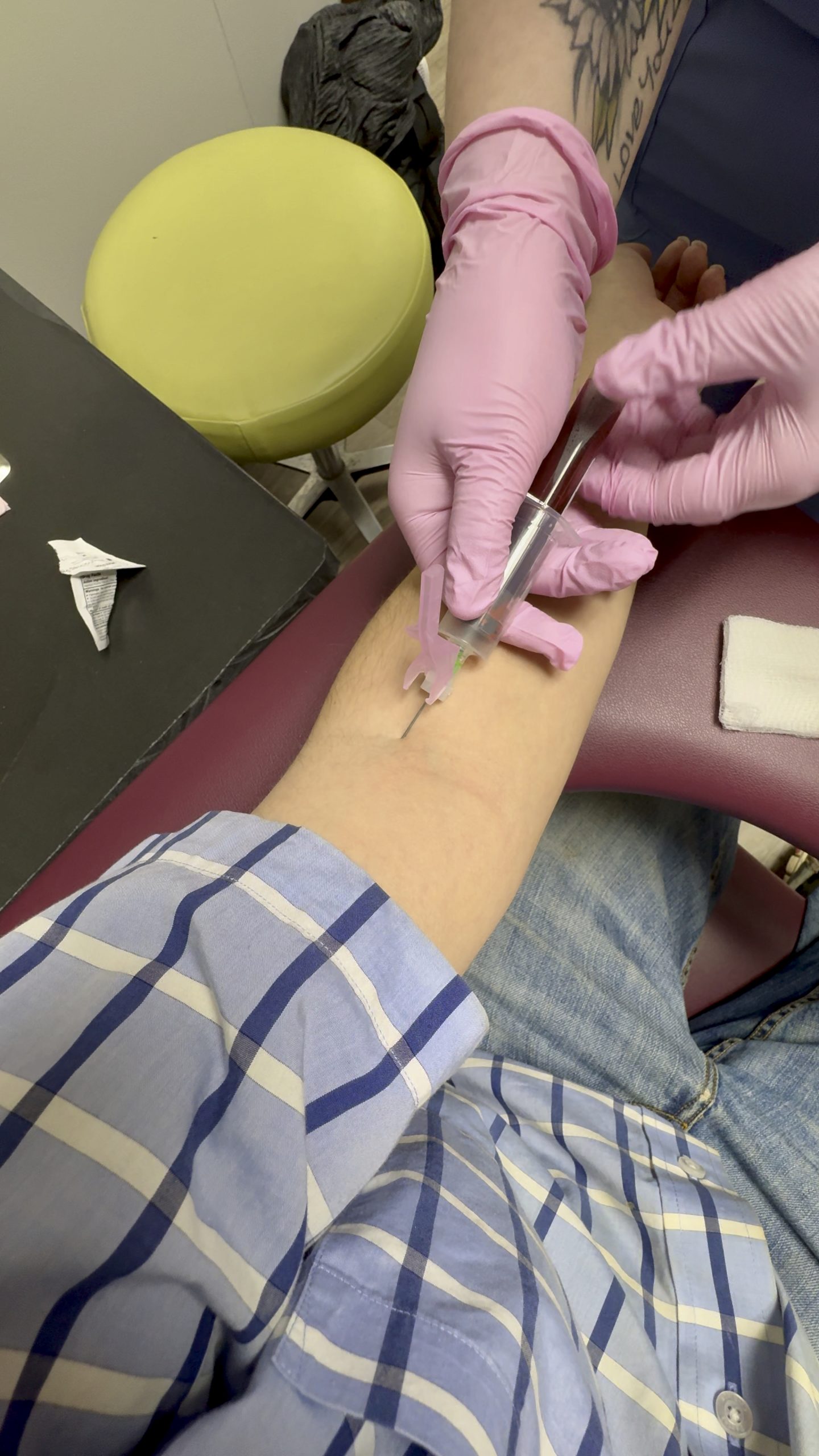
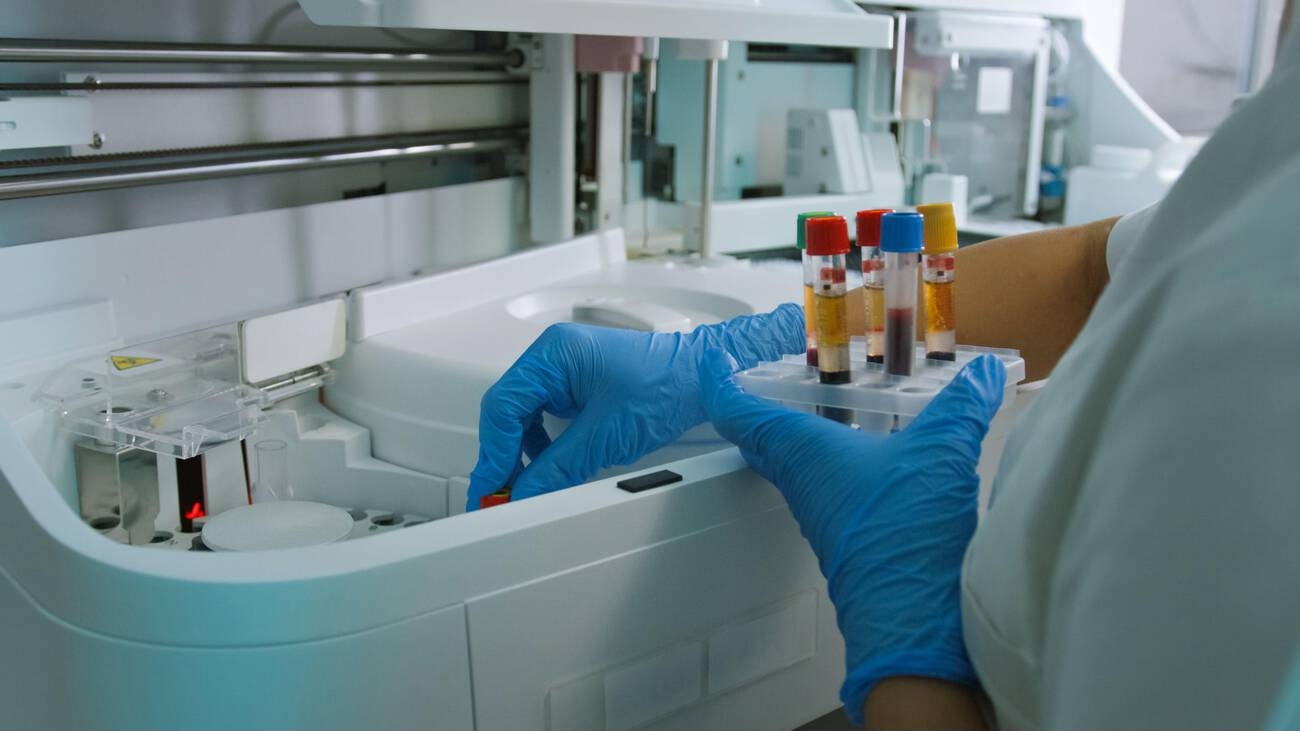
Until now, Advanced Labs required an active Whoop membership. That gate is gone. Anyone can order panels covering cardiovascular, metabolic, hormonal and inflammatory markers, with non-member pricing that starts around $150. The headline addition is Galleri, listed at $799. That price is actually a discount to Galleri’s usual list of roughly $949, and Whoop notes it is eligible for HSA and FSA spending. The draw happens at a Quest Diagnostics location, the order is placed and reviewed by a licensed clinician, and results return inside the Whoop app, wrapped in AI-generated context that tries to connect the lab numbers to the continuous data the band already collects.
What the Galleri numbers really say
Galleri’s strongest figure is specificity, roughly 99.6 percent, which produces a low false-positive rate of about 0.4 percent. In plain terms, out of every 250 people without cancer, about one will still get a cancer signal detected result. The number that matters more to a person holding a positive result is the positive predictive value, the chance that a signal is really cancer, and here the trials must be read carefully because they are not the same study. In GRAIL’s PATHFINDER 2, presented in 2026 with more than 35,000 participants, the positive predictive value was about 60 percent. In the far larger NHS-Galleri trial, the aggregate value across three rounds was about 52 percent. So when the test flags a signal, further work-up confirms cancer a little more than half the time.
Sensitivity is the other half, and it is where the marketing and the biology part ways. The test is far better at catching advanced cancer than early cancer. Published validation data put detection at roughly 17 percent for Stage I, about 40 percent for Stage II, and about 77 percent for Stage III. A negative Galleri result therefore misses roughly half of all cancers and most of the earliest ones. It cannot be read as a clean bill of health, and standard age-based screening such as mammography and colonoscopy still has to happen on schedule.
The trial result the ads tend to skip
The single most important fact about the largest test of this technology rarely makes the promotional copy. NHS-Galleri, which enrolled about 140,000 people, did not meet its primary goal. It was designed to show a statistically significant drop in late-stage cancer diagnoses, and it did not. It did show a nominally significant reduction in the most advanced Stage IV diagnoses, a secondary measure, and it moved more detections toward earlier stages, but the headline endpoint was missed. No multi-cancer blood test has yet been shown in a randomized trial to reduce cancer deaths, which is the outcome that ultimately decides whether a screening test is worth doing.
The honest case in favor is real too. In PATHFINDER 2, adding Galleri on top of standard screening found several times more cancers than screening alone, and a large share of those were cancers with no recommended screening test at all, such as pancreatic and ovarian. For diseases that are otherwise found late or by accident, advocates argue that even an imperfect signal is a meaningful gain. That is a defensible position. It is simply not the same claim as proven lives saved, and the two get blurred in a checkout flow.
It is not FDA approved, and no one recommends it for everyone
Galleri is not approved or cleared by the Food and Drug Administration. It is sold as a laboratory-developed test. GRAIL filed a premarket approval application in January 2026, and an FDA advisory committee is scheduled to review it on September 23, 2026, so its regulatory status may change, but as of now it has not. Just as important, no major United States body recommends multi-cancer early-detection screening for the general population. The U.S. Preventive Services Task Force has issued no recommendation for these tests, and the American Academy of Family Physicians has called the category a promise yet to be proven. The product is on the market ahead of the guidance, not behind it.
So who is this actually for
A test like this makes the most sense for a narrow group: adults around 50 or older, or those at elevated risk, who are already up to date on standard screening and who understand that a positive result is the start of an investigation rather than a diagnosis. It makes the least sense for the anxious and average-risk young, for anyone who would skip proven screening because a Galleri result came back negative, and for anyone who would spiral on an indeterminate finding. A positive can begin what clinicians call a diagnostic odyssey of scans and biopsies; even in a well-run trial the median time to resolve a signal ran to several weeks. Insurance and Medicare generally do not cover it, so the $799 is out of pocket. Whoop says a large majority of Advanced Labs users find something worth acting on, but that is a company figure, not an independent one, and it should be read as marketing until someone outside the company verifies it.
| Company | Lab offering | Roughly |
|---|---|---|
| Whoop | Advanced Labs panels; Galleri cancer screen | from ~$150; Galleri $799 |
| Oura | Health Panels (via Quest) | ~$99 |
| Function Health | 160-plus biomarkers, subscription | ~$365/yr |
| Hims & Hers | Biomarker testing | ~$499/yr |
| Superpower | 100-plus tests | ~$199 |
None of this is a reason to fear the test or to trust it blindly. It is a reason to know exactly what you are buying before you tap the button. A multi-cancer blood test is a genuinely promising tool being sold directly to consumers, at a real price, ahead of the proof that it changes outcomes, and with accuracy limits the marketing rounds off. If you are weighing it, the useful move is not a checkout page. It is a conversation with a clinician who can put it against your own history. That is the decode: promising, not proven, and priced like it is already settled.
- WHOOP, Advanced Labs available without a membership (Aug 18, 2026)
- Fierce Healthcare, Whoop adds GRAIL’s multi-cancer test, via Quest
- GRAIL, PATHFINDER 2 results (35,878 participants), ASCO 2026
- GRAIL, NHS-Galleri full results, ASCO 2026
- Cancer Therapy Advisor, NHS-Galleri did not meet its primary endpoint
- Galleri, Test performance (specificity, PPV, sensitivity)
- American Family Physician, Galleri review and stage-by-stage sensitivity
- GRAIL, FDA advisory committee to review Galleri PMA (Sept 23, 2026)
- NPR, Wearable companies move into blood testing
Reported and edited to HeadLines Decoded newsroom standards. E.G. v4.17 · I.R.G. v1.14 · L.R.G. v1.9 · P.L.G. v1.10. This article is health information, not medical advice; decisions about screening belong with you and your clinician.
Editor written. AI used for spelling and grammar only.