What the Iran nuclear deal capped, and why Iran’s uranium can’t be verified now
Inspectors reported Iran within the 2015 limits until 2019. The deal never covered missiles or armed groups, and since the strikes of June 2025 the U.N. nuclear agency has not been able to say where Iran's near-weapons-grade uranium is.
 Todd Ruffner-Schoenfeld
Editor in chief. A knack for the fine print, and likes it.
Todd Ruffner-Schoenfeld
Editor in chief. A knack for the fine print, and likes it.
On Sept. 9, the board of the International Atomic Energy Agency, or IAEA, the United Nations’ nuclear inspectors, voted 23 to 3 to report Iran to the U.N. Security Council. It was the first time the board had done that in 20 years. The agency’s latest report on Iran says it cannot tell the world how much near-weapons-grade uranium Iran has or where it is.
The vote comes as American and Iranian officials trade messages at the United Nations, 11 years after the nuclear deal meant to keep Iran from building a bomb. President Barack Obama, who made that deal, said in August 2015 that “it cuts off all of Iran’s pathways to a bomb.” President Donald Trump, who pulled the United States out in 2018, called it “a horrible, one-sided deal that should have never, ever been made.”
The 2015 deal
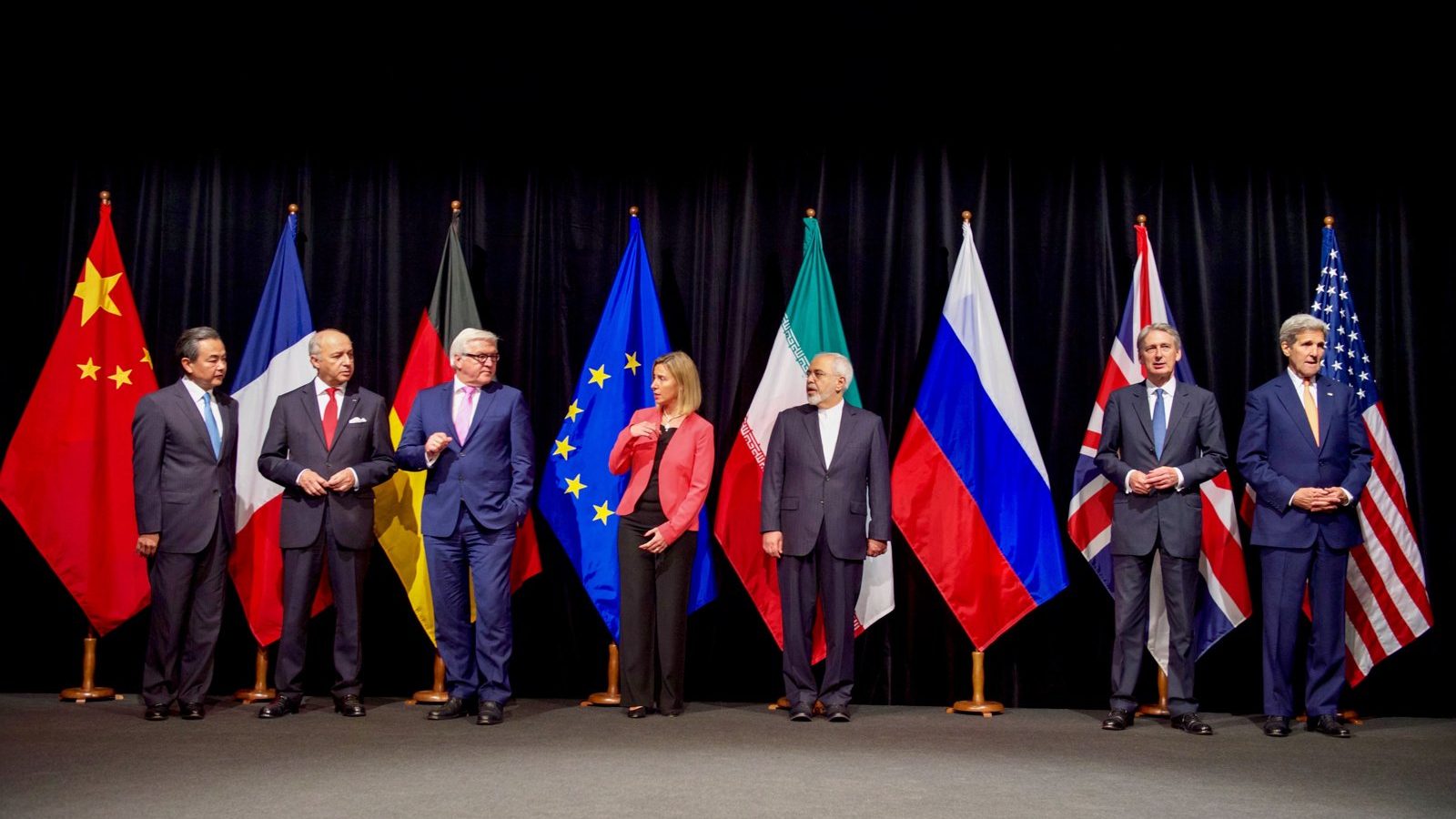
The Joint Comprehensive Plan of Action was concluded in Vienna on July 14, 2015, by Iran, the United States, Britain, France, Germany, Russia and China, with the European Union coordinating the talks. Iran accepted limits on enrichment. Enriching means spinning uranium gas in fast machines called centrifuges to raise the share of the rare U-235 atoms. Power plants need a few percent. A bomb needs about 90 percent. Iran also disabled the core of its Arak reactor and agreed to redesign it to make far less plutonium, the other material a bomb can be built from, and it let IAEA inspectors in more often and to more places. In return, the U.N. Security Council, the European Union and the United States lifted the sanctions tied to Iran’s nuclear program. The limits took effect on Implementation Day, Jan. 16, 2016.
Those end dates were printed in the deal, and critics such as Israeli Prime Minister Benjamin Netanyahu pointed at them from the start. Mr. Obama answered that the deal would stretch the time Iran needed to build a bomb and put inspectors on the ground around the clock.
Whether Iran kept to the limits
For about three years, the inspectors said it did. From January 2016, the IAEA’s quarterly reports found Iran’s low-enriched stockpile under the 300-kilogram cap, its enrichment at or below 3.67 percent, its Natanz centrifuges within the cap, and no enrichment at Fordow. The one slip the agency recorded was heavy water, a material used in some reactors. Iran twice held slightly more than its 130-ton limit in 2016 and shipped the extra out. Yukiya Amano, the agency’s director general at the time, told its board again and again that Iran was implementing its nuclear commitments.
Those reports carried a caveat. The inspectors were checking the material and sites Iran had declared. On whether Iran had any undeclared nuclear material or activity, the agency wrote that its evaluation “remained ongoing,” and it never reached a final answer.
Missiles and armed groups
Ballistic missiles were never part of the deal. The U.N. Security Council resolution that endorsed it, Resolution 2231, called on Iran not to work on missiles designed to carry nuclear weapons for eight years, until October 2023. That language asked Iran to hold back without binding it, and Iran kept testing and improving its missiles.
Iran’s support for armed groups was outside the deal too, including Hezbollah in Lebanon, militias in Iraq and the Houthis in Yemen. In January 2018, a U.N. panel of experts on Yemen found that Iran had failed to stop Iranian-made missiles and drones from reaching the Houthis, in breach of the arms embargo on Yemen. The United States has listed Iran as a state sponsor of terrorism since January 1984, three decades before the deal, and the penalties that came with that label were never lifted.
Critics, Mr. Trump among them, said the money freed up by sanctions relief went to a government that also funds those groups.
The U.S. withdrawal and what followed
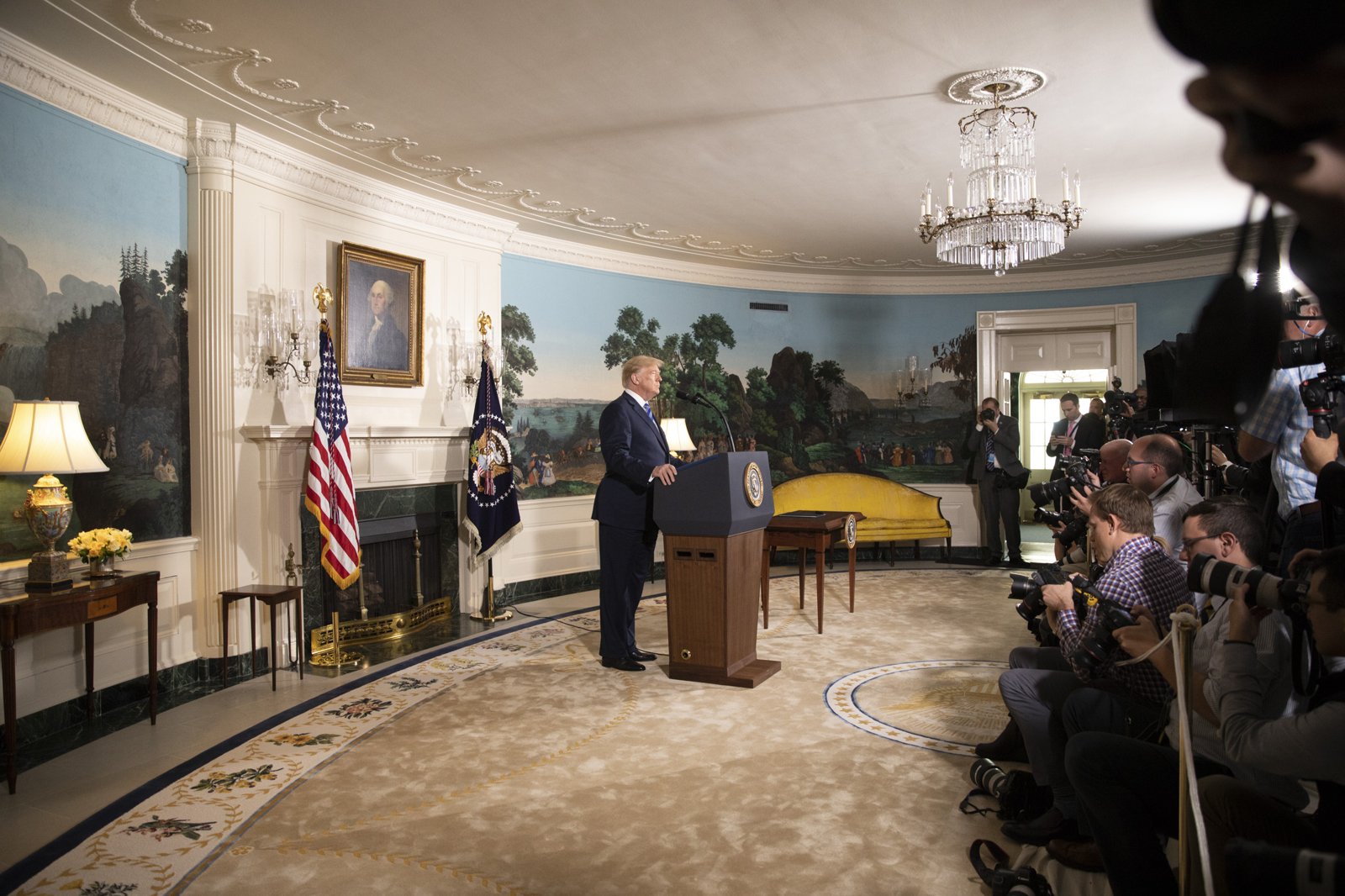
On May 8, 2018, Mr. Trump announced that the United States was leaving the deal. He said its limits expired too soon and that it did nothing about Iran’s missiles or its support for militant groups. He restored U.S. sanctions. Britain, France and Germany stayed in and set up a trade channel called INSTEX to keep some business going with Iran, but it handled only one deal before it was shut down in 2023.
A year to the day later, on May 8, 2019, Iran’s president, Hassan Rouhani, announced that Iran would start stepping past the limits. He said Iran was answering the U.S. withdrawal and Europe’s failure to deliver the promised economic relief, and that the deal itself allowed it to scale back if the other side did not keep its end. Iran has always said its program is peaceful. The IAEA confirmed in July 2019 that Iran had gone over the 300-kilogram cap and above 3.67 percent. From there the program grew year by year, with uranium enriched to 20 percent and then 60 percent and a far larger stockpile.
Since the June 2025 strikes
On June 12, 2025, the IAEA board formally found Iran in breach of its safeguards agreement, its basic inspection deal under the nuclear Nonproliferation Treaty. The board had not made that finding since 2005, and it set up the referral that came 15 months later. Israel began striking Iran the next day, and on June 22 the United States bombed the enrichment plants at Fordow and Natanz and the site at Isfahan. Inspectors have not been back to those three sites since.
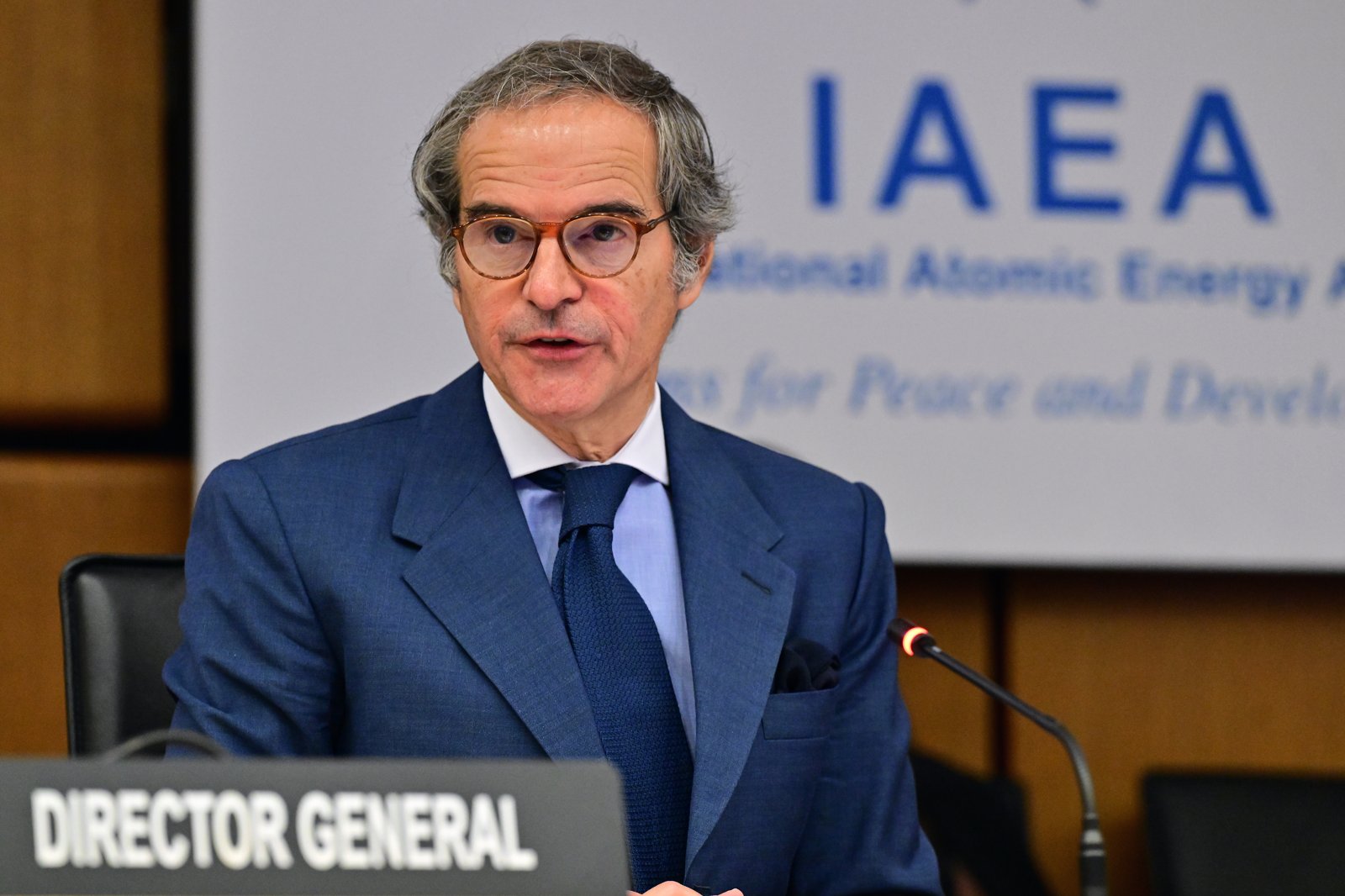
The agency’s last estimate before the strikes was 9,874.9 kilograms of enriched uranium in all forms as of June 13, 2025. That included 440.9 kilograms enriched up to 60 percent and 184.1 kilograms up to 20 percent. Sixty percent is a short technical step from weapons grade. Rafael Grossi, the IAEA’s director general, said in November 2025 that Iran’s stockpile could make as many as 10 bombs if Iran decided to build them, and that this did not mean Iran had a weapon, the Associated Press reported.
In late August 2025, Britain’s foreign secretary, David Lammy, and his French and German counterparts, Jean-Noël Barrot and Johann Wadephul, used the deal’s snapback clause, which let any party bring back the old U.N. sanctions. Those sanctions, lifted under the deal in 2016, came back into force on Sept. 27 and 28, 2025, three weeks before the clause was due to expire. The State Department says the restored resolutions also bar Iran from using ballistic missile technology. Russia, China and Iran call the whole restoration illegal. Meanwhile, on Sept. 9, 2025, Mr. Grossi and Iran’s foreign minister, Abbas Araghchi, signed an agreement in Cairo to restore some inspections. Iran ended it that November.
On Feb. 28, 2026, the United States and Israel went to war with Iran. Strikes on Tehran that first day killed Iran’s supreme leader, Ayatollah Ali Khamenei. In early March, his son Mojtaba Khamenei was named to succeed him. Since the war began, IAEA inspectors have not been able to work anywhere in Iran except the Bushehr nuclear power plant, which they visited in early June, according to the agency’s September report. A conditional ceasefire in early April has not ended the fighting, and the U.S. Navy has blockaded Iranian ports since April 13. A 60-day memorandum that Mr. Trump and Iran’s president, Masoud Pezeshkian, signed on June 17, 2026, which called for Iran’s enriched uranium to be diluted under IAEA supervision, expired on Aug. 17 without being carried out.
In the Sept. 9, 2026 vote, Russia, China and Niger voted against referring Iran to the Security Council, and eight countries abstained. “The agency’s lack of information about these facilities and our inability to conduct verification activities is a matter of serious proliferation concern,” Mr. Grossi said. Iran’s mission to the U.N. answered in a statement the same day, blaming “the criminal acts of aggression by the U.S. and Israeli regime.”
What comes next
This week, on the sidelines of the U.N. General Assembly in New York, Steve Witkoff, Mr. Trump’s envoy, and Jared Kushner, his son-in-law and adviser, traded proposals with Mr. Araghchi’s team, with go-betweens carrying messages between the two sides, Mr. Witkoff said. Mr. Trump said the talks “went very well.” Iranian state media reported that Iran’s conditions include lifting the naval blockade and releasing frozen Iranian money. The IAEA’s report now goes to the Security Council, where Russia and China, which voted against the referral, can veto any new resolution. On Sept. 17 they blocked a U.S. plan to renew the U.N. panel that tracks sanctions on Iran.
- The JCPOA text, July 14, 2015, and U.N. Security Council Resolution 2231; Arms Control Association, “The JCPOA at a Glance.” Arms Control Association.
- AP fact check, via Fox News, on Prime Minister Benjamin Netanyahu’s March 3, 2015 address to Congress and the deal’s expiring limits. Fox News/AP.
- President Obama’s remarks on the Iran nuclear deal at American University, Aug. 5, 2015. Obama White House archives.
- IAEA report GOV/2018/47, verification and monitoring in Iran, with the 300-kilogram and 202.8-kilogram figures and the undeclared-material caveat. IAEA.
- IAEA, “Iran is Implementing Nuclear-related JCPOA Commitments, Director General Amano Tells IAEA Board.” IAEA.
- Radio Free Europe/Radio Liberty on Iran briefly exceeding its heavy-water limit in 2016. RFE/RL.
- U.N. Panel of Experts on Yemen, report S/2018/68, Jan. 26, 2018. ReliefWeb.
- Council on Foreign Relations on state sponsors of terrorism and Iran’s 1984 designation. CFR.
- President Trump’s remarks on the JCPOA, May 8, 2018. White House archives.
- Bourse & Bazaar on the INSTEX trade channel shutting down, 2023. Bourse & Bazaar.
- CNN on Iran announcing it would step past the deal’s limits, May 8, 2019. CNN.
- Arms Control Association on Iran exceeding the deal’s limits from 2019. Arms Control Association.
- IAEA report GOV/2026/50, September 2026: stockpile estimate as of June 13, 2025, loss of access, and the agency unable to report the stockpile’s size, makeup or location. IAEA.
- PBS NewsHour/AP on Grossi saying Iran’s stockpile could make several weapons, November 2025. PBS NewsHour.
- U.N. News on the IAEA board’s June 12, 2025 non-compliance finding. U.N. News.
- U.S. State Department, completion of the U.N. sanctions snapback on Iran, Sept. 27, 2025, including the restored ban on ballistic missile technology. State Department.
- Axios on the European foreign ministers triggering snapback, Aug. 28, 2025. Axios.
- Security Council Report on the September 2025 votes on snapback. Security Council Report.
- NPR on the killing of Ali Khamenei on Feb. 28, 2026, and Mojtaba Khamenei named successor. NPR.
- U.K. House of Commons Library, “US-Iran ceasefire and nuclear talks in 2026.” House of Commons Library.
- CNN on the U.S. Navy blockade of Iranian ports beginning April 13, 2026. CNN.
- Al Jazeera on the June 17, 2026 memorandum and its Aug. 17 expiry. Al Jazeera.
- Al Jazeera on the IAEA board referring Iran to the Security Council, Sept. 9, 2026, with Grossi’s statement and Iran’s response. Al Jazeera.
- Times of Israel on the IAEA board vote, a first in two decades. Times of Israel.
- Security Council Report on the Sept. 17, 2026 vote on renewing the Iran sanctions panel of experts. Security Council Report.
- Radio Free Europe/Radio Liberty on the Sept. 22, 2026 U.S.-Iran talks in New York and Iran’s conditions. RFE/RL.
- Times of Israel on U.S. and Iranian negotiators’ talks at the U.N., Sept. 23, 2026. Times of Israel.