The Kennedy Center’s two crises, one facade
The plaster that fell into the Grand Foyer on September 4 had been on the verge for years, flagged by the Center's own engineers as water in the vaults and rust in the steel. The empty seats this fall trace to something else, the week the president took over the board and pushed to get his name on the building. This piece keeps those two on separate lines and stays with what the record can hold up.
 Todd Ruffner-Schoenfeld
Editor in chief. A knack for the fine print, and likes it.
Todd Ruffner-Schoenfeld
Editor in chief. A knack for the fine print, and likes it.
Credit: Olaf Zerbock
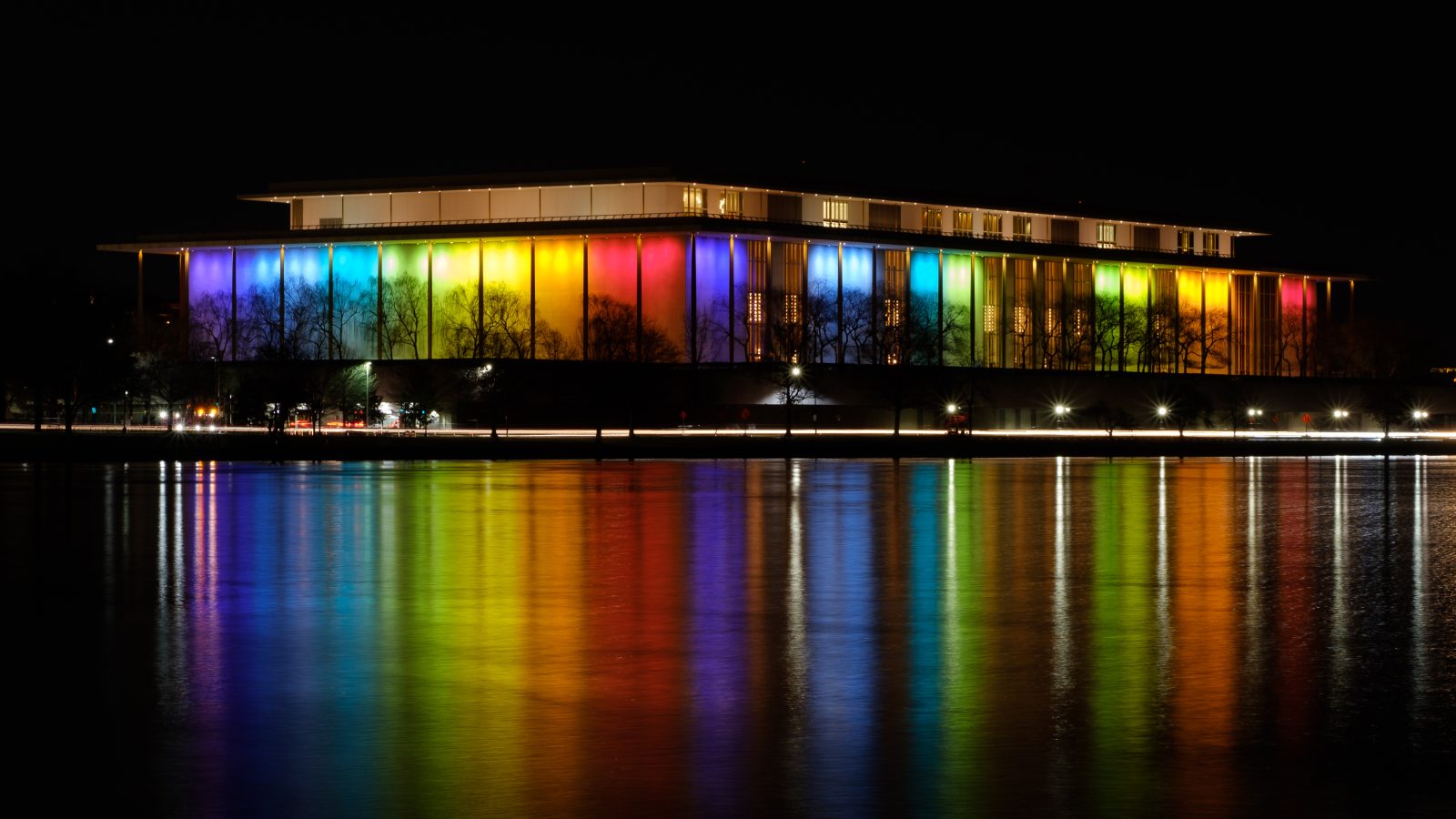
The Kennedy Center carries John F. Kennedy’s name by act of Congress, not by a board’s choice, so any fight over that name runs straight into a federal statute. That is part of why the argument is so loud, and it is why we are going to move slower than the argument does. On the evening of September 4, during a storm over Washington, a section of plaster broke loose from the ceiling of the Kennedy Center’s Grand Foyer and fell about sixty feet to the red carpet near the Concert Hall doors. No one was hurt. By this week that debris had been pulled into two competing stories, and a 57-page packet for a Tuesday trustee meeting tried to make them one story.
One draft resolution treats the main house as unsafe to keep occupying. Another warns of fiscal collapse within weeks unless the president’s name returns to the facade in some form, the condition on which he will raise the money. To the president’s critics, the offer sounds like a ransom note carved in marble. His allies call it the first honest accounting of a memorial that earlier boards let rot, and both sides are quoting real pages of the same packet.
Two different problems are tangled together here, and most of the noise comes from treating them as one. One ledger is the building: water, steel, soffits, chillers, an appropriation, a plaster fall. The other is the operating house: tickets, subscriptions, artists, donors, a forecast that fell after a political takeover and a name fight. A wet soffit does not cancel Hamilton. A boycott does not rust a panel. If those two sentences are the only ones you take from this page, the page did its job.
What Congress named
Congress created a National Cultural Center in 1958. After the assassination it dedicated the project by statute as a living memorial to John F. Kennedy. The Edward Durell Stone building opened on the Potomac in 1971. The Grand Foyer is one of the largest rooms of its kind in the country, a long red carpet under Swedish crystal, the room everyone photographs on the way to the Concert Hall, the Opera House, or the Eisenhower. That room is why a hole in the ceiling became national politics in a night.
Sitting presidents historically kept a polite distance from the board. That custom ended in February 2025. Trump dismissed eighteen trustees appointed in the Biden years, installed allies including White House Chief of Staff Susie Wiles and Second Lady Usha Vance, and had the remaining board elect him chairman. In December 2025 the board voted to put his name on the building, crews added the letters, and for months the official style was the Trump-Kennedy Center. The audience answered in the box office that same season.
Rep. Joyce Beatty of Ohio, an ex-officio trustee, sued. In late May 2026, U.S. District Judge Christopher R. Cooper ruled that Congress named the Center and only Congress can rename it. He ordered the Trump lettering off the facade and official materials. He also blocked a hurried two-year shutdown as ill-informed and seemingly preordained, while leaving room for actual repair work. He wrote that the statute makes crystal clear the Center is named for Kennedy, and that no other individual is to be memorialized on the front portico. When Congress authorized the Reach expansion in 2012, it said private contributions could be acknowledged inside the project, not on the exterior. That sentence is doing a lot of work in 2026.
Workers took the letters down by the court’s June 13 deadline. Tarps went up and stayed. The legal fight stayed. On August 13 the board voted again: close the main house for about two years, keep the Reach open for limited programming as a remnant memorial, and inscribe a credit under Kennedy’s name. The line then on the table was “Restored and Renovated by President Donald J. Trump.” If a Trump-named endowment reached $100 million, a third line would credit that fund. The grounds themselves were proposed as President Donald J. Trump Plaza. Lawyers told the court new lettering would not go up before early September. Beatty asked Cooper to treat the new wording as the old maneuver in a thinner font.
This week’s packet, described in court papers and the press, offers about ten inscription options and ties the fundraising rescue to “appropriate recognition.” The board language is blunt: without that recognition, it is unlikely the president will oversee the renovation or lead the fiscal rescue. That is a conditional pledge written into a resolution that also asks to darken the house, not an engineer’s occupancy letter.
Ledger one: the building and the $257 million
Start with what the people who run the building have been saying for years, including in budget books written before this board arrived. The Kennedy Center is a fifty-five-year-old building on the edge of the Potomac, and a building that old and that close to a river takes on water. A 1994 statute requires a comprehensive building plan. Updates across administrations have listed hundreds of capital projects. The last major envelope campaign dated to about 2012. By 2025, of a long list once valued in the mid-two-hundreds of millions, only a fraction had been obligated. Justifications already flagged concealed waterproofing at the end of its life, roofing and soffit systems due for replacement, and mechanical plant past design life.
The service-side picture
Walk the service side and the case writes itself without a press shop. The Center’s own capital-budget justifications, written before this board arrived, describe water reaching electrical vaults, steel that crumbles in places, chillers and boilers from the 1990s past a normal service life, planters that sit on expansion joints and trap water against concrete, and exterior granite discoloring from corrosion behind it. On September 4 the public finally saw the version of that story that does not require a hard hat: plaster, sixty feet down, in the room everyone photographs. WJLA, ABC, DC News Now, and the Center’s own posts agree on the basics. Storm, evening, Grand Foyer, no injuries, foyer restricted, the rest of the house told to reopen around the hole.
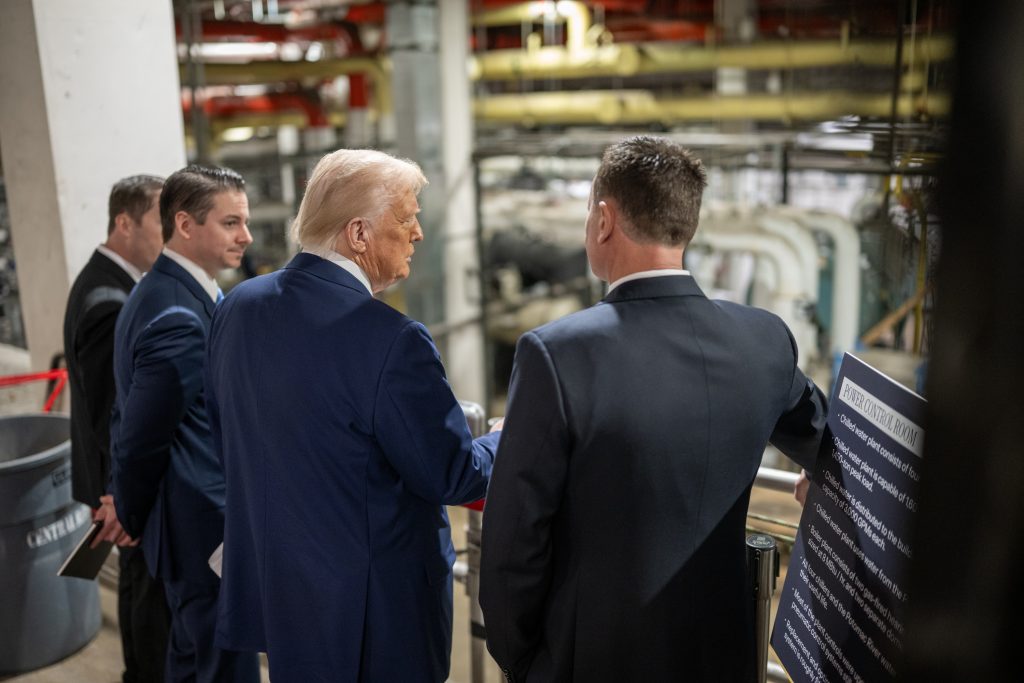
Engineers examining roughly half of the building’s 278 soffit panels, the underside of the overhang that wraps the house, found dozens with severe structural corrosion and more with mild-to-moderate corrosion. They projected that about a third of the inspected set needs prompt replacement. Some ceiling assemblies above public walks weigh on the order of 2,500 pounds. Executive Director Matt Floca has told trustees the main house is unsafe for continued occupancy. Spokeswoman Roma Daravi’s line after the plaster fall was the administration thesis in one sentence: decades of neglect, no justification for further delay.
What the appropriation covers
Congress appropriated about $257 million specifically for capital repair, restoration, maintenance backlog, and security structures. That is several times a typical year’s federal facilities money. House language listed water systems, elevators, rigging, seating, lighting, hydronic equipment: the unglamorous list. Trump and the board treat the appropriation as proof he funded the rescue the old board would not demand. The appropriation is real, but “the job is fully funded” is a bigger claim than the number supports. Consultants comparing a two-year dark-house path to a four-year stay-open path have put the stay-open number near $560 million, more than twice the federal pile. Those figures describe different jobs. They do not erase the $257 million. They mean the public should stop hearing “Congress paid for the renovation” as if it paid for every version of the renovation.
Sen. Sheldon Whitehouse’s July 9 letter, built on a disclosure from former project managers, alleges a first year that was not life-safety first: rust coming through fresh paint, an $8 million flooring award to a firm without concert-hall experience, a new bathroom floor torn out over tile color. Those allegations have not been adjudicated. They also have not been answered with an itemized obligation list. Until that list exists, how much of the $257 million is steel and waterproofing versus signage and furniture, the public is asked to take a facilities emergency on faith from the same shop that treated the president’s name as the price of the rescue.
Ledger two: the empty seats
No chiller aging out can explain what happened to the operating side. The house came apart when the memorial turned into factional property and a large part of its public started treating the room as someone else’s.
The week Trump announced the takeover, ticket sales dropped by about half. By early summer 2025, subscription revenue was down on the order of a third year over year, with theater subscriptions down far harder. A Washington Post count of several weeks of houses in fall 2025 found typical productions selling or giving away at most 57 percent of seats, against 93 percent in fall 2024. A soft Broadway year does not move numbers like that, and this was the same building selling to half the room it had filled a season earlier, on a clock that started with the takeover.
Artists left in waves. NPR kept a running list that passed two dozen names and companies. Issa Rae canceled a sold-out date. Rhiannon Giddens and Renée Fleming stepped back, and Ben Folds resigned as an adviser to the National Symphony. Hamilton’s producers killed a 2026 engagement at a house the show had filled on an earlier run. Jeffrey Seller said the show had played the same house during the first Trump term and was not boycotting the administration as such. He was boycotting what he called a new spirit of partisanship at a national treasure. After the December lettering came another wave: Philip Glass, Béla Fleck, Martha Graham, Doug Varone, jazz bookings, New Year’s programming. In January 2026 the Washington National Opera ended its residency, citing a new requirement that productions be fully funded in advance, which it called incompatible with how opera actually works. By summer the main calendar was described, including by staff talking to reporters, as a ghost operation. Millennium Stage survived as a remnant.
The budget in plain numbers
Internal budgets obtained by the Post, and not disputed on the figures by the Center, are the hardest numbers in the operating fight. Fiscal 2026 had been planned at about $220 million in revenue. By late spring, management projected about $124 million. That is no rounding error, a drop of about $96 million, call it 44 percent off the plan, close enough to half that the kitchen-table version is fair. Earned revenue, tickets and the money that moves with a full house, was on track to miss its target by roughly 70 percent. Contributed revenue was off about 25 percent. Even after cutting expenses by about a third, the house still projected a deficit in the low tens of millions. One official called it a fiscal cliff: donors gone, tickets gone, artists gone.
Why a dark house still costs
Here is the part that does not show up in a cancellation headline. A venue this size does not get cheap when the calendar dies. The building still needs climate control so the plaster and the instruments and the remaining staff do not cook or freeze. It still needs security, insurance, elevators that pass inspection, a night crew, a finance shop, lawyers, and the contracts that keep water out of the electrical vaults. Resident companies have historically been subsidized even in a good year. Those costs do not clock out because Hamilton left. A few of those costs ease when the calendar empties, but most keep invoicing long after the ticket money has stopped.
Think of the $220 million as a plan that assumed a living house: full-ish theaters paying for ushers and concessions and the overhead that sits on top of every ticket. The $124 million plan assumed a lot of that living house was already gone, while the plant and the payroll to run it stayed on the books. That is why a one-third expense cut was not enough to break even. Variable costs, the extra ushers and the touring guarantee, can be cut when the show is canceled. Fixed costs, the plant that heats and cools the building, keep invoicing. The packet’s warning that payroll and routine maintenance contracts may not clear within weeks is that same math in a panic voice. It does not show the roof caused the shortfall. What it shows is that a dark house still burns cash, and that this house had gone dark in the operating sense months before anyone voted to hang a tarp for two years.
A two-year close makes the same problem larger, not smaller, unless someone else writes the check. Capital money can rebuild a soffit. It is not supposed to be next Friday’s payroll. If the main house goes dark and the Reach shrinks to a remnant, earned revenue falls again while the fixed bill for guarding and insuring a landmark holds. That is the operating trap inside the facilities speech. Roughly half the shortfall is missing ticket money, and the rest is the plain cost of a landmark that was never built to run cheap.
The brand of the room
Leadership’s early argument was that the old house booked work the public would not buy, and that cutting it would fill seats. The sales data ran the other way. The National Symphony and several inherited theater titles were the Center’s ordinary mix, not a sudden invasion. What changed was the brand of the room. Former Kennedy Center president Michael Kaiser restated the old donor logic: ticket buyers become givers. Empty seats hurt the box office now, and they quietly drain the donor pipeline a year or two later, because the givers of tomorrow are the ticket buyers of today.
The announced two-year close then made the remaining calendar nearly impossible to sell. Houses that tour book a year and a half out. An opera company that leaves does not quietly return for a half season. The National Symphony, whose deficit the Center has historically covered, spent months waiting on a budget so it could lock guest artists and rooms. Mocking a resident orchestra for losing money is partly a taste argument, and partly an admission that these companies are cost centers the earned-revenue collapse can no longer paper over.
Other forces exist. A softer touring market. The long tail of the pandemic. Security theater in the District. None of those explain a fifty percent drop in the week of the announcement, an eighty-plus percent crater in theater subscriptions, or a second cliff after the December letters. You do not need a conspiracy to read that timing, only the patience to line up each drop with the shock that came right before it.
How the packet ties the two together
| Ledger | What it pays | Status this week |
|---|---|---|
| Capital / $257 million | Structure, envelope, mechanicals, security, backlog | Appropriated. Spend-down not a public line-item list. Stay-open consultant path much higher. |
| Operations | Payroll, programming, routine contracts, resident-company support | Collapsed after takeover and name fight. FY26 tens of millions below plan even after cuts. |
| Conditional rescue | Keep the institution alive with the main house dark | Trump offer, as drafted, is tied to facade recognition the court has already limited. |
A federal capital account does not automatically clear next Friday’s payroll. A two-year dark house with no season also means two years with almost no earned revenue. That is why the Tuesday drafts tie a facilities close to a demand for an inscription. That pairing is the tell. If the $257 million were quietly covering the job, the Center would not have to make the president’s name the price of staying solvent, and the soffit survey and the fallen plaster are real enough to rule out a pure political prop.
Two further claims sit under the rescue language. Lawyers have told courts that pledged private gifts tied to the name might have to be returned if the inscription stays off. That is a bylaw theory, not cash in the drawer. The Center is also late on independently audited statements for the first year of the new chairmanship. Until those land, every round number from either shop should be labeled unaudited.
Both speeches skip a column. The rescue version walks past the box office that died on a political calendar, and the memorial version walks past the rust that was in the tunnels long before anyone hung a letter. We can hold both columns without signing on to either speech.
What a full accounting would require
Before the public is asked to accept an immediate dark house or a new line of marble under Kennedy’s name, three documents should be in daylight.
- The full engineer and consultant occupancy opinions, not a two-page summary, on whether the Grand Foyer can be localized and the rest of the memorial kept open.
- An itemized spend-down of the $257 million: obligated, paid, life-safety versus cosmetic, change orders, sole-source awards.
- Cash on hand versus restricted funds; which contracts lapse in weeks; what share of the hole is lost ticket income versus returned pledges versus ordinary seasonal timing.
A national cultural center can genuinely need a new building envelope and, at the same time, a board that does not treat a living memorial as a naming-rights package. When those two jobs can no longer be described apart from each other, the place has stopped being run as what Congress said it was.
I have tried to keep my own temperature out of the steel and out of the subscriptions. This building belongs to more than a faction, which is why the statute put one name on it and left the rest of us to argue about the program inside. The argument this month is whether a sitting president’s credit line can be made a condition of keeping the lights on. The court has already said the portico is not that kind of wall. The packet asks the board to test that sentence again, with a hole in the foyer as the exhibit.
The sentence that should survive both sides
The Kennedy Center was under-repaired for years. Congress then appropriated a large capital sum. After the 2025 takeover and the attempt to hang a sitting president’s name on a presidential memorial, the audience and a long list of artists left, and the operating forecast fell from about $220 million toward $124 million. A storm then dropped plaster in the Grand Foyer, and a board that already wanted a two-year close wrote the fall into a resolution that also asks for the name back.
That is what can be honestly sourced today. Everything else, “Trump destroyed it,” “the place was already a ruin,” “only the inscription can stop bankruptcy,” is a slogan parked on one ledger and aimed at the other. The building really is wet, the fight really is about the name, and the empty seats are simply how that fight showed up in the cash.
Related from HeadLines Decoded: They draw the map. You live in the leftover. and IndyCars on Pennsylvania Avenue.
- WJLA, DC News Now, ABC News, Washington Examiner, People, and the Center’s own September 5 posts: Grand Foyer plaster fall the evening of September 4, 2026; no injuries; foyer restricted.
- Judge Christopher R. Cooper, late May 2026: only Congress names the Center; lettering off; hurried shutdown blocked. Letters removed June 13. Later briefing on August 13 inscription and plaza proposals.
- NYT, Washington Post, USA Today, CNN, AP, ArtNews, HuffPost: 2025 takeover and renaming; August 13 votes; $257 million appropriation; consultant stay-open path near $560 million; mid-September packet.
- Washington Post ticket and budget reporting: fall 2025 occupancy versus 2024; FY26 plan ~$220 million versus ~$124 million. Hamilton’s cancelled 2026 engagement. Washington National Opera departure, January 2026. NPR cancellation list.
- Sen. Whitehouse July 9, 2026 letter. Allegations unadjudicated. Itemized spend-down and audited first-year statements not public at publication.