NAD+: Biology, the Decline Narrative, and Recent Challenges
NAD+ is essential for cellular energy and signaling. The claim that it declines steadily with age and that restoring it reverses aging has driven a large market. The biology is real. The simple decline narrative is under pressure.

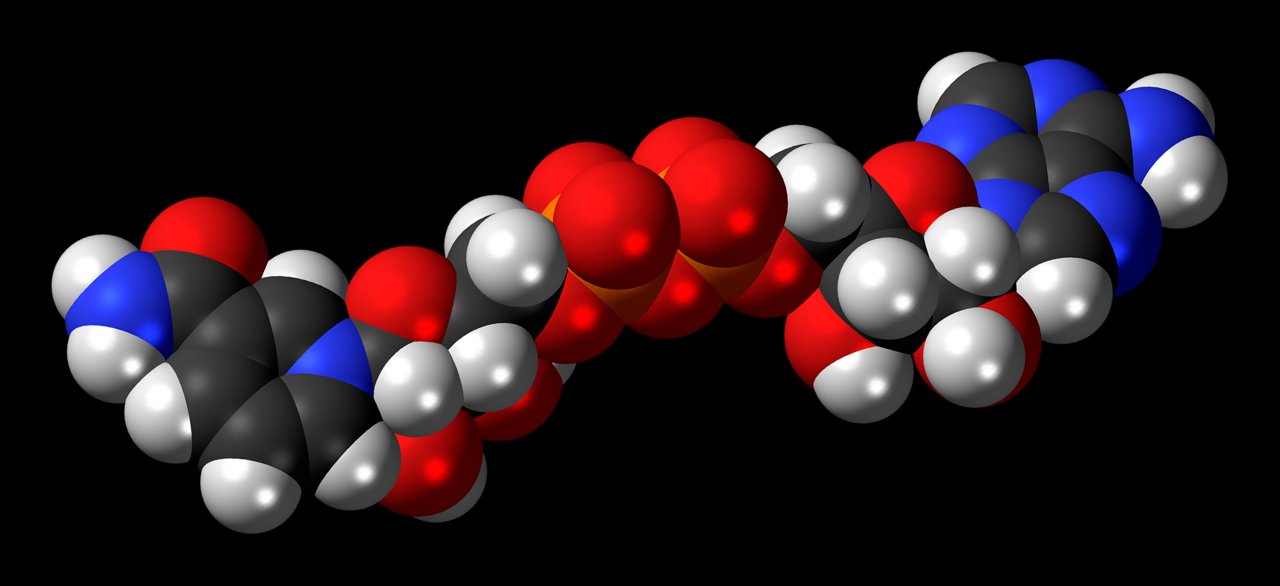
Nicotinamide adenine dinucleotide, or NAD+, is a molecule found in every living cell. It functions as a coenzyme in redox reactions that transfer energy and as a substrate for enzymes involved in DNA repair, gene regulation, and cellular stress responses. Without adequate NAD+, core metabolic and repair processes cannot run normally.
Because NAD+ sits at the intersection of energy metabolism and longevity-related pathways, it became a natural target for aging research. Animal studies in which NAD+ levels were raised through precursors or other means produced improvements in metabolic health, mitochondrial function, and, in some models, aspects of healthspan. Those findings created a scientific foundation. They also created a commercial opportunity.
What NAD+ Actually Does
In its oxidized form (NAD+) and reduced form (NADH), the molecule participates in hundreds of metabolic reactions. It is required for glycolysis, the citric acid cycle, and oxidative phosphorylation, the main routes by which cells extract energy from nutrients. Separate from its redox role, NAD+ is consumed by several enzyme families.
Sirtuins use NAD+ to remove acetyl groups from proteins, influencing gene expression, metabolism, and stress resistance. PARPs (poly-ADP-ribose polymerases) consume large amounts of NAD+ when responding to DNA damage. Other enzymes, including CD38 and SARM1, also degrade NAD+. When demand for these processes rises or when synthesis lags, cellular NAD+ levels can fall.
Cells maintain NAD+ through biosynthesis pathways. The salvage pathway, which recycles nicotinamide back into NAD+, is especially important in mammals. Precursors such as nicotinamide riboside (NR) and nicotinamide mononucleotide (NMN) feed into these pathways and can raise NAD+ levels when supplied in sufficient amounts.

The Decline-with-Age Narrative
A central premise of the NAD+ longevity narrative is that levels of the molecule decline with chronological age in multiple tissues. That decline is said to impair sirtuin and PARP activity, reduce mitochondrial function, and contribute to the phenotypes of aging. Raising NAD+ with precursors is therefore framed as restoring a youthful cellular state.
Supporting evidence exists in animal models and in some human tissue studies. However, the picture in circulating blood has become more complicated. Recent analyses, including a 2026 study in Nature Metabolism and a research briefing summarizing it, reported that whole-blood NAD+ levels do not show a clear, consistent decline with age across several independent datasets. Other studies continue to find age-related changes in specific tissues or under conditions of metabolic stress.
The distinction between circulating NAD+ and tissue NAD+ is important. Blood measurements are convenient and commonly used in human trials of oral precursors. Tissue levels, especially in muscle, brain, or liver, are harder to sample but may be more relevant to functional outcomes. A rise in blood NAD+ does not automatically prove that every tissue of interest has been equivalently repleted.

Why the Narrative Matters Commercially
The simple version, NAD+ falls with age, therefore supplementing precursors will counteract aging, translates cleanly into product claims. It supplies a mechanistic story that feels both scientific and actionable. The more precise version, NAD+ metabolism is complex, tissue-specific changes occur, blood levels may not track aging in a simple way, and functional benefits require more than biomarker movement, does not sell as easily.
Commercial content has tended to emphasize the simpler story. Primary literature and recent systematic reviews have become more cautious about equating a rise in circulating NAD+ with broad anti-aging efficacy.
What Raising NAD+ Does Not Automatically Mean
Even when oral precursors successfully raise blood NAD+ levels, several further questions remain. Does the increase reach the tissues that matter for the claimed benefit? Does it restore the activity of the relevant enzymes under physiological conditions? Does that restoration produce measurable improvements in clinical or functional outcomes that matter to people? And does any benefit persist with continued use or diminish over time?
Animal data and mechanistic studies provide hypotheses. Human trials provide the test. The next part of this series examines those trials for NMN and nicotinamide riboside in detail: what they reliably show about target engagement, and what they show, or fail to show, about functional outcomes.
NAD+ is a central metabolic cofactor with real and consequential biology. The commercial narrative built around it has often outrun the strength of the human outcome data. Keeping the biology and the evidence in proportion is the necessary corrective.
Correction, Sept. 24, 2026: An earlier version of this article said two 2026 companion papers in Nature Metabolism reported these findings on whole-blood NAD+. It was one study, by Tretowicz, Houtkooper and colleagues at the University of Amsterdam, plus a research briefing in the same journal summarizing it.
Built against current standards generation: E.G. v4.16 · I.R.G. v1.13 · L.R.G. v1.9 · P.L.G. v1.10. As of August 2026.
Editor written. AI used for spelling and grammar only.