Social Security Raise of 3.6% Starts in January, About $75 a Month
About $75 a month for the average retired worker. Gasoline is up 34.2 percent in a year, and Medicare's premium comes out of the check.

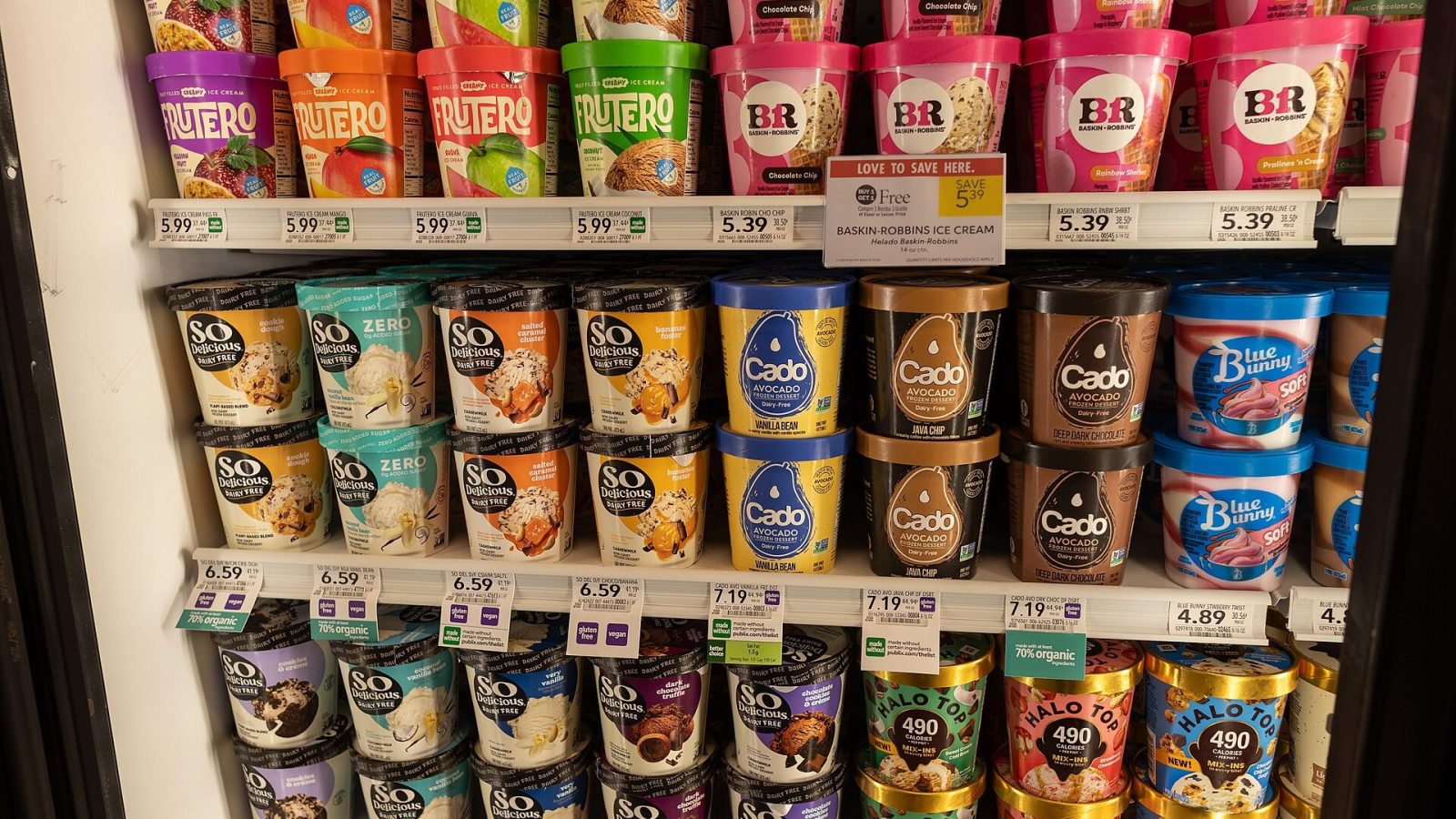
Credit: Nielsoncaetanosalmeron / Wikimedia Commons, CC BY 4.0
Details as of October 15, 2026. The Social Security Administration announced the 2027 cost-of-living adjustment on October 14. Price figures come from the Bureau of Labor Statistics’ September report, released October 14. The 2027 Medicare premium is a projection until Medicare announces it this fall.
Social Security benefits go up 3.6 percent in January 2027. For the average retired worker that is about $75 a month. The Social Security fact sheet for 2027 puts the average check at $2,095 before the raise and $2,170 after. It is the largest raise in four years. The raise for 2026 was 2.8 percent. Nearly 72 million people get the increase. About 7.3 million people who receive Supplemental Security Income, the program for older adults and people with disabilities who have little income or few assets, are paid the higher amount on December 31, because January 1 is a federal holiday.
Figuring the 3.6 percent
The raise is a cost-of-living adjustment, called a COLA. It follows a price index called the Consumer Price Index for Urban Wage Earners and Clerical Workers, known as CPI-W, which the Bureau of Labor Statistics compiles for households that get more than half their income from clerical or wage jobs. Social Security compares the index for July, August and September with the same months a year earlier. AARP lists the yearly changes as 3.4 percent in July, 3.5 percent in August and 3.9 percent in September, and those three figures average about 3.6.
September prices
Energy was up 20.4 percent from a year earlier, and gasoline was up 34.2 percent. Electricity was up 4.4 percent. Food bought at stores was up 1.8 percent, and restaurant meals were up 3.5 percent. Those category figures come from CPI-U, an index that covers a broader group of city residents and rose 3.7 percent overall. CPI-W, the one that sets the raise, was up 3.9 percent for the year ending in September, and its categories can differ.
Ice cream cartons since 2002
Shrinkflation is a package that holds less than it used to while the price stays close to where it was. Ice cream is a long-running example. In March 2002, Dreyer’s, the company behind the Dreyer’s and Edy’s brands, began replacing its 64-ounce half-gallon carton with a 1.75-quart, or 56-ounce, one at the same price, the Associated Press reported that November in a story the Seattle Times carried. Ice-cream-industry consultant Malcolm Stogo told the AP the switch was “very deceptive.” In April 2008, the consumer site Consumerist reported, from a reader’s photo, that Breyers was moving to 48 ounces. In May 2008, the newsletter Mouseprint reported that Breyers cited rising ingredient prices, fresh cream especially, and that Edy’s was cutting its carton to 48 ounces as well. Mouseprint said both brands appeared to keep their prices, and Edy’s said it wanted to keep a “familiar price.”
A 48-ounce carton holds three-quarters of the old 64-ounce half gallon. At an unchanged shelf price, that works out to a third more per ounce.
Kari McNair, an economist at the Bureau of Labor Statistics, wrote in February 2023 that when a data collector finds a changed package size, the bureau records the new size and the CPI uses the price per standard unit, usually per ounce. A smaller carton with an unchanged price therefore shows up in the index as a price increase. Shrinkflation adds little to the index, though. The bureau built test versions of the CPI with size changes removed. From January 2015 to December 2019 they differed from the published CPI by about 0.05 percent in total, roughly 0.01 percent a year, and by about 0.21 percent for food and beverages. The Government Accountability Office, which audits for Congress, reported in July 2025 that downsizing added about 0.06 percentage points to the 34.5 percent rise in consumer prices from 2019 to 2024. In the five categories where downsizing had the largest effect, it added between 1.6 points for cereal and 3.0 points for household paper products to those categories’ price increases. The GAO added that the bureau sees size changes only on products in its sample.
The bureau also publishes an average price for regular packaged ice cream, stated per half gallon. It was $3.43 in January 2002 and $5.85 in August 2026, the latest month published, an increase of about 71 percent. The bureau says it converts food prices to a common unit before averaging them. It also says average prices carry sampling error and are meant for comparing prices within one month, so treat the 71 percent as a rough guide.
What Medicare takes back
Medicare’s Part B, which covers doctor visits and outpatient care, charges a monthly premium that is usually deducted from Social Security checks. The standard premium is $202.90 a month in 2026. The Medicare trustees, the board that oversees the program’s finances, project $209.50 for 2027 in their 2026 report. That is an increase of $6.60, or 3.25 percent. If that holds, the $75 raise becomes about $68 after the $6.60 increase. For 2026 the premium rose 9.7 percent while the raise was 2.8 percent, the Motley Fool reported. Social Security says each person’s 2027 premium will appear in their my Social Security Message Center in late November.
A different index for retirees
CPI-W is not built around retirees’ spending. The Senior Citizens League, an advocacy group, says benefits have lost nearly 14 percent of their buying power over the past decade, CBS News reported in July. Its executive director, Shannon Benton, said, “Seniors don’t experience inflation as a percentage on a chart.”
The Bureau of Labor Statistics also issues an experimental index for people 62 and older, called R-CPI-E. The Congressional Research Service, Congress’s research arm, calculated that a COLA based on it would have been 3.0 percent for 2026 instead of 2.8 percent, about $4 more a month for a typical retired worker. Prices measured by R-CPI-E grew about 221 percent from January 1985 to January 2025, against about 197 percent for CPI-W. The bureau says conclusions from R-CPI-E are tentative. It builds the index from the same geographic areas, outlets, items and prices as the CPI-U, so older shoppers are assumed to pay the same prices as other urban consumers, though in different amounts. It covers everyone 62 and older, including some who have not claimed benefits, and it leaves out the roughly one in eight beneficiaries who are under 62.
- Social Security Administration, Oct. 14, 2026, “Social Security Announces 3.6 Percent Benefit Increase for 2027”
- Social Security Administration, 2027 COLA fact sheet, “2027 Cost-of-Living Adjustment (COLA) Fact Sheet”
- AARP, Deirdre Shesgreen, Oct. 14, 2026, “Social Security COLA Set at 3.6% for 2027”
- Bureau of Labor Statistics, Oct. 14, 2026, “Consumer Price Index Summary – 2026 M09 Results”
- Bureau of Labor Statistics, Kari McNair, February 2023, “Measuring shrinkflation and its impact on inflation”
- Government Accountability Office, July 31, 2025, “Consumer Prices: Trends and Policy Options Related to Shrinking Product Sizes (GAO-25-107451)”
- Bureau of Labor Statistics, “Average Prices fact sheet”
- Federal Reserve Bank of St. Louis (Bureau of Labor Statistics data), “Average Price: Ice Cream, Prepackaged, Bulk, Regular, per One-Half Gallon (1.9 Liters) in U.S. City Average”
- Associated Press, John Curran, via the Seattle Times, Nov. 19, 2002, “Some screaming over ice-cream packaging”
- Consumerist, Apr. 21, 2008, “Breyers Ice Cream Shrinks To 1.5 Quarts”
- Mouseprint, May 12, 2008, “Ice cream scoop: major brands downsize again”
- Motley Fool, Sean Williams, via Yahoo Finance, Oct. 14, 2026, “Social Security’s 2027 COLA Is Officially the 5th-Largest in 35 Years — but This Doesn’t Tell the Full Story”
- MOAA, June 17, 2026, “Medicare Report Estimates Future Part B Premiums”
- Congressional Research Service, “A Hypothetical Social Security Cost-of-Living Adjustment Based on the Research Consumer Price Index for the Elderly (IF12675)”
- CBS News, updated July 14, 2026, “June’s inflation data showed a big drop. How will that impact the 2027 Social Security COLA?”
- CPA Practice Advisor, Leada Gore of al.com, Aug. 14, 2026, “How Much Will Social Security COLA Go Up Next Year? ‘It’s Infuriating’”
- Wikimedia Commons, Nielsoncaetanosalmeron, CC BY 4.0, “Ice cream displayed at a supermarket.jpg”

Editor written. AI used for spelling and grammar only.
More in Business
 Business
Diesel Fell 2 Cents in the First Weekly Reading After Trump’s Russian Diesel Announcement
Business
Diesel Fell 2 Cents in the First Weekly Reading After Trump’s Russian Diesel Announcement
 Business
Judge approves Paramount’s settlement with 12 states over the Warner Bros. deal
Business
Judge approves Paramount’s settlement with 12 states over the Warner Bros. deal
 Business
Florida paid to study the fees insurers pay their sister companies. The Senate’s lawyer told two newspapers to shred it.
Business
Florida paid to study the fees insurers pay their sister companies. The Senate’s lawyer told two newspapers to shred it.