The USS Abraham Lincoln’s Supply Problems Are Real. The Spin on Both Sides Isn’t.
Iranian missiles wrecked the Navy's main Gulf supply hub and pushed resupply 2,200 miles out to Diego Garcia. The Lincoln never ran out of food, and it never stopped flying. The truth sits between 'cover-up' and 'completely misrepresented.'

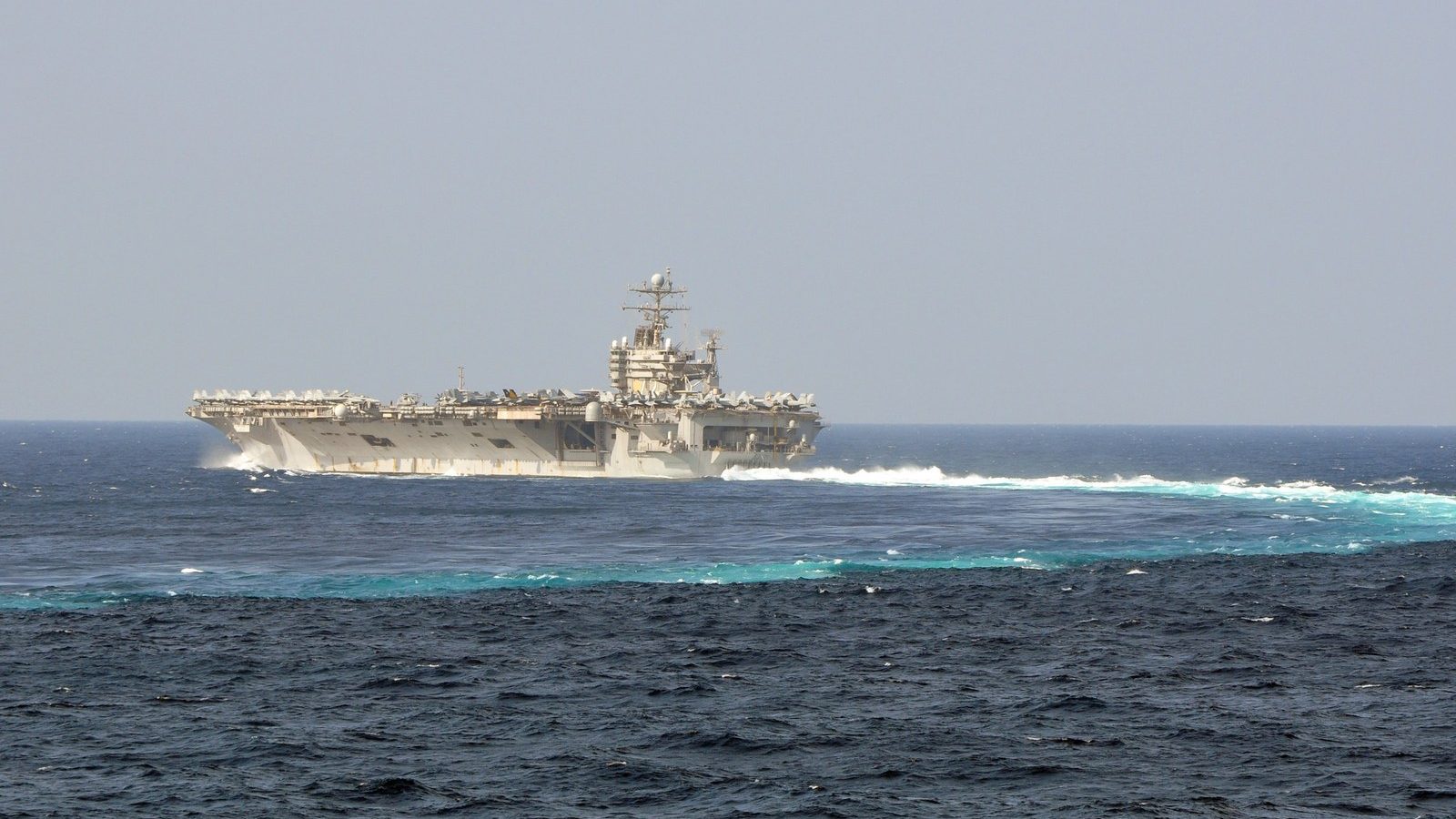
The USS Abraham Lincoln has been at sea for roughly nine months, more than 200 days of it without a single liberty port. That is one of the longest carrier stretches in modern Navy history. For weeks, two very different stories about life aboard have been fighting for the headline. One says sailors are near starving on a broken ship the Pentagon is covering up. The other says the reporting is, in the words of Defense Secretary Pete Hegseth, “completely misrepresented,” and that a long war deployment is simply hard.
Here is the thing both versions leave out: there is a documented, physical reason the food got worse, and the honest answer sits between the two loud ones.
- An Iranian missile and drone strike on the Navy base in Bahrain in late February wrecked the region’s main supply hub, forcing resupply out to Diego Garcia, roughly 2,200 miles away.
- That distance is the practical reason fresh food and hygiene supplies became slow and unreliable, with mail lagging behind them. It is a logistics failure, not a menu choice.
- Crews report real strain: repetitive meals, shortages of soap and toothpaste, moldy showers, broken toilets and laundry, and worn-down morale. The ship did not run out of food or water and stayed mission-capable.
- The right is wrong to wave it away as “misrepresented.” The left is wrong to call it near-starvation and a cover-up. A fact-check found no evidence the Bahrain damage was hidden.
- A relief carrier, the USS George Washington, is heading in to take the Lincoln’s place.
The part both sides skip: a base got bombed
On February 28, 2026, in the opening stretch of the war with Iran, Iranian missiles and drones hit Naval Support Activity Bahrain, the home of the U.S. Fifth Fleet and the Navy’s primary logistics hub in the Gulf. Reporting and satellite imagery showed damage across the base, including headquarters buildings, port facilities, a desalination plant, fuel storage, and communications. The New York Times, whose reporting several outlets built on, described the attack as having “destroyed much of the base.”
With Bahrain degraded, the Pentagon shifted major resupply to Naval Support Facility Diego Garcia, a British-controlled island in the Indian Ocean that sits roughly 2,200 miles from where the carriers were operating near the Gulf of Oman. That distance is what everything downstream follows from. Fresh produce and dairy do not travel 2,200 miles on a warship’s schedule the way they travel a short hop from Bahrain. Navy leaders acknowledged a backlog and said they prioritized food first, then hygiene items, then mail.
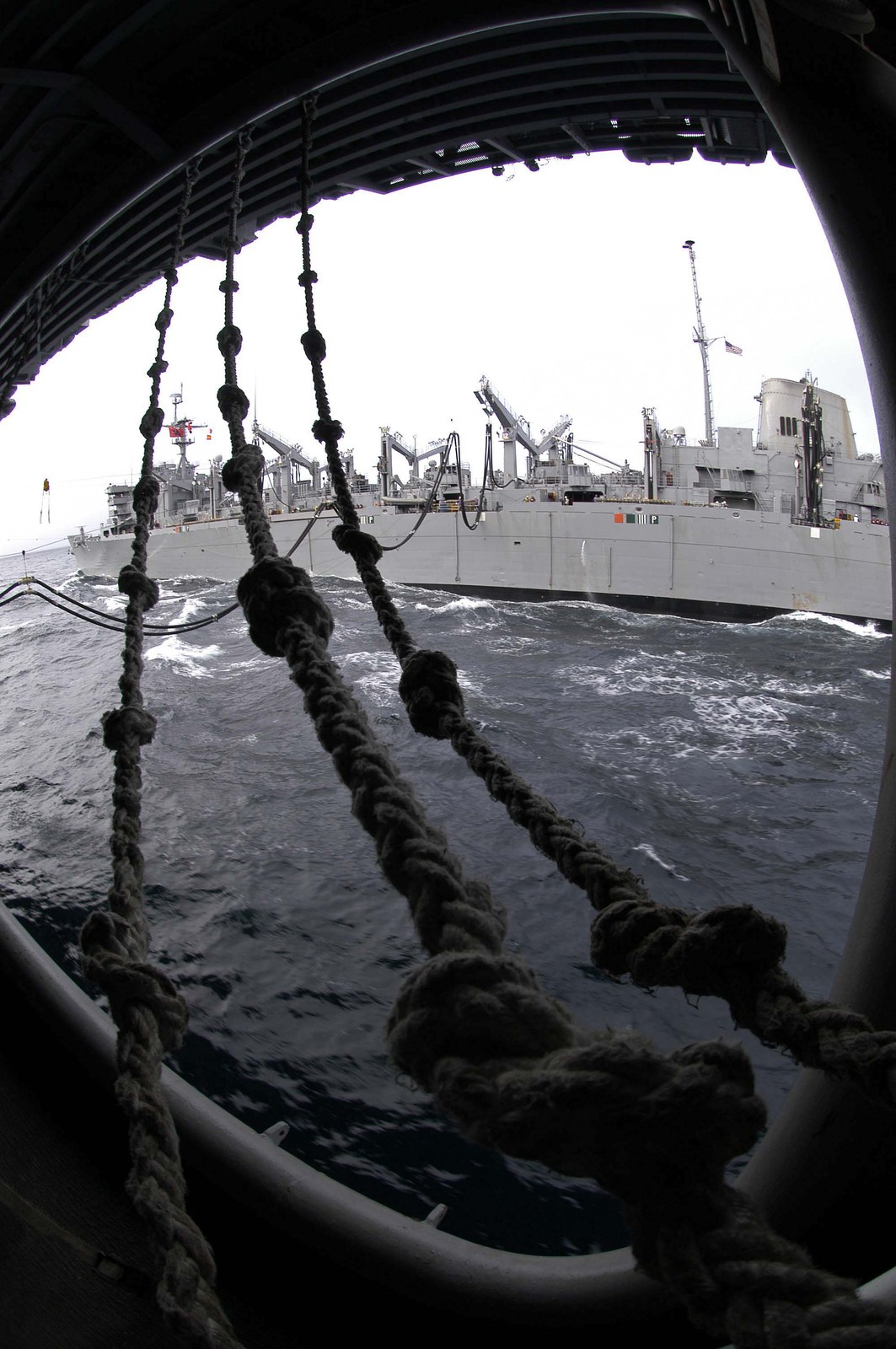
A carrier at sea is fed by underway replenishment, supply ships steaming alongside and passing pallets across on cables, like the transfer above. Stretch the distance those supply ships have to cover and the whole rhythm slows down. That is the mechanism under every headline about the Lincoln.
What sailors and families describe
Accounts from family members and sailors, reported by Military Times, Task & Purpose, NBC News, TIME and others, land on a consistent picture that stops well short of running out of food or water:
- Fresh items became scarce or unreliable for stretches, and meals grew repetitive as crews leaned on frozen and shelf-stable options.
- Basic toiletries ran low at times, soap, toothpaste, deodorant.
- Family members described moldy showers, broken toilets, long meal lines, and inoperable laundry.
- Shifts ran as long as 16 hours, and more than eight months without a normal port call wore on morale.
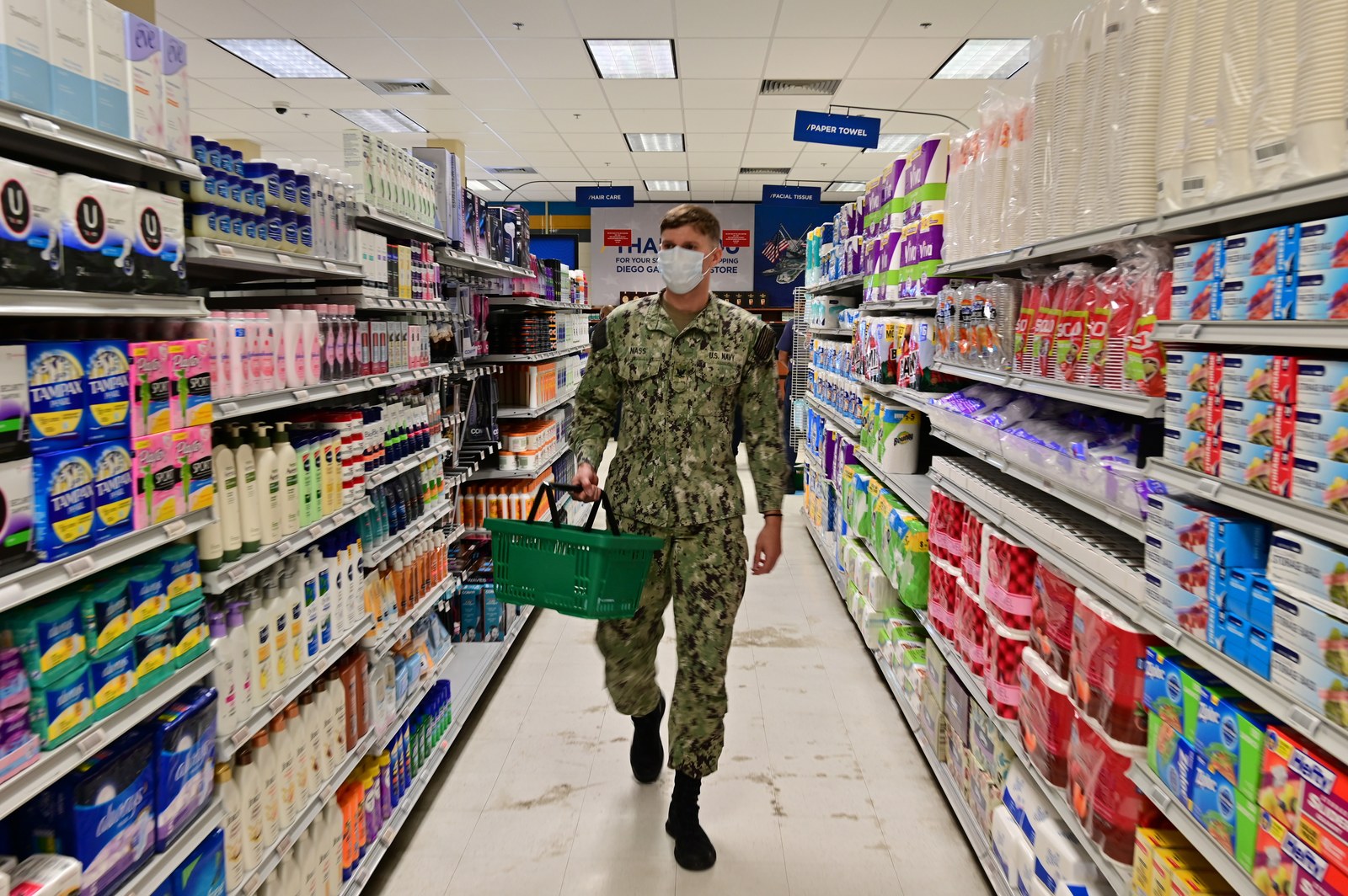
There is a quiet irony in the picture above: the shelves ashore at Diego Garcia are stocked. The soap and toothpaste exist. The problem was never a global shortage of deodorant. It was getting those shelves to a ship 2,200 miles out, which is exactly why the shortages were intermittent rather than absolute.
On the hardest question, crew mental health, the record is genuinely mixed. Navy Times, along with Stars and Stripes, reported accounts of sailors attempting to go overboard, and CNN reported one confirmed overboard incident on August 3 in which the sailor was recovered. More than 200 family members turned out for a meeting in San Diego to raise concerns. The Navy told TIME it had “not observed an increase in suicidal ideations or attempts aboard the ship,” and CENTCOM said the Lincoln had among the lowest mental-health case numbers of the fleet’s active carriers. Both of those things can be partly true at once, which is precisely why it is being fought over.
The Navy and Pentagon response
Navy and Pentagon leaders have pushed back hard on the worst descriptions. Admiral Daryl Caudle said in April that “in no way” had there been a time when nutritional requirements were not met. The Office of the Chief of Naval Operations said the Lincoln had “sufficient food onboard to serve their crews with healthy options.” A Fifth Fleet spokesperson denied reports of holes in the flight deck and said the ship “remains fully capable of meeting all mission tasking.” CENTCOM pointed to the carrier’s output, roughly 10,000 aircraft sorties and 1.5 million pounds of ordnance, as evidence of a crew that was strained but working.
Hegseth called the media accounts “completely misrepresented” and said the Navy makes sure “every ship, every crew, every captain has everything we can provide” under the circumstances. Those denials are narrowly accurate on the specific claims they answer. They also do a lot of work to change the subject from the quality-of-life problems that families were describing in detail.
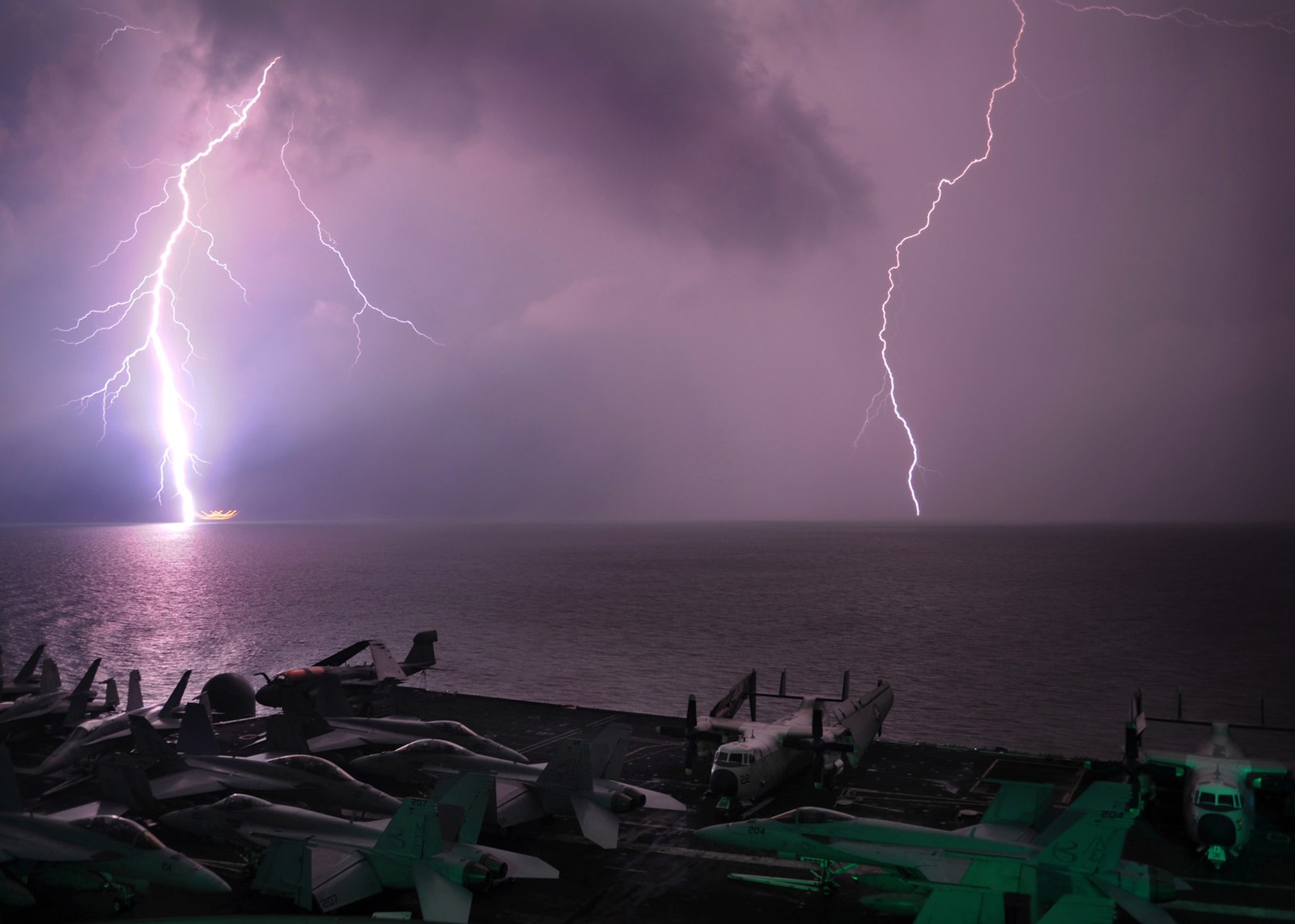
What the administration plays down
The administration and its supporters have mostly worked to shrink the story. Hegseth’s “completely misrepresented” does the heavy lifting: it treats a set of documented, specific complaints as a media invention. President Trump went further, dismissing the concerns outright and calling the record-setting deployment “not nearly long enough.” The supporting argument is that long combat deployments are inherently austere, that sailors are tough, and that amplifying the hardship only hands the enemy a morale win.
Where that framing goes wrong: it waves away a real logistics failure and real conditions. A base the Navy relied on was knocked out, resupply got materially harder, and sailors and their families reported the results in concrete terms. “Everything is fine, stop reporting it” is not a description of what happened. It is a decision not to talk about it.
Where the cover-up charge overreaches
On the other side, the story got inflated into catastrophe and cover-up. Commentary, amplified by outlets on the left, leaned on the words “starvation” and “crisis.” National-security reporter David Rohde argued that Hegseth had “hid” the fact that Iran destroyed the Bahrain hub, framing the supply mess as something the Pentagon deliberately buried. Newsweek and The New Republic ran with the cover-up angle.
Where that framing goes wrong: an independent fact-check found that while the Bahrain damage and the supply disruption are well documented, the claim that Hegseth intentionally hid them is unsubstantiated. The strikes on Bahrain were public. They were covered at the time, including satellite analysis in the press. Disputing how bad conditions are, loudly and in public, is not the same as concealing that a base was hit. And “near starvation” overshoots the evidence: by every account, including critical ones, the ship never ran out of food or water and never stopped flying missions.
What the record supports
Strip the adjectives from both sides and a clear, unglamorous story is left. Iranian strikes on Bahrain forced a longer, less flexible supply chain out to Diego Garcia. That distance made fresh food and hygiene items slow and unreliable to get out to the ship, with mail lagging too. Crews adapted by stretching variety and improvising. Quality-of-life friction was real: repetitive food, thin toiletries, broken plumbing and laundry, and the grinding fatigue of more than eight months at sea. Morale suffered, and the mental-health picture is contested rather than settled. Through all of it, the Lincoln kept doing its job.
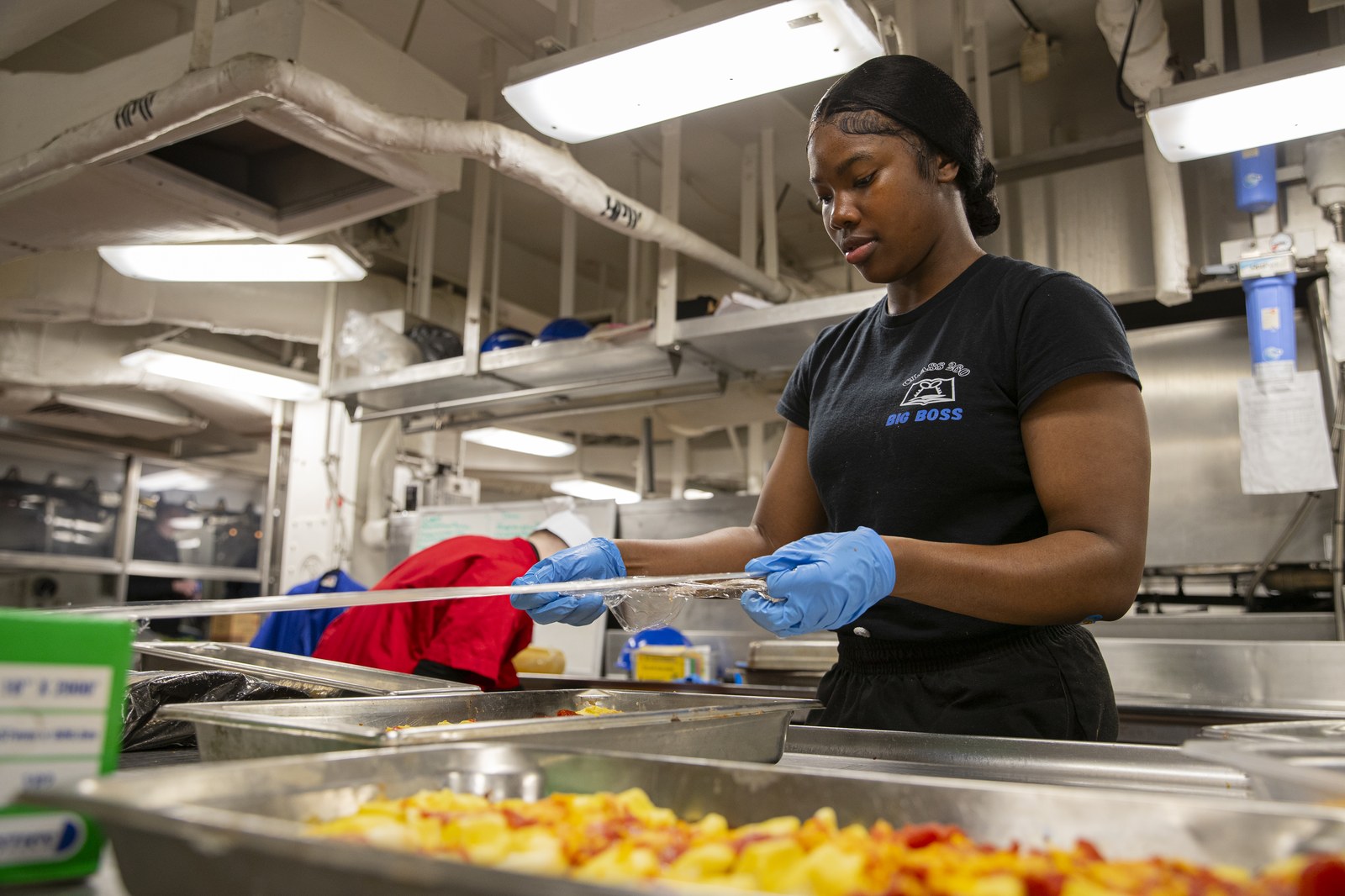
It is, in plain terms, a real problem that is not a catastrophe. That is a less satisfying headline than either side wants, which is usually a sign it is the accurate one.
Why it matters
The relief carrier, the USS George Washington, has been moving in to take the Lincoln’s place, and Trump has confirmed the swap. That solves this deployment. It does not solve the thing underneath it, which is whether the strain of extending the Iran war is being formally flagged inside the Pentagon.
This was never really about a menu or a morale survey. An adversary reached out and hit a forward logistics node, and the effects rippled all the way to a warship’s galley thousands of miles away. Carriers are built to project power far from home. Their food and fuel still have to come from somewhere, and that somewhere can be targeted. Whether the current episode gets remembered as a scandal or a footnote, that vulnerability is the part worth watching, long after the spin on both sides has moved on.
- TIME: What to Know About Concerns Over the Long-Deployed USS Abraham Lincoln
- Task & Purpose: Sailors aboard USS Abraham Lincoln report concerning conditions, families say
- The Philadelphia Inquirer (New York Times reporting): Navy carrier’s problems are tied to attacks on U.S. base early in war
- Snopes: USS Abraham Lincoln crew reportedly faces food shortages, low morale
- Factually: Did Pete Hegseth hide that Iran destroyed the U.S. logistics base?
- 2026 Iranian strikes on Bahrain (overview and timeline)
- Newsweek: Pete Hegseth accused of covering up USS Abraham Lincoln resupply problems
- The New Republic: Hegseth covered up the real reason the USS Lincoln wasn’t resupplied
- CNN: Trump says USS Lincoln’s deployment was ‘not nearly long enough’
- Al Jazeera: US aircraft carrier expected to relieve USS Lincoln in Middle East
Written to standard. E.G. v4.17 · I.R.G. v1.14 · L.R.G. v1.9 · P.L.G. v1.10. Produced under the HeadLines Decoded Editorial, Image & Rights, and Legal & Risk Guidelines at the versions shown. Images are U.S. Navy public-domain photographs. Decode. Do not sensationalize. Show the facts and let the reader decide.
Editor written. AI used for spelling and grammar only.