Who can still say no to a data center
The veto that actually stops a data center today sits in a county building. Washington is trying to move it. Where the power really is.
 Todd Ruffner-Schoenfeld
Editor in chief. A knack for the fine print, and likes it.
Todd Ruffner-Schoenfeld
Editor in chief. A knack for the fine print, and likes it.
The stop that works is local
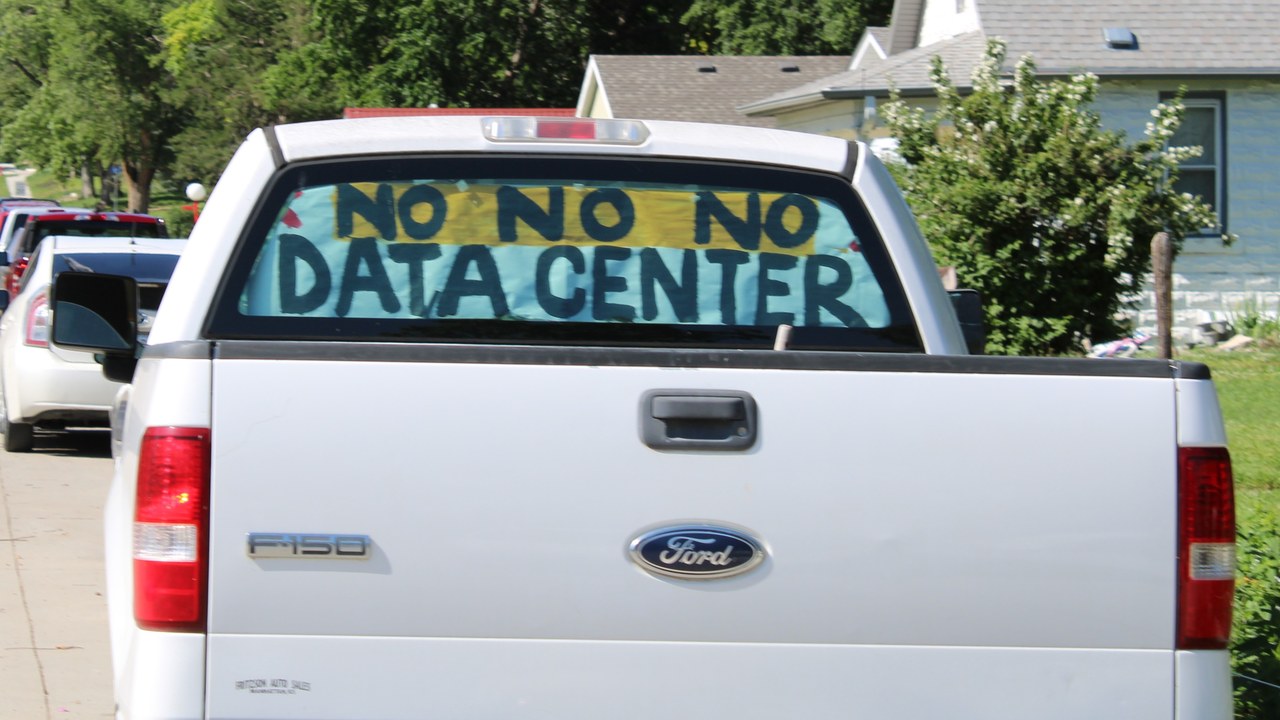
More than 100 communities have already used some version of the pause or the ban. About three dozen have passed outright bans, with New Jersey towns leading the count, while many more counties and townships have simply hit a timeout. In the first six weeks of 2026, lawmakers in more than 30 states filed over 300 data-center bills, a sharp jump from the year before. Voters are getting a direct say, too. A handful of local ballot measures are confirmed for 2026 across California, Michigan, Nevada and Wisconsin, and in Port Washington, Wisconsin two-thirds of voters have already approved a measure that forces a public vote on the large tax districts these deals lean on. In Butte, Montana, the county is weighing a moratorium while a citizens’ group fights in court over a ballot initiative the county tried to reverse.
The state steps in
New York moved first at the state level. On July 14, Governor Kathy Hochul signed Executive Order 62, the first statewide pause of its kind, holding discretionary environmental permits for any data center that can draw 50 megawatts or more while three state agencies study the grid, the water and the air and write a community-benefits framework. The order carries no hard end date; the governor described it as running about a year. The legislature had passed a tighter version with a 20-megawatt trigger, and Hochul signed the narrower order instead. Industry called it a signal. The people who had spent a year begging Albany to do something called it overdue.
The federal fight, so far
Washington is where the volume lives and the action does not. In March, Senator Bernie Sanders and Representative Alexandria Ocasio-Cortez introduced the Artificial Intelligence Data Center Moratorium Act, S.4214 in the Senate and H.R.9442 in the House, which would freeze new AI data-center construction until Congress writes federal safeguards. It is not going to become law in this Congress. It shifted the conversation anyway, and Representative Frank Pallone, the ranking Democrat on the House Energy and Commerce Committee, went further and called for a national moratorium at a subcommittee markup. President Trump pushed hard the other way, telling New York to reverse course and calling the facilities “money machines” for the states that host them; weeks later he warned the opponents they would end up “backwards and poor.” The administration’s answer to the backlash has been speed, plus a voluntary ratepayer-protection pledge from the large AI firms. Speed and a pledge are not a statute.
The sleeper is preemption
The quiet risk under all of this is preemption. If Congress or a federal agency decides to treat data centers as critical infrastructure and tells a county it may not refuse one, the hearing on Tuesday night turns into theater. That fight is not settled, and the Congressional Research Service has already mapped the limits of how far federal power could reach. Until it is settled, the person who can still stop a project is often a county commissioner who could lose a primary over a single contaminated well.
Who holds the veto now
For now, the answer to “who can stop this” is still, mostly, your county. Whether that stays true is the fight worth watching, because the side with the compute and the capital would very much like the answer to be nobody. The next part sets the two national arguments about the whole boom side by side, on the same page, and holds them to the same spreadsheet.
- New York Executive Order 62 (July 14, 2026), the first statewide data-center moratorium, covering sites of 50 megawatts and up while state agencies study grid, water and air. Office of the Governor of New York.
- Artificial Intelligence Data Center Moratorium Act, introduced March 2026 by Sen. Sanders (S.4214) and Rep. Ocasio-Cortez (H.R.9442). Congress.gov (S.4214); announcement.
- Rep. Frank Pallone called for a national AI data-center moratorium at a House Energy and Commerce subcommittee markup. House Energy and Commerce Democrats.
- President Trump’s remarks urging New York to reverse course and calling data centers “money machines” (later “backwards and poor”). PBS NewsHour.
- State-level activity (30-plus states, 300-plus bills in early 2026) and local bans/pauses (100-plus communities). MultiState. Local ballot measures. Ballotpedia.
- Polling (about 70 percent oppose a nearby data center) and political ad spending (CNN analysis of AdImpact: $31 million-plus, over 99 percent against). Fox News poll; CNN. Federal preemption analysis: Congressional Research Service.