IndyCars on Pennsylvania Avenue: What the Freedom 250 Actually Is, and What It Costs
The first IndyCar race through Washington runs Sunday past the Capitol. Underneath the spectacle sit real questions about who pays, who runs it, and how a bipartisan anniversary became a White House production.

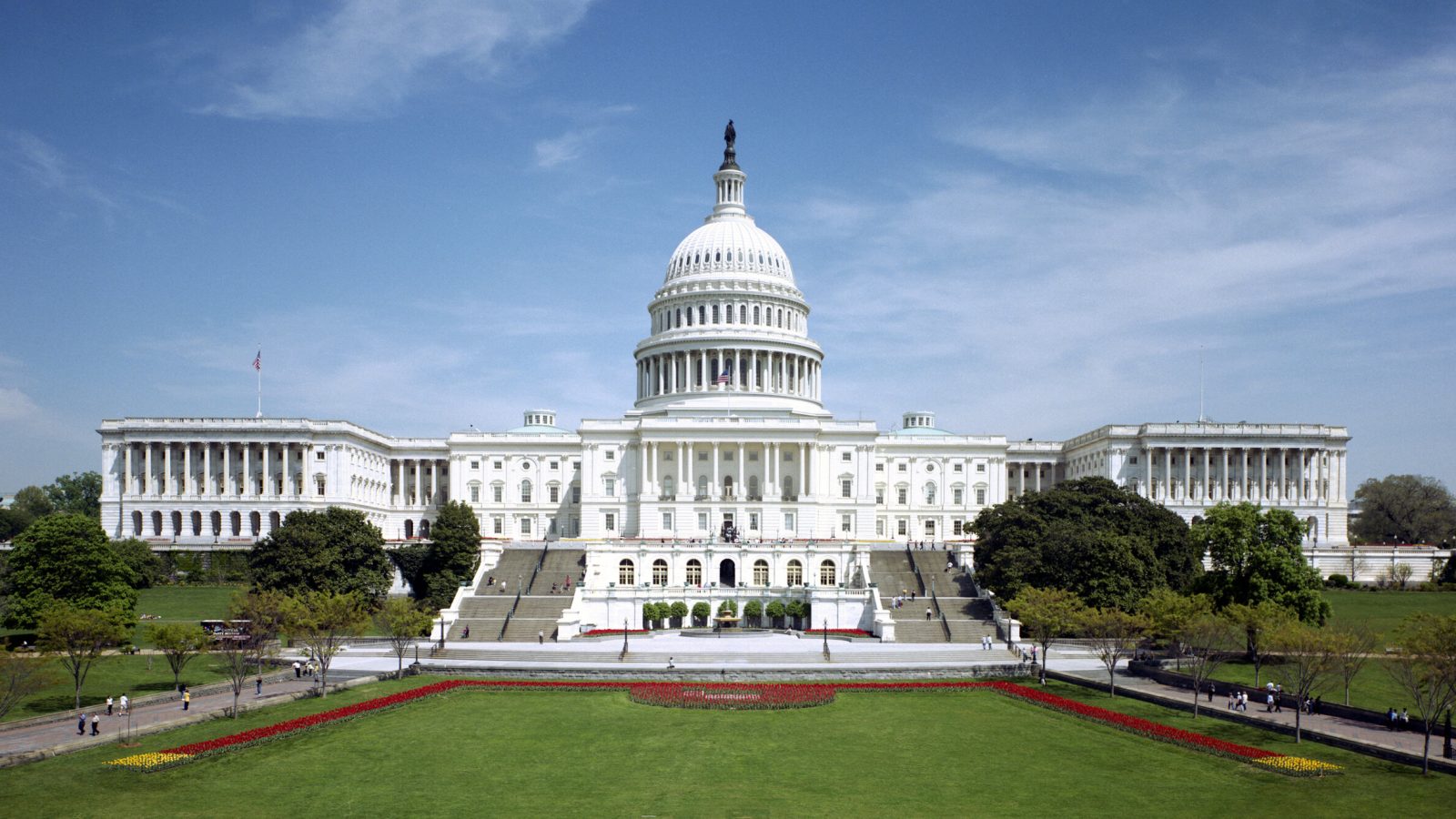
On Sunday afternoon, open-wheel race cars will run down Pennsylvania Avenue with the dome of the United States Capitol filling the windshield. The Freedom 250 Grand Prix is the first IndyCar race ever held on the streets of Washington, and by almost any measure it is one of the largest, most expensive, and most heavily policed sporting events the city has staged. It is also, depending on who is describing it to you, either a once-in-a-generation birthday gift to the nation or a federally produced spectacle that has quietly absorbed a bipartisan anniversary. Both of those stories are being told loudly this week. Here is what is actually verified underneath them.
What is actually happening
The race runs Sunday, August 23, with the green flag scheduled for shortly after 1 p.m. Eastern and FOX coverage beginning around 11:30 a.m. The circuit is a 1.7-mile temporary street course with seven turns, its main straight running about four-tenths of a mile down Pennsylvania Avenue, a stretch that normally carries a 25 mph limit. Drivers will complete 147 laps. That number is not an accident: IndyCar’s original schedule listed a 125-lap race, and organizers lengthened it to 147 so the total distance would land on a symbolic 250 miles for the nation’s 250th year.
Top speed is where the promotion outruns the stopwatch. Organizers and the president have talked up cars approaching 190 to 200 mph. A typical IndyCar street course tops out closer to 180 to 185, so treat the bigger numbers as marketing rather than measurement. General-admission tickets were free, distributed by a lottery that closed in June, and demand was real: organizers reported roughly 288,000 requests over nine days for about 100,000 free spots. They now plan for around 130,000 people a day, with some reports putting peak attendance closer to 140,000 once suites, team passes and official guests are counted. Hospitality suites ran from a $200,000 base to about $250,000; the state of Indiana bought one.
The security state around a street race
The footprint is the tell. Federal planners have given the weekend a SEAR 1 rating, the same tier used for the Super Bowl, which brings airport-style screening, a clear-bag policy limited to roughly 12 by 6 inches, and a no-drone zone overhead. FOX Sports reported the buildout in concrete terms: about 1,800 barriers, many trucked in from Virginia at roughly five tons apiece, more than 200 manhole covers welded shut, and some 1,350 pages of permits, against about 200 for a typical Detroit race. The security roster runs deep, with reports of more than 500 National Guard members and roughly 1,300 Metropolitan Police officers alongside the Secret Service, FBI, U.S. Capitol Police, U.S. Park Police and ATF. The FAA is expected to pause traffic at Reagan National for several hours around the race.
Who is paying, and who will not say
On cost, the honest answer is that nobody has published one. Penske Corporation is covering what its executives call the vast majority of staging the race, and FOX Sports reported the company has spent more than $35 million on it, a figure worth attributing to that reporting rather than treating as official. For scale, TIME put the comparable Detroit event at roughly $20 million. What is not disclosed is the public share. The District has described its own road work as very limited and referred cost questions to Penske. Federal agencies supplied route authorization and permitting through an executive order, and the security operation is heavily federal. TIME reported that Congress allocated about $90 million from an emergency security fund for the weekend, a number that has not been independently settled. The clean summary: the private spend is large and partly disclosed, and the taxpayer spend is real and almost entirely undisclosed.
| IndyCar street race | Approx. race distance |
|---|---|
| Freedom 250 (Washington) | ~250 miles |
| Markham (historic) | ~189 miles |
| Grand Prix of St. Petersburg | ~180 miles |
| Long Beach | ~177 miles |
| Detroit | ~164 miles |
The part both sides are spinning
The loudest fight is not about the racing. It is about who owns the nation’s birthday. The race was authorized by a January 2026 executive order, and it is being staged under an entity called Freedom 250, which is structured as an LLC housed inside the National Park Foundation and traces back to a White House task force created by an earlier order. That is a separate body from America250, the U.S. Semiquincentennial Commission that Congress chartered years ago to lead the 250th-anniversary programming. Reporting indicates the two have not shared the spotlight evenly: by one account America250 had drawn only about $25 million of a $150 million appropriation while Freedom 250 received $68.3 million from the Interior Department by April. Those figures come from reporting, not from an audited ledger, and they are the root of the politicization charge.
Strip the adjectives and two honest cases remain. Supporters can point out that the event is free to attend, largely privately funded, and beamed worldwide on FOX, a civic and economic showcase the city could not otherwise stage, arriving on a genuine national milestone, with organizers stressing that they ran noise and vibration studies and built a security operation to match the setting. Critics can point out, just as fairly, that a bipartisan anniversary is being routed through a White House-controlled entity, that the public cost is undisclosed, that downtown faces days of closures and a militarized footprint, and that four museums inside the perimeter, three Smithsonian institutions plus the National Gallery of Art, now require a race ticket for weekend entry. The National Gallery boarded some outdoor sculptures and ran vibration studies as a precaution; Penske’s Bud Denker counters that the cars weigh about 1,750 pounds and are quieter than a passing siren.
What to watch on Sunday
On the track, the field is genuinely worth watching. It is round 15 of the 2026 season, and the entry list includes Alex Palou, the reigning and points-leading champion, Felix Rosenqvist, this year’s Indianapolis 500 winner, and David Malukas, with a Saturday card of heat races and seven military flyovers building toward the main event. The White House says the president will take a ceremonial lap in the presidential limousine before the start and is expected to wave the green flag, though plans like that can shift on the day.
Everything else is a question the weekend itself will answer. The disruption, the security scale, the museum rules and the governance structure are all documented and beyond dispute. The two things people are arguing hardest about, what the public ultimately pays and whether the vibration reaches the art, are genuinely unresolved right now. Anyone telling you they already know the answer to those two is not decoding the story. They are selling you a side of it.
Related from HeadLines Decoded: The Kennedy Center’s two crises, one facade.
- TIME, What to know about the Freedom 250 Grand Prix (Aug 20, 2026)
- FOX Sports, The complex road to building the D.C. street course
- RACER, 288,000 requests for 100,000 free Freedom 250 tickets
- PBS NewsHour, D.C. prepares to host its first IndyCar street race
- NPR, The race will run past the museums. Could it harm the art?
- Axios D.C., Road closures, security and prohibited items
- Indiana Capital Chronicle, A $200,000 hospitality suite
- Washington Examiner, White House confirms Trump ceremonial lap; bag policy
- Wikipedia, Freedom 250 (organization and America250 funding context)
Reported and edited to HeadLines Decoded newsroom standards. E.G. v4.17 · I.R.G. v1.14 · L.R.G. v1.9 · P.L.G. v1.10. Figures attributed to organizer materials and contemporaneous reporting as of August 2026.
Editor written. AI used for spelling and grammar only.