 Disney
 Is Testing a Cruise Wristband on One Treasure Sailing Today
Disney
Disney Is Testing a Cruise Wristband on One Treasure Sailing Today
A HeadLines Decoded Series
Power Through the Storm
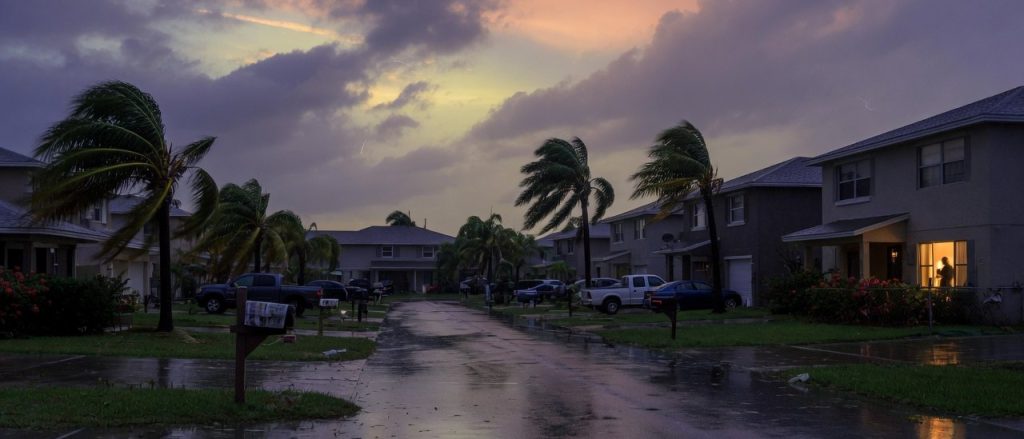
In October 2024, Hurricane Milton left 3.4 million Florida customers without power, a few weeks after Helene had already taken out millions more across the Southeast. The U.S. Energy Information Administration later reported that 2024 brought the most hours without electricity the country had seen in a decade. Customers averaged about 11 hours without power that year, nearly double the previous decade’s norm. Major storms such as Beryl, Helene and Milton accounted for roughly 80 percent of those hours. After a direct hit, one house can sit dark for three days or longer.
A closed refrigerator can keep food safe for about four hours if nobody opens the door, and a full freezer often holds 24 to 48 hours, though Florida heat shortens that. Prescription medicine that needs cold storage loses potency once the refrigerator warms. If the house runs on a well, water pressure disappears the moment the pump stops, so the toilets quit and basic hygiene gets hard. Clinics lose power the same way houses do. The medical aid nonprofit Direct Relief found that power loss forced temporary closures at more than half of the safety-net healthcare providers answering its survey across Florida, Georgia, North Carolina and South Carolina after Helene and Milton.
There are basically three ways to do this. A portable generator lives in the garage or a shed until you need it. You wheel it out, start it by hand or with an electric start, and run it on gasoline. Somebody has to be there to do that and to refill it, sometimes every 6 to 12 hours under load. A standby generator sits on a pad outside the house and is wired in for good, on natural gas where the utility system reaches the street or on propane from a tank in the yard. An automatic transfer switch watches the utility voltage, and when it drops below a set threshold and stays there, the switch starts the engine and moves the house over. On most residential systems that takes under a minute, and the homeowner can be asleep, at work, or away. The third way belongs to houses that already have rooftop solar and battery storage, where a generator recharges the batteries instead of carrying the house on its own.
Florida’s long outages keep happening even after years of work hardening the grid, and the first part of the series explains why. The second works out what a portable can really carry, and a unit sold as 7,000 watts may only put out 5,500 or 6,000 hour after hour. Setup and safety come third: where a portable has to sit so the carbon monoxide stays outside, the two common code-compliant ways to connect it, and why a cord run into a dryer outlet can kill a lineman. A standby takes permits, a site plan and a licensed electrician, and the fourth part walks through all of it. The last one puts the whole decision together, including the house that already has batteries, which can carry the essentials for hours or more than a day.
At Florida prices for 2025 and 2026, a quality portable with an interlock or a manual transfer switch to connect it legally comes to roughly $1,500 to $4,500 all in. A bigger portable, properly connected, runs $3,000 to $7,000. A standby covering the essential circuits is $6,000 to $10,000 installed. Most of a typical home takes an 18 to 22 kW unit, which is 18,000 to 22,000 watts, at $9,000 to $14,000. The top of the market, a larger standby or a complex hybrid, reaches $12,000 to $22,000 or more. None of those are quotes; site conditions move them. Which one is yours depends on the list of what cannot go dark in your house. If there is already a portable in the garage, read the safety part first, because carbon monoxide is the leading killer tied to portable generators.
5 parts
A series by Todd Ruffner-Schoenfeld.
Part 1 of 5
Florida’s Next Long Outage Is Coming. A Generator Is the Difference Between Managing and Losing the Fridge, the Medicine, and the Ability to Leave.
The grid is getting tougher. Storms still win. Here is what days without power actually cost a household, and why the choice of backup power is no longer optional for many Florida homes.
Part 2 of 5
A Portable Generator Can Keep the Essentials Running. It Can Also Kill You in Minutes If You Treat It Like an Indoor Appliance.
Conventional open-frame units and quieter inverter models both work. Both produce deadly carbon monoxide. Here is what a portable can realistically power, how long it can run, and the non-negotiable limits.
Part 3 of 5
The Setup Mistakes That Turn Backup Power Into a Hazard: Placement, Transfer Equipment, Fuel, and Flooding
Carbon monoxide, backfeeding, wet connections, and stale fuel are the ways a generator hurts the household it is supposed to protect. Florida’s codes and conditions make some of these risks sharper.
Part 4 of 5
A Permanent Standby Generator Changes the Outage Experience. It Also Changes the Cost, the Permitting, and the Commitment.
Automatic transfer, continuous fuel options, and whole-house or critical-circuit coverage come with higher upfront cost, licensed installation, and ongoing maintenance. Here is what Florida homeowners actually face.
Part 5 of 5
How to Decide What You Actually Need: Sizing, Hybrids With Solar and Batteries, and a Practical Framework for Florida Homes
The right answer depends on your critical loads, how long you can tolerate an outage, whether someone can manage a portable, and whether you already have solar and battery storage. Here is a way to work through the choice without the marketing noise.
The bottom line
Start with a load list. Write down what cannot fail: refrigeration, any medical device that plugs in, the well pump or a sump pump if the house has one, lights and phone charging, and one zone of air conditioning if heat is a medical risk. Find the running wattage for each on the appliance nameplate or in the manual, and the starting wattage too where the manufacturer gives it. Add some headroom on top. Shop against that total.
Manufacturers list two numbers for every machine. Motors and compressors pull a brief spike when they kick on, so the starting figure is the larger one. Size against the running figure, also called the continuous rating, because that is the load the machine can sustain rather than the one it can manage for a second. Central air is where the math usually breaks. A 3-ton system, which is a measure of cooling capacity and not of weight, can easily demand 3,000 to 5,000 watts running and a much higher surge to start it, and many portables cannot carry that alongside the refrigerator and the other essentials. If the total continuous load stays under about 3,000 to 4,000 watts, a quality portable with a proper interlock or transfer switch can often handle it. A portable rated at 5,000 to 7,500 watts continuous can carry several essential circuits, a well pump and sump, and selected outlets, and maybe one zone of central air if the starting surge is managed.
A portable reaches the house wiring one of two common code-compliant ways. An interlock kit is a mechanical sliding plate fitted over the main breaker panel cover, and it makes it physically impossible to have the utility breaker and the generator breaker on at the same time. The hardware is often under $150, and it is legal when it is certified for your specific panel and installed with a permit by a licensed electrician. A manual transfer switch is a small separate panel holding only the circuits you intend to run on generator power, and it needs the same permit and the same electrician. What is not legal in Florida is a cord run from the generator into a dryer outlet. That pushes power back onto lines a utility crew believes are dead, and it can kill the people restoring your power.
Run a portable outdoors and nowhere else. Never inside the house or the garage, even with the door open, and never in a basement, a crawlspace, a shed, a porch or a carport. Keep it at least 20 feet from any window, door or vent, with the exhaust pointed away from your house and away from the neighbors. The Consumer Product Safety Commission ties portable generators to an estimated 765 carbon monoxide deaths nationwide from 2009 through 2019, and its more recent reporting shows the annual toll rising. Some newer units built to the UL 2201 or PGMA G300 standards shut themselves off when they detect elevated carbon monoxide nearby, which does not replace the 20-foot rule. Put carbon monoxide detectors with battery backup on every level of the home and test them monthly.
A standby earns its price on the days nobody is home, and on natural gas it will keep going without refueling as long as the gas stays pressurized. Gas service often outlasts the grid after a hurricane, though not everywhere and not in every storm. The size that covers the essential circuits is a 10 to 16 kW unit, meaning 10,000 to 16,000 watts. If the roof already carries solar and a battery, a smaller generator recharging the battery can be enough. A rule can still kill the plan. Homeowners associations add restrictions on top of the code setbacks, usually about where a unit can sit and what has to screen it. In a flood hazard area the unit and its electrical components have to be raised or otherwise protected. And the licensed electrician you need may have no opening before the season. Write the load list, then decide who will be home.
This series was reported and edited to HeadLines Decoded newsroom standards.
More from HeadLines Decoded
Disney
Disney Is Testing a Cruise Wristband on One Treasure Sailing Today
 Disney
Choosing Our 2026 Candlelight Processional Night at EPCOT
Disney
Choosing Our 2026 Candlelight Processional Night at EPCOT
 Disney
Our 2026 Disney World Holiday Resort Stroll Starts at Magic Kingdom
Disney
Our 2026 Disney World Holiday Resort Stroll Starts at Magic Kingdom