The Setup Mistakes That Turn Backup Power Into a Hazard: Placement, Transfer Equipment, Fuel, and Flooding
Carbon monoxide, backfeeding, wet connections, and stale fuel are the ways a generator hurts the household it is supposed to protect. Florida’s codes and conditions make some of these risks sharper.

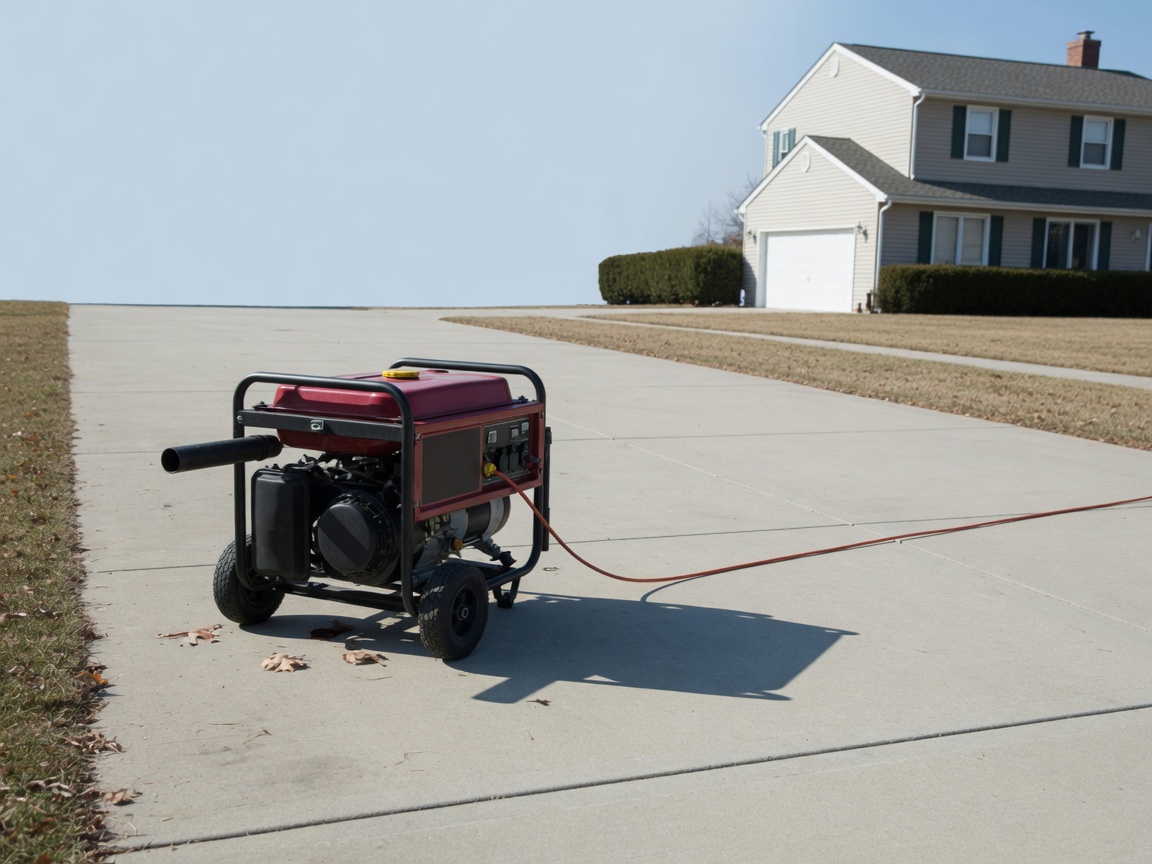
Credit: AI-generated illustration (Grok), generated in-house. HeadLines Decoded. · HeadLines Decoded LLC
Illustration generated with AI (Grok).
A generator that is bought and never used is only an expensive paperweight. A generator that is used the wrong way can kill. The difference is almost always in the setup: where the machine sits, how it is connected to the house, how the fuel is handled, and whether the installation accounts for water.
This part covers the non-negotiable rules. They apply to portable units and, with some differences, to permanent standby systems. Skipping any of them is how people end up in the CPSC fatality statistics.
Carbon monoxide: the leading killer
Portable generators produce carbon monoxide at rates hundreds of times higher than a modern automobile in some measurements. The gas is invisible and has no smell. It binds to hemoglobin more readily than oxygen. Victims can lose consciousness without realizing what is happening.
CPSC reporting shows portable generators are the leading cause of carbon monoxide deaths among engine-driven consumer products, tied to an estimated 765 deaths from 2009 through 2019 alone. Most deaths occur inside homes. The most common scenarios are generators running in garages, basements, or too close to open windows and doors so that exhaust is drawn inside.
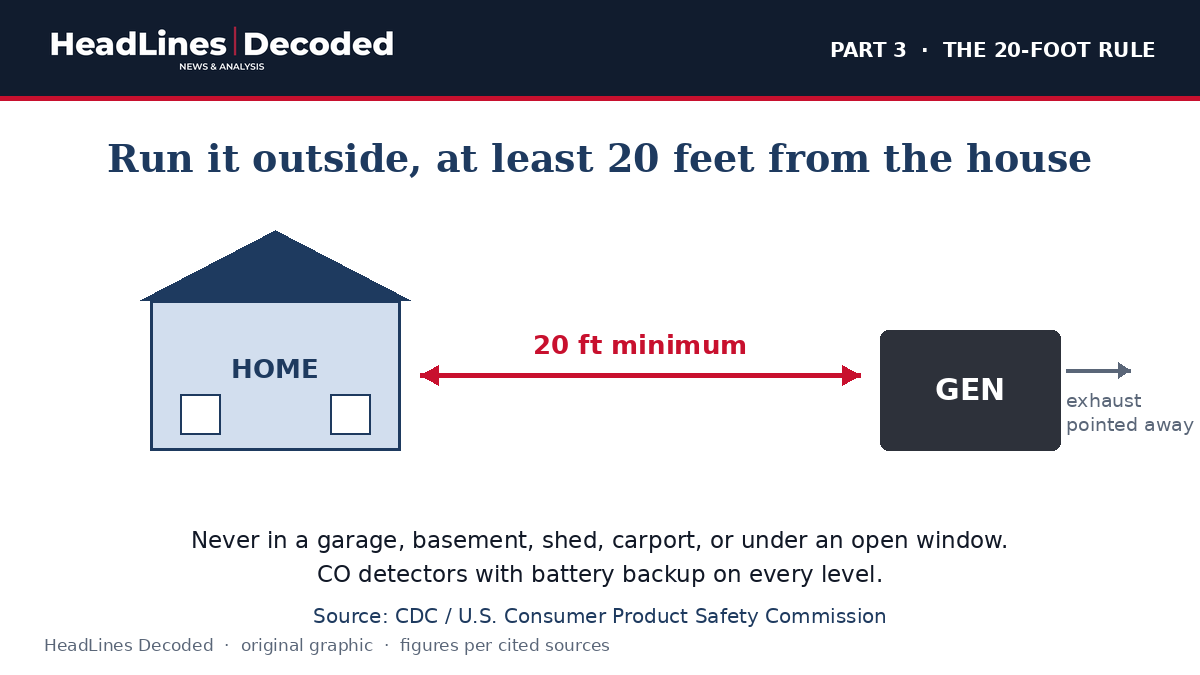
The placement rule from the CDC and CPSC is clear and repeated across every major safety campaign:
- Operate the generator only outdoors.
- Keep it at least 20 feet from any window, door, or vent.
- Point the exhaust away from the house and away from neighboring houses.
- Never run it in a garage, even with the door open.
- Never run it on a porch, in a carport, or under an open window.
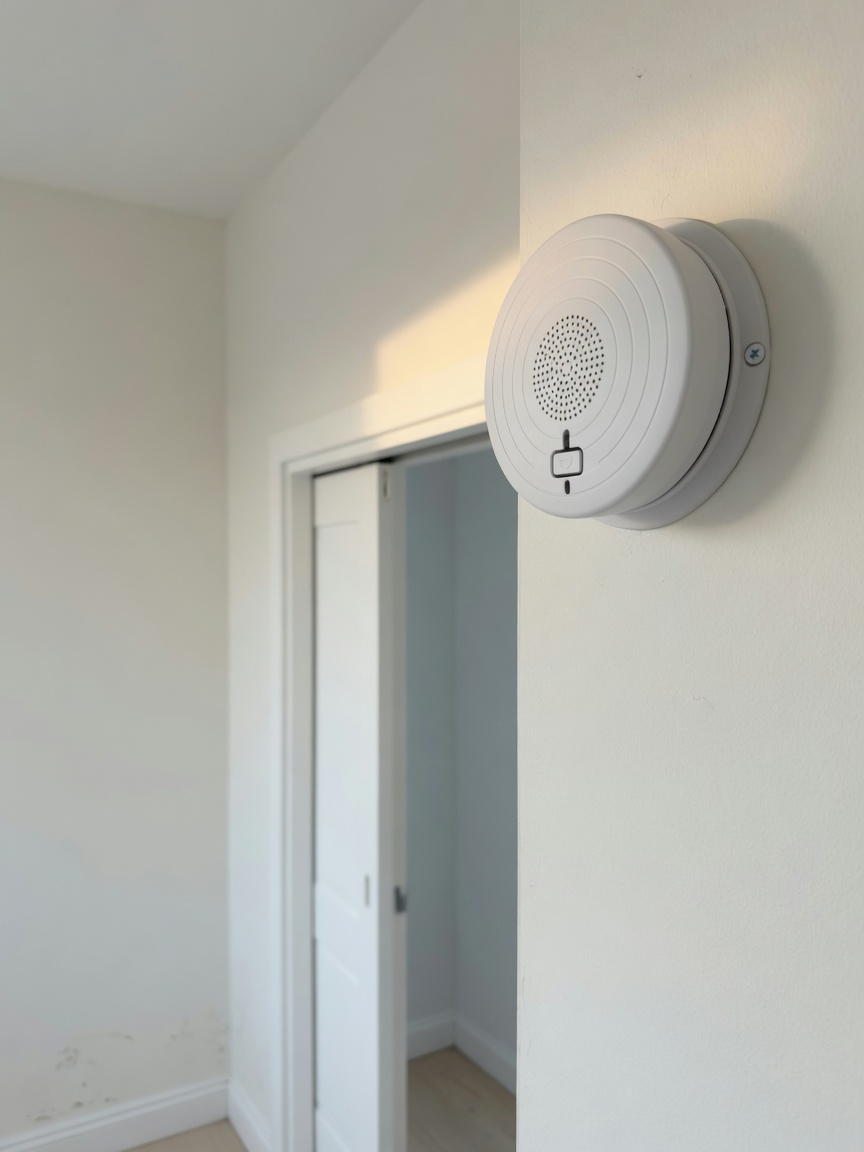
Install carbon monoxide detectors that have battery backup on every level of the home, especially near sleeping areas. Test them monthly. Replace them according to the manufacturer’s date. If a detector alarms while a generator is running, get everyone outside into fresh air immediately and call for help.
Some newer portable generators meeting UL 2201 or PGMA G300 standards have reduced emission rates and automatic shutoff features when elevated carbon monoxide is detected near the unit. Those features are improvements. They are not a substitute for the 20-foot outdoor placement rule.
Electrical connection: never backfeed
Backfeeding is the practice of connecting a generator to a household outlet or to the panel in a way that allows power to flow out onto the utility lines. It is dangerous for two reasons. It can electrify lines that utility crews believe are dead, creating a lethal risk for the people restoring power. It can also damage the generator or the house wiring when utility power returns.
The National Electrical Code (Article 702) requires transfer equipment that prevents the generator and the utility from being connected at the same time. In Florida, that requirement is enforced through the Florida Building Code and local permitting.
Two common code-compliant methods exist for portable generators:
Interlock kit. A mechanical sliding plate installed on the main panel cover. It physically prevents the main utility breaker and the generator breaker from both being on at once. The homeowner turns off the main, slides the interlock, and turns on the generator breaker. The entire panel can then be energized by the generator, and individual breakers are selected as needed. Interlock kits are relatively inexpensive (often under $150 for the hardware) and are legal when listed for the specific panel and installed with a permit by a licensed electrician.
Manual transfer switch. A separate subpanel that contains only the circuits intended for generator power. A lever or set of switches transfers those circuits from utility to generator. This method limits the loads that can be powered and can make load management simpler. It also requires a permit and licensed installation.
In either case, a weatherproof inlet box is mounted on the exterior of the house. A heavy-duty cord runs from the generator to the inlet. The cord and inlet must be rated for the amperage involved (commonly 30-amp or 50-amp for residential portables).
Plugging a generator into a dryer outlet or any other receptacle with a “suicide cord” or reverse-wired adapter is illegal in Florida and extremely dangerous. Do not do it.
For permanent standby generators, an automatic transfer switch is the standard. It senses the loss of utility power, starts the generator, and transfers the load without human intervention. The same isolation principle applies: the generator and the utility cannot be paralleled unless the system is specifically designed and approved for that purpose.
Florida-specific placement and exhaust rules
The Florida Building Code and the Residential Code set minimum distances for generator exhaust relative to openings in the building. Exhaust termination is generally required to be at least 10 feet from doors, operable windows, eave vents, and air intakes. An exception allowing 5 feet exists under certain listed conditions, but the more restrictive of the code and the manufacturer’s instructions applies.
Permanent generators must also meet setback requirements from property lines and structures, and they must be installed according to the manufacturer’s listing (typically UL 2200 for stationary units). In flood hazard areas, the generator and its electrical components must be elevated or otherwise protected according to Section R322 of the Residential Code.
Local jurisdictions and HOAs can add further restrictions on noise, placement, and appearance. Checking with the local building department and the HOA before purchasing a permanent unit avoids expensive relocation later.
Fuel storage and handling
Gasoline is the most common portable fuel and the most problematic to store. It degrades. Water contamination and varnish formation can clog carburetors and make the machine hard to start when it is needed most. Use a fuel stabilizer if gasoline will sit for more than a month or two, and rotate stock so that you are not relying on year-old fuel during a storm.
Store gasoline in approved containers, away from living spaces, and never inside the house. Keep containers tightly closed. In hot Florida weather, pressure can build in sealed cans; follow the container manufacturer’s guidance.
Propane stores indefinitely and is often the cleaner long-term option for dual-fuel machines. The tanks are bulky, and a sufficient multi-day supply takes planning. Natural gas for permanent standby units has the advantage of continuous supply as long as the utility gas system remains pressurized, which it often does even when the electric grid is down.
Never refuel a hot generator. Shut it down, let it cool, then add fuel. Spilling gasoline on a hot engine is a common cause of fires.
Wet conditions and flooding
Florida storms bring water. Generators and electrical connections that sit in standing water create shock and short-circuit hazards. Elevate portable units on a dry, stable platform if water is present. Keep cords and inlets out of puddles. If the generator or the connection equipment has been submerged, do not use it until it has been inspected and dried by a qualified person.
Permanent installations in mapped flood zones must follow the elevation and protection rules in the Florida Building Code. Ignoring those rules can void insurance coverage and create a safety hazard the next time water rises.
Maintenance that actually matters
A generator that will not start when the power fails is useless. Basic maintenance keeps the machine ready:
- Run it under load for 20–30 minutes every month or two. This circulates oil, charges the battery on electric-start models, and confirms that it still works.
- Change the oil according to the manual, typically after the first 20–30 hours and then at regular intervals.
- Replace the spark plug and air filter on schedule.
- Keep the fuel system clean. For gasoline models, consider draining the tank and carburetor if the unit will sit unused for long periods, or use stabilizer consistently.
- For permanent standby units, follow the manufacturer’s service schedule and consider a maintenance contract. Many warranties require documented professional service.
Test the transfer switch or interlock as part of the monthly exercise. Confirm that the carbon monoxide detectors still function.
The practical checklist before the storm
- Confirm the generator starts and runs under a realistic load.
- Verify that the transfer method (interlock or transfer switch) is installed, permitted, and understood by everyone who might operate it.
- Check fuel supply and stabilizer status. Top off or rotate as needed.
- Walk the placement area. Confirm the 20-foot rule can be met and that the spot will stay reasonably dry.
- Test carbon monoxide detectors.
- Have the heavy-duty cord and any adapters ready and in good condition.
- Know which breakers or circuits will be powered and which will stay off so the generator is not overloaded.
These steps are unglamorous. They are also the difference between a generator that works when it is needed and one that becomes another problem in the dark.
Part 4 examines permanent standby systems: automatic operation, fuel choices in Florida, sizing, permitting, and the real installed cost ranges that homeowners encounter.
- U.S. Consumer Product Safety Commission, carbon monoxide fatality report
- Centers for Disease Control and Prevention, Generator Safety Fact Sheet
- National Electrical Code (NFPA 70), Article 702, Optional Standby Systems
- Florida Building Code, 8th Edition (2023), including Residential Code flood and generator provisions
- UL 2200 (stationary) and ANSI/UL 2201 and PGMA G300 (portable) safety standards
Reported and edited to HeadLines Decoded newsroom standards. E.G. v4.16 · I.R.G. v1.13 · L.R.G. v1.9 · P.L.G. v1.10. Part of our Power Through the Storm series.
Editor written. AI used for spelling and grammar only.