A Portable Generator Can Keep the Essentials Running. It Can Also Kill You in Minutes If You Treat It Like an Indoor Appliance.
Conventional open-frame units and quieter inverter models both work. Both produce deadly carbon monoxide. Here is what a portable can realistically power, how long it can run, and the non-negotiable limits.

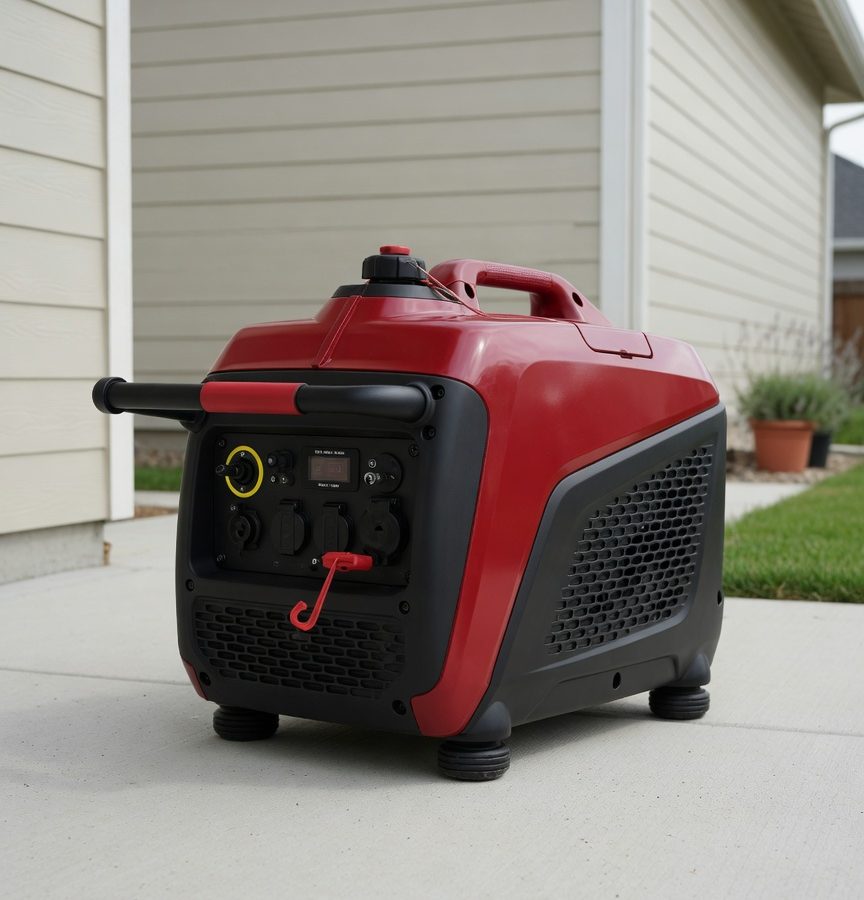
Credit: AI-generated illustration (Grok), generated in-house. HeadLines Decoded. · HeadLines Decoded LLC
Illustration generated with AI (Grok).
Most Florida homeowners who buy their first generator after a bad storm season buy a portable. The price is lower. The commitment is smaller. You can store it in a shed or garage and roll it out when the lights go out. That flexibility is real. So are the limits and the risks.
A portable generator is not a whole-house solution for most homes. It is a tool for keeping a defined list of critical loads alive. Understanding the difference between marketing claims and actual continuous output is the first step that keeps people from buying the wrong machine and then running it in the wrong place.
Two main types: conventional and inverter
Conventional portable generators use an engine that turns an alternator at a fixed speed, usually 3,600 rpm, to produce 60-hertz power. They are generally louder, heavier for a given output, and less fuel-efficient under light loads. They are also usually less expensive per watt. Many models in the 3,000- to 8,000-watt range fall into this category.
Inverter generators take a different path. The engine output is converted to direct current and then inverted back to clean alternating current. The engine speed can vary with the load. That design produces several practical differences.
- Lower noise. Many inverter models run in the mid-50s to low-60s decibels at a distance of 23 feet under partial load. Conventional open-frame units often sit in the 70s or higher.
- Better fuel efficiency under light and medium loads. The engine does not stay at full speed when the demand is low.
- Cleaner power. Total harmonic distortion is typically under 3 percent on a good inverter, compared with higher levels on many conventional units. That matters for sensitive electronics and some medical devices.
- Smaller size and weight for a given continuous output in the lower wattage ranges.
Inverters still burn fuel and still produce carbon monoxide. They are not indoor-safe. The efficiency and noise advantages are real. The safety rules do not change.
What the wattage numbers mean
Manufacturers list both a starting (or surge) wattage and a running (or continuous) wattage. The starting number is higher because many motors and compressors draw a brief spike when they start. The running number is the one that matters for sustained operation.
A unit advertised as “7,000 watts” may have a continuous rating closer to 5,500 or 6,000 watts. Always work from the continuous rating when you build a load list. Exceeding that rating for more than a short surge will trip breakers or damage the generator.
Realistic continuous outputs for common portable sizes:
| Approximate continuous watts | What it can typically support |
|---|---|
| 2,000-2,200 | Refrigerator or freezer, lights, phone charging, a few small appliances. Not central air. |
| 3,000-4,000 | Refrigerator, freezer, lights, electronics, a window air conditioner or a small space heater in limited use, well pump in some cases if carefully managed. |
| 5,000-7,500 | Multiple critical circuits, possibly one zone of central air if the starting surge is managed, well pump and sump, and selected outlets. |
| 8,000-10,000+ | More headroom for larger homes or simultaneous loads, still usually not every circuit in a typical Florida house with full air conditioning. |
Central air is the load that most often breaks the plan. A 3-ton system can easily demand 3,000 to 5,000 watts running and a much higher starting surge. Many portable generators cannot handle that plus the refrigerator and other essentials at the same time. Owners who want air conditioning during an outage often end up either cycling the system carefully or moving to a larger standby unit.
Fuel choices, from gasoline to dual-fuel
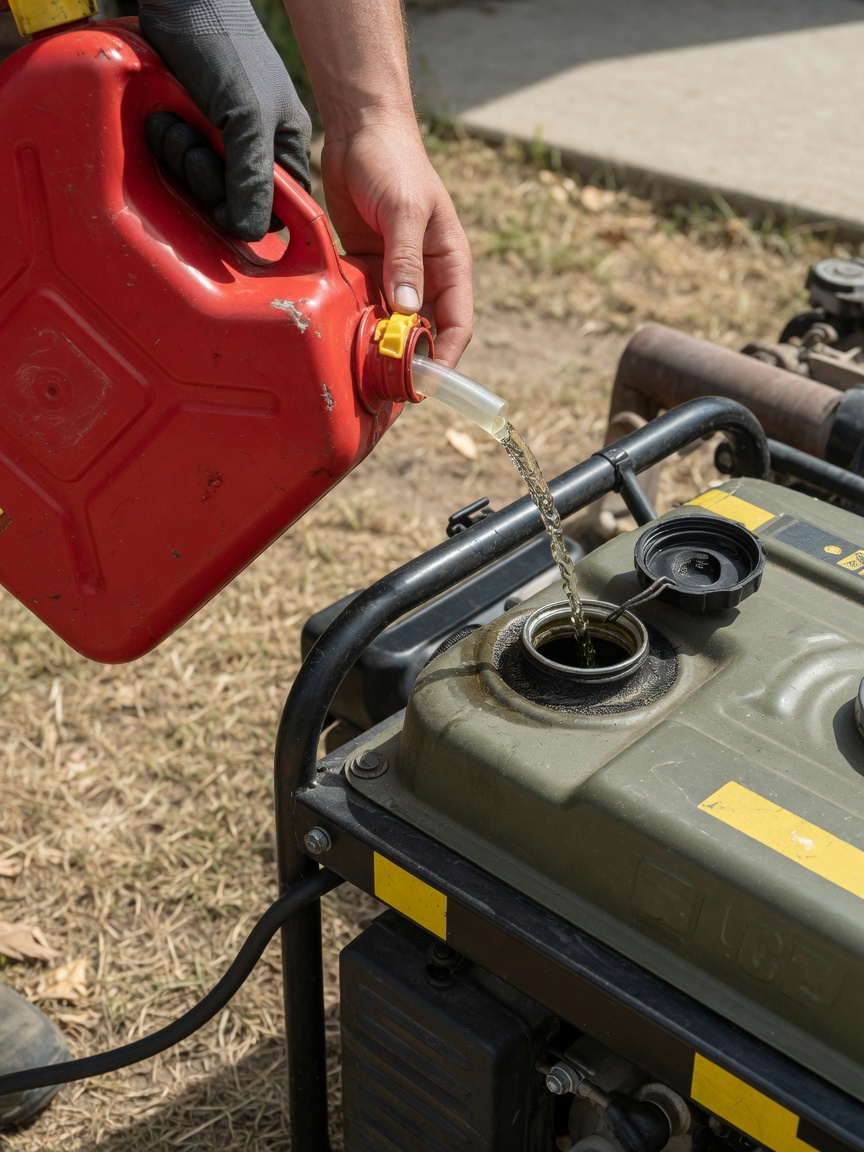
Gasoline is the most common fuel for portables. It is widely available in normal times and delivers good power density. It also goes stale. Untreated gasoline can begin to degrade in a few months. Stabilizers help, but rotating stock and keeping tanks relatively fresh remains necessary. After a major storm, gasoline stations may be closed or have long lines, and some may lack power to run their pumps.
Propane stores indefinitely in a sealed tank and burns cleaner. Dual-fuel models let you switch between gasoline and propane. Propane typically produces slightly less power than gasoline on the same engine, and the tanks are bulkier to store and handle. For multi-day outages, having both options can reduce the risk of running dry when one fuel is hard to find.
Diesel portables exist but are less common in the residential size range. They are efficient and the fuel is more stable, but the machines are usually larger and heavier, and more expensive to run.
Runtime claims on the box are usually measured at half load or less. Real household use is often higher. Plan on more frequent refueling than the marketing number suggests, especially in hot weather when the engine is working harder and the fuel is more volatile.
Parallel capability
Some inverter models can be linked in parallel with a special cable so two smaller units act as one larger source. This gives flexibility: run one unit for light loads, bring the second online when demand rises. It also means you can buy two modest units instead of one large, heavy machine. Parallel kits are model-specific. Mixing brands or incompatible units is not supported.
The hard limit: carbon monoxide
Every gasoline, propane, or diesel portable generator produces carbon monoxide. The gas is colorless and odorless. It kills without warning. The U.S. Consumer Product Safety Commission ties portable generators to an estimated 765 carbon monoxide deaths from 2009 through 2019, an average near 70 a year, and its more recent reporting shows the toll trending upward. Generators are the leading cause of carbon monoxide deaths among engine-driven consumer products under CPSC jurisdiction.
Most of those deaths occur in residential settings. The common pattern is a generator running in a garage, a basement, a porch, or too close to a window or door so that exhaust enters the living space. Weather-related power outages are the leading reason people start the machines.
The Centers for Disease Control and Prevention and CPSC guidance is consistent and blunt:
- Never run a generator inside a home, garage, basement, crawlspace, or shed.
- Place it outdoors, in a dry area, at least 20 feet from any window, door, or vent.
- Point the exhaust away from the house.
- Install battery-operated carbon monoxide detectors on every level of the home and test them regularly.
Newer portable generators that meet stricter voluntary standards (ANSI/UL 2201 or PGMA G300) have lower carbon monoxide emission rates and, in some cases, automatic shutoff if dangerous levels are detected near the unit. Those features reduce risk. They do not eliminate it. Placement rules still apply.
If anyone in the house feels dizzy, weak, nauseated, or develops a headache while a generator is running, move to fresh air immediately and seek medical help. Do not wait to see if the symptoms pass.
Noise, and what neighbors and HOAs allow
Conventional open-frame generators are loud enough to annoy neighbors and, in some communities, to violate noise ordinances or HOA rules. Inverter models are noticeably quieter and are often the practical choice in denser neighborhoods or where an HOA is strict. Even a quiet unit running for days will be noticed. Talking with neighbors before a storm about placement and expected runtime reduces friction later.
What a portable is good for, and what it is not
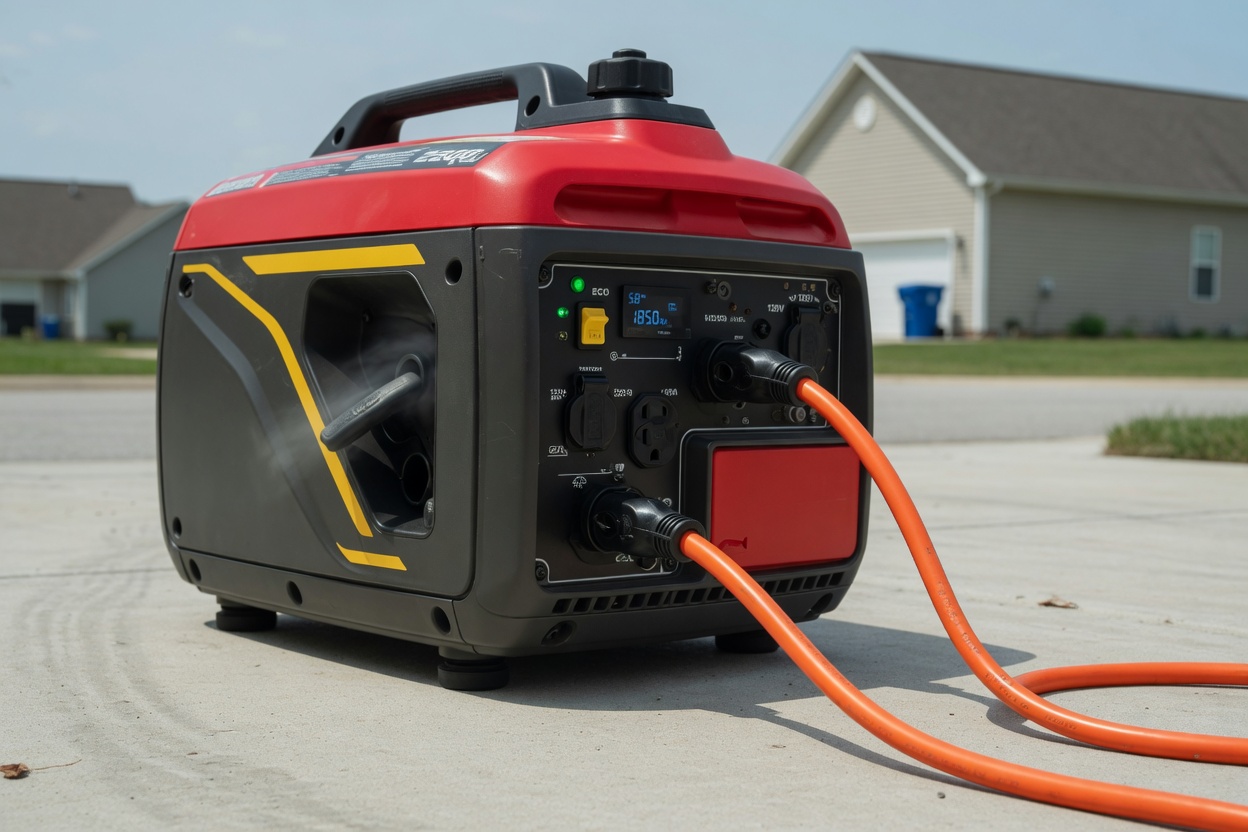
A well-chosen portable, properly placed and properly connected, can keep a refrigerator and freezer cold, run lights and fans, charge phones and medical devices, power a well pump for limited periods, and support a modest window air conditioner or a carefully managed central system. It can make a multi-day outage survivable instead of destructive.
It will not silently power an entire modern house the way a utility connection does. It requires the owner to be present, to manage fuel, to watch the load, and to respect the carbon monoxide rules every single time it runs. For households that need automatic operation, higher capacity, or the ability to leave the house during an outage, a permanent standby system or a hybrid with battery storage becomes the next conversation.
Part 3 of this series covers the electrical connection methods that keep a portable from backfeeding the utility lines, the placement details that matter in Florida’s wet and flooded conditions, and the maintenance habits that keep the machine ready when it is needed.
- Part 1: Why Florida’s long outages still happen
- Part 2: Portable generators: power and limits (you are here)
- Part 3: Setup and safety
- Part 4: Permanent standby systems
- Part 5: How to decide what you need
- U.S. Consumer Product Safety Commission, carbon monoxide fatality report
- Centers for Disease Control and Prevention, Generator Safety Fact Sheet
- National Electrical Code (NFPA 70), Article 702, Optional Standby Systems
- Consumer Reports and manufacturer literature on inverter vs. conventional performance
Reported and edited to HeadLines Decoded newsroom standards. E.G. v4.16 · I.R.G. v1.13 · L.R.G. v1.9 · P.L.G. v1.10. Part of our Power Through the Storm series.
Editor written. AI used for spelling and grammar only.