Seven Drone Companies, Then a War. Now Ukraine Builds Drones by the Millions
Four years of war turned a handful of workshops into a system that builds millions of drones and improves them in days. In the cheap, attritable layer it now outpaces most of the West, and U.S. exercises have felt it.

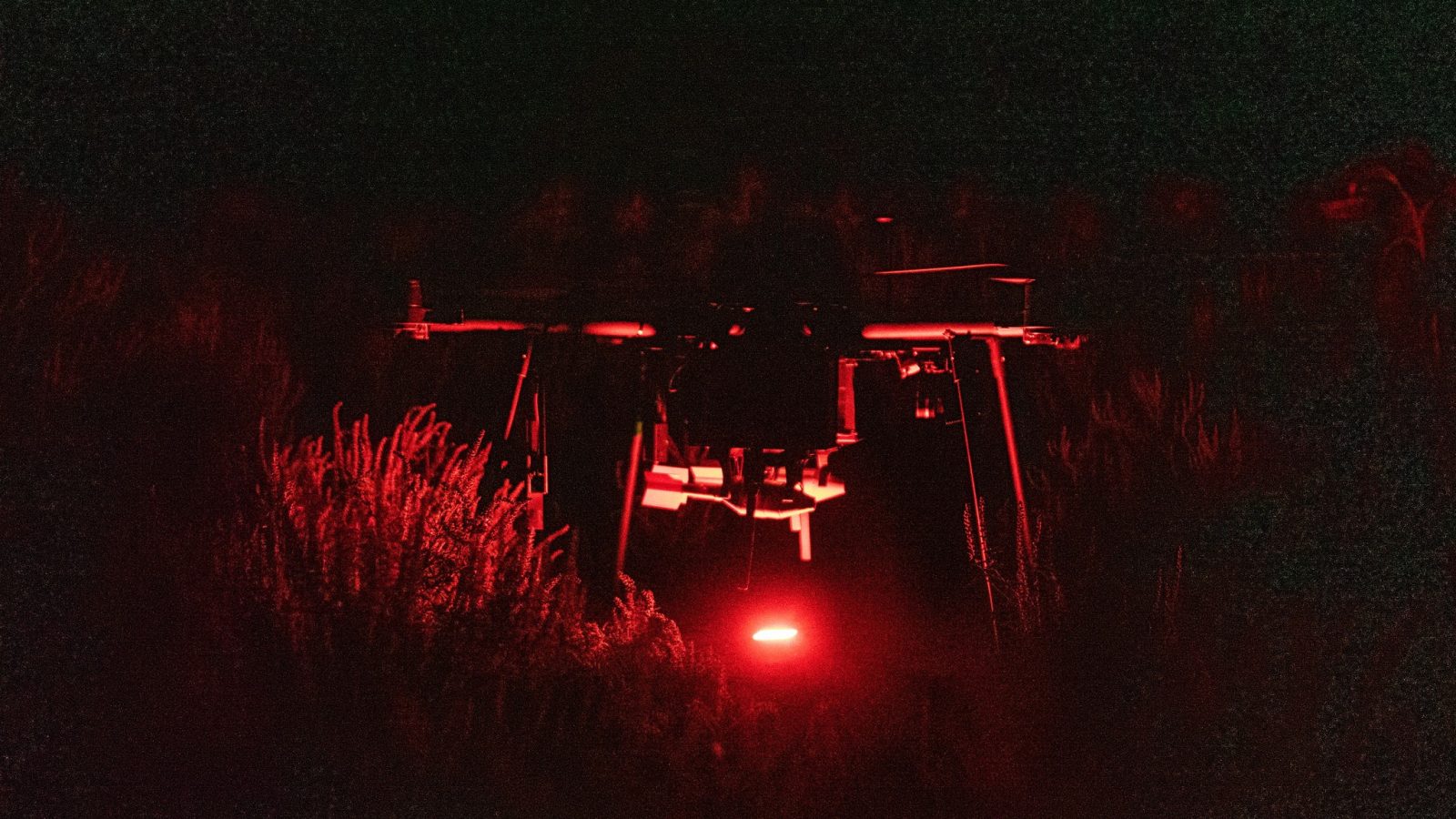
This spring, on a training range in Germany, a U.S. armored brigade kept getting killed faster than the exercise could keep up.
The visitors were from Ukraine’s 412th Nemesis Regiment, and they had brought the war with them: reconnaissance drones to find the enemy and cheap first-person-view drones to hit it. The Americans were running the kind of armored maneuver the Army has trusted for a generation. According to the Wall Street Journal’s account of the Combined Resolve rotation, the Ukrainian crews spotted the U.S. vehicles and scored simulated kills so quickly that exercise controllers had to keep putting American armor back on the board just to keep the scenario running. Over two weeks the U.S. side adjusted, spreading out, hiding better, leaning harder on jamming. The early lopsidedness was the part everyone remembered.
Four years ago this could not have happened, because the tool that did it barely existed. In 2021 Ukraine had about seven companies building drones, turning out a few thousand aircraft a year. Today it has more than five hundred, and it is building millions of drones a year. How a country got from there to here, under fire, without a master plan, is the most important thing happening in military technology right now.
- Ukraine went from about seven drone makers before 2022 to more than five hundred, and is on pace to build over seven million first-person-view drones this year.
- Cheap tactical drones now account for roughly 60 to 70 percent of the Russian equipment Ukraine destroys, at about 500 dollars a drone, according to the Royal United Services Institute.
- The real edge is speed: a fix can travel from a front-line complaint to a redesigned drone in days, where a normal weapons program takes years.
- The lead is narrow. It sits in the cheap, jam-resistant, throwaway tactical layer; the United States still leads in high-end platforms, and Ukraine long leaned on Chinese parts.
Seven companies, then a war
Start with the numbers, because the numbers are the story. Ukraine built roughly 2.2 million drones in 2024. Its target for 2025 was 4.5 million. For 2026, officials talk about more than seven million first-person-view units, with the industry claiming it could build eight to ten million a year if the money were there. Front-line units now burn through these things at a rate measured in the hundreds of thousands a month.
They can do that because the drones are cheap enough to throw away. A basic FPV strike drone costs somewhere between three hundred and seven hundred dollars, and about five hundred is typical. It is a few ounces of motor, battery, camera and explosive, flown by a person wearing goggles, and it is meant to be spent.
That trade is not a talking point. The Royal United Services Institute, a British defense institute not known for hype, estimated that cheap tactical drones now account for roughly sixty to seventy percent of the Russian equipment Ukraine damages or destroys, which makes them about twice as effective as every other weapon in the arsenal combined. Ukraine’s own commanders have put the drone share of all battlefield strikes north of sixty percent, and by early this year were claiming figures closer to eighty. Take the official numbers with the caution any wartime claim deserves. Even discounted, they describe a weapon that has quietly become the main way this war is fought. Worth saying too: most FPV drones miss. Depending on the sector and the pilot, more than half never reach the target. The model works anyway, because the ones that connect are so cheap and so many.
The loop that runs in days
The scale matters less than the speed. What Ukraine actually built is not a drone. It is the fastest design-test-fix loop any military has ever run.
In a normal defense program the distance between a soldier’s complaint and a fix in the field is measured in years and contract cycles. In Ukraine it is measured in days. A pilot notices that a jammer is killing his signal on a certain stretch of front, tells the workshop that built his drones, and a modified version comes back before the week is out. The manufacturing base is deliberately scattered: hundreds of small shops and a handful of larger firms, close to the units they supply, hard to bomb because there is no single place to hit. In June 2024 Ukraine made the arrangement official, standing up the Unmanned Systems Forces as a separate branch of its military, the first country in the world to give drones their own service.
The clearest picture of that loop is the fiber-optic drone. Radio-controlled drones can be jammed, and by 2024 both sides were jamming furiously, so someone reached for an old idea: run a hair-thin fiber-optic cable off a spool behind the drone and steer it down the glass. There is no radio signal to jam because there is no radio signal at all. Russia fielded the trick at scale first, during Ukraine’s Kursk incursion in the late summer of 2024. Within a year Ukraine had answered with more than eighty of its own fiber-optic designs, some reaching thirty or forty kilometers down a thread thinner than fishing line. The cable is a bargain with the devil. It snags on trees, it rules out flying home, and it drags. But it goes where nothing else will, straight through a wall of electronic warfare that stops everything with an antenna.
Chasing Shaheds for a thousand dollars
The same loop is now pointed at the sky. For two years Russia has hammered Ukrainian cities with Shahed drones, the Iranian-designed flying mopeds that cost around fifty thousand dollars each and arrive in swarms. Shooting them down with the West’s answer, a surface-to-air missile that can run past five million dollars, is a losing trade no budget survives. So Ukraine started building drones to hunt drones.
By its own account it produced a hundred thousand interceptors in 2025, an eightfold jump, from more than twenty companies. The machines are small, fast and startlingly cheap. Wild Hornets’ Sting runs about twenty-five hundred dollars and claims thousands of kills, including the first confirmed downing of a jet-powered Shahed. SkyFall’s P1-SUN costs a thousand. Over Kyiv in the weeks before this March, interceptors were knocking down more than seventy percent of incoming Shaheds. Downing one that way costs something like a twenty-fifth of a Western missile. The Pentagon noticed the arithmetic after watching itself spend roughly four billion dollars and more than eight hundred Patriot interceptors in a single week of the June 2025 fighting with Iran, more than Ukraine’s entire multi-year supply.
Where the lead stops
This is the point where the story wants to run away from the facts, so it is worth planting a flag. Ukraine’s lead is real, and it is narrow. It lives in one layer: the mass, cheap, throwaway, jamming-resistant tactical drone. In the high-end categories, the long-endurance surveillance aircraft and stealthy strike platforms that take years and billions to build, the United States and its allies are still comfortably ahead. Different problems produce different tools, and the world’s best cheap-drone army is not automatically the world’s best air force.
The dependence underneath is real too. For most of the war, the cheap Ukrainian drone was a Chinese product in a Ukrainian frame. As recently as 2024, by one analysis, roughly nine in ten of the components Ukrainian makers imported came from China: the motors, the flight controllers, the cameras, the batteries. Then in December 2024 Beijing began choking off shipments to American and European drone firms while its parts kept flowing to Russia, and the risk stopped being theoretical. Ukraine is racing to build its own supply, and getting somewhere. One domestic firm now turns out two hundred thousand motors a month, close to a fifth of what the country needs. The catch is money: a Ukrainian motor runs about a hundred and fifty dollars against a Chinese one at seventy, and at nine thousand drones a day that gap adds up fast. The worry is not Ukraine’s alone. Washington has been chasing the same Chinese-hardware problem all the way down to the robot vacuum on the living-room floor.
What Washington sees in the battle lab
The United States has spent the same period trying to build its own version of this and finding it hard. In 2023 the Pentagon launched Replicator, a program meant to field thousands of cheap, attritable, autonomous machines within two years, explicitly because it had watched Ukraine and worried about China’s numbers. The deadline came and went this past summer amid congressional complaints about opacity and analysts asking where the promised swarm had gone. The trouble was never really the technology. It was a procurement culture built to buy small numbers of exquisite things, badly suited to buying oceans of cheap ones.
So Washington has started going to the source. In July, a Defense Innovation Unit official told Reuters that American industry was still years from matching Ukraine’s output, noting that Ukraine would build six to seven million FPV drones this year while the Pentagon’s own drone push would have ordered fewer than two hundred thousand, total, by February. The Army has begun buying Ukrainian-proven interceptors at fifteen thousand dollars a copy to swat down fifty-thousand-dollar Shaheds. A NATO ambassador recently called Ukraine “the battle lab of the future,” and for once the phrase was not entirely spin. Officials now travel there to learn.
There are limits to what travels home. Ukraine’s system was forged by an existential emergency, the kind that dissolves the peacetime rules about paperwork and pace, and you cannot import the emergency. A country not fighting for its life will always build more slowly, because it can. That is not a criticism of anyone. It is the oldest pattern in the history of war: sustained pressure burns away everything that does not work under fire, and leaves an industry that peacetime rarely matches.
What it proves, and what it doesn’t
Be careful about what to take from all this. It does not prove that Ukrainian drones would win a different war, that America’s expensive machines are obsolete, or that this model could be dropped intact into a peacetime budget. It proves something narrower and more durable. Put a capable country under enough pressure for long enough, hand its engineers a short enough path to the people using their work, and they will out-iterate any process on earth.
Ukraine built seven-hundred-dollar answers to million-dollar problems faster than the people with the million dollars could respond. The rest of the world’s militaries are now studying how, which is its own kind of verdict. The country that most needed to reinvent the way wars are supplied has done it in the open, on a deadline it did not choose, and everyone else is taking notes.
The same war economy that reshaped the battlefield reaches all the way to a warship’s galley. For how an Iranian missile strike on one Navy base rippled into food and supply problems aboard a U.S. carrier thousands of miles away, see the USS Abraham Lincoln’s supply problems, decoded.
- Reuters: Pentagon says US industry still years from matching Ukraine’s wartime drone output (27 July 2026)
- Stars and Stripes: US turns to Ukraine’s ‘battle lab’ for drone lessons (10 August 2026)
- Wall Street Journal, via Il Sole 24 Ore: Ukrainian drones overwhelm a U.S. unit during the Combined Resolve exercise (spring 2026)
- Royal United Services Institute, via Forbes: tactical drones now destroy the majority of Russian targets (February 2025)
- Atlantic Council: Fiber-optic drones have emerged as critical kit for both Russia and Ukraine (24 February 2026)
- Military Times: These are Ukraine’s $1,000 interceptor drones the Pentagon wants to buy (11 March 2026)
- National Security and Defense Council of Ukraine: results of Ukraine’s FPV drone industry in 2025 (January 2026)
- Foundation for Defense of Democracies: China is a key factor in Ukraine’s drone industry, and its export controls could ground it (10 October 2025)
- USNI News: Congressional Research Service report on the Pentagon’s Replicator initiative (26 August 2025)
- Ukrainska Pravda: Ukraine’s drone commander on the roughly 25-kilometer kill zone (14 May 2026)
- Militarnyi: more than 500 companies now produce drones in Ukraine
Reported and edited to HeadLines Decoded newsroom standards. E.G. v4.16 · I.R.G. v1.13 · L.R.G. v1.9 · P.L.G. v1.10.
Editor written. AI used for spelling and grammar only.