The $24 Million Bet on U.S. Shipbuilding: The Arsenal of Democracy
Twenty-four million dollars aimed at reviving American shipbuilding. What that buys, and what it does not.

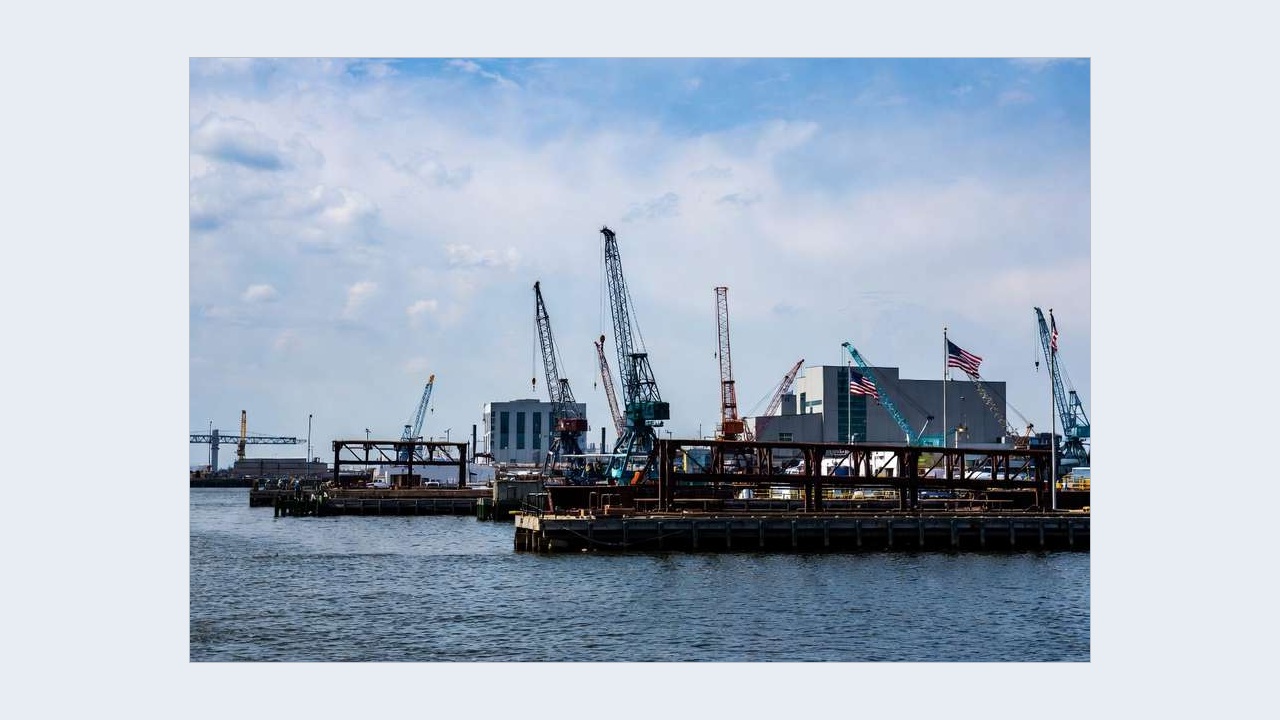
On July 15, 2026, JPMorganChase put $13 million of New Markets Tax Credit equity into a new 95,000-square-foot submarine manufacturing and assembly facility at the Philadelphia Navy Yard. The money goes to Rhoads Industries. The facility is expected to create 450 permanent jobs. That single line item sits inside a larger $24 million package of loans, investments, and grants announced the same day. The bank described the move as support for an industry critical to America’s defense industrial base.
The bet also lands at a lean moment for the country’s energy cushion: the Strategic Petroleum Reserve has fallen to its lowest level since 1983, which shapes how much room Washington has if oil prices spike.
This is not a one-off donation. It is a visible piece of JPMorgan’s $1.5 trillion Security and Resiliency Initiative, a ten-year commercial plan to finance industries the bank has identified as essential to U.S. economic and national security. Shipbuilding is one of five priority domains. The language Jamie Dimon has used for years, “arsenal of democracy,” now has a concrete dollar amount and a physical address in South Philadelphia.
The Numbers Behind the Bet
The $24 million breaks down as follows:
| Allocation | Amount | Purpose |
|---|---|---|
| Rhoads Industries (NMTC equity) | $13 million | New 95,000 sq ft submarine manufacturing and assembly facility (part of a $40 million NMTC transaction). Expected to create 450 permanent jobs. |
| PIDC Community Capital (loan) | $5 million | Long-term, low-cost loan to expand small-business lending. Expected to support up to 15 loans and create or retain as many as 200 jobs. |
| PIDC + DVIRC (grant) | $1.5 million | Technical assistance for up to 100 local maritime small business suppliers, including high-touch assessments for 30 of them. |
| Greater Philadelphia Growth Partnership (grant) | $2.4 million | Build a regional collaborative connecting employers, training providers, and community partners. |
| Skills Initiative / University City District (grant) | $2 million | Scale non-degree training pathways into higher-wage shipbuilding and advanced manufacturing roles for nearly 300 local people. |
Near-term focus areas named by the bank include expanding submarine manufacturing capacity, building apprenticeship pipelines for welders, electricians and other trades, strengthening the local supplier base, and coordinating the regional ecosystem so the jobs and contracts stay local.
How Far U.S. Shipbuilding Has Fallen
The United States once built the ships that won two world wars. In the 1960s the country still operated nearly 3,000 flagged merchant vessels. Today it has fewer than 190, many of them built abroad. Less than 1 percent of new commercial ships worldwide are built in American yards. China currently holds the majority of global commercial shipbuilding capacity and the bulk of the order book. A U.S. Navy briefing earlier this year put Chinese naval shipbuilding capacity at roughly 23 million tons against under 100,000 tons for the United States.
The Navy’s own May 2026 shipbuilding plan and multiple Government Accountability Office reports document the same structural problems: aging yards, a projected shortage of 250,000 skilled workers over the next decade, high costs, long lead times, and heavy reliance on foreign suppliers for critical components. Bipartisan concern has existed for years. Results have lagged.
What the Bank Is Actually Buying
JPMorgan is not writing a check and walking away. The loans and tax-credit equity are structured as commercial investments. The grants target the exact bottlenecks the industry itself identifies: trained workers and a functioning local supply chain. Since late 2025 the bank has received more than 750 business opportunities under the broader Security and Resiliency Initiative and has assembled a dedicated team to manage the pipeline.
Dimon’s own words in the July 15 announcement stay practical: “America can compete and lead in shipbuilding again. It starts with more skilled workers and secure supply chains. We need to train people for the jobs shipbuilders urgently need, connect them to good careers and strengthen the suppliers and partners that keep a shipyard running.” The historical rhetoric appears in his earlier shareholder letters and public remarks. The July package turns the slogan into steel, concrete, and apprenticeships at a specific yard with a specific company that already does Navy submarine work.
Rhoads Industries has been expanding its Philadelphia Focus Factory for submarine modules for more than a year. In 2025 the company announced a roughly $100 million investment of its own, supported by state funds, to double capacity and add the new high-bay facility. The JPMorgan equity sits on top of that existing plan and accelerates the next phase.
Steelman and the Trade-Offs
Supporters will say private capital is filling a gap that government funding and procurement rules have left open for decades. The Navy Yard has the space, the water access, and a continuous history of naval work. Training people for high-wage trades that do not require four-year degrees creates real mobility in a city that needs it. Submarine module fabrication is sticky, high-skill manufacturing that is hard to offshore once the workforce and tooling exist.
Critics will note that $24 million is small next to the scale of the capacity problem. Tax-credit structures and community-development loans come with public subsidies. Banks that finance defense work also finance the rest of the economy; concentration of that financing power raises its own questions about influence and priorities. No amount of private capital alone can fix Navy acquisition processes or the cost structure of American steel and labor relative to Asian competitors.
Both readings can be true at the same time. The facts of the investment stand independent of either interpretation.
What It Means for You
If you live in the Philadelphia region or work in the trades, this is concrete: new permanent jobs, apprenticeship slots, and small-business technical assistance that are already funded and attached to a growing Navy contractor. If you own shares in large banks or defense-related companies, it is another data point that Wall Street is treating industrial capacity as a growth market, not merely a policy talking point. If you care about how the United States will equip its Navy or maintain sealift capacity in a prolonged crisis, the gap between rhetoric and actual yard output remains wide. One new building and a few hundred jobs do not close it. They do show where private money is willing to place a measurable, public bet.
The arsenal of democracy was never just a slogan. It was factories, workers, and supply chains that could be turned on. On July 15 a large American bank wrote a check that tries to turn a small part of that machine back on at the Philadelphia Navy Yard. The rest of the machine is still largely silent.
Sources & Further Reading
- JPMorganChase press release, “JPMorganChase announces $24 million to help strengthen shipbuilding in Philadelphia and America’s defense industrial base,” July 15, 2026. Full allocation details and executive quotes.
- JPMorganChase Security and Resiliency Initiative materials and Jamie Dimon’s 2025 shareholder letter (prior public use of “arsenal of democracy” language).
- Rhoads Industries announcements regarding Pier 6A, Building 57/57A expansion, and Philadelphia Focus Factory for U.S. Navy submarine modules (2025-2026).
- U.S. Navy Shipbuilding Plan, May 2026.
- U.S. Government Accountability Office reports and congressional testimony on Navy and Coast Guard shipbuilding capacity, workforce shortages, and industrial-base challenges, 2025-2026.
- CSIS and related analyses of global commercial shipbuilding market share (China, Korea, Japan, United States).
- Historical U.S. merchant fleet data from the U.S. Maritime Administration and UNCTAD shipbuilding statistics.
What this means
Why that capacity matters right now is playing out in the Red Sea: Houthis Strike Saudi Tankers in the Red Sea: Two Chokepoints, One Bill for Households.
Editor written. AI used for spelling and grammar only.